Bienvenido a BKPOWER












Guía de especificaciones de SAI industriales
CONSEJOS:Industrial Power UPS systems require precise specification analysis to ensure reliable operation in critical environments. Understanding Industrial Power UPS specifications—including input voltage range, output THD, and overload capacity—helps engineers select the right equipment for demanding applications. This comprehensive guide decodes these essential industrial power ups specs to optimize your power protection strategy.
Ⅰ. Introduction: Why Specifications Matter
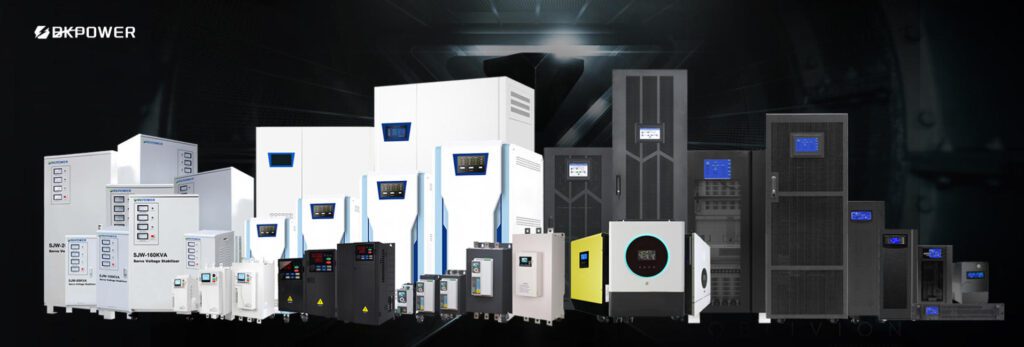
Selecting an industrial power UPS requires more than checking the power rating. Engineers must understand detailed industrial power ups specs to ensure reliable operation. Input voltage ranges determine grid compatibility. Output THD affects sensitive equipment. Overload capacity protects against startup surges.
Industrial environments demand higher performance than office settings. Voltage fluctuations are common. Loads are unpredictable. Standard UPS specifications often fall short. This guide explains three critical specifications that define SAI de potencia industrial performance.

Figure 1: Technical specifications sheet showing key parameters for 40-80 kVA industrial UPS systems
Ⅱ. Input Voltage Range: The Foundation of Compatibility
1. Understanding Input Voltage Specifications
The input voltage range defines the acceptable voltage window for Sistemas SAI operation. When grid voltage stays within this range, the UPS maintains normal operation without switching to battery power.
Standard UPS units typically accept 160V-270V input. Industrial power UPS systems offer wider ranges. Many industrial units handle 304V-456V (line voltage) or 176V-264V (phase voltage). Some advanced models accept 90V-300V or even wider spans.
2. Why Wide Input Ranges Matter
Industrial grids experience significant voltage fluctuations. Heavy machinery starting causes voltage sags. Long cable runs create voltage drops. Utility switching produces transients.
A wide input voltage range provides several benefits:
- Ciclos de batería reducidos: The UPS avoids unnecessary battery discharge during brief voltage sags
- Extended battery life: Fewer discharge cycles mean longer battery service life
- Lower operating costs: Reduced battery replacement frequency saves money
- Higher availability: The system remains online during grid disturbances
3. Specification Standards
International standards define input voltage requirements for SAI de potencia industrial systems:
| Tipo de SAI | Rango de tensión de entrada | Aplicación |
|---|---|---|
| Standard Commercial | 160V-270V | Office, IT equipment |
| Industrial Class I | 304V-456V (line) / 176V-264V (phase) | General industrial |
| Industrial Class II | 323V-418V (line) / 187V-242V (phase) | Heavy industrial |
| Wide-Range Industrial | 90V-300V or custom | Extreme environments |
ABB industrial UPS systems, for example, accept ±10% voltage tolerance at the utility input. Some models handle 30% voltage variation at partial loads. This flexibility ensures continuous operation despite severe grid disturbances.
4. Selecting the Right Range
Choose input voltage range based on your local grid conditions. Measure actual voltage fluctuations at your facility. Consider future load growth that might affect voltage stability. Select a SAI de potencia industrial with input range exceeding your measured variations by at least 20%.

Figure 2: UPS panel specification diagram showing input voltage connections and protection devices
Ⅲ. Output THD: Ensuring Power Quality
1. What is Total Harmonic Distortion?
Total Harmonic Distortion (THD) measures waveform purity. It quantifies unwanted harmonic frequencies added to the fundamental 50Hz or 60Hz sine wave. High THD indicates distorted power that can damage sensitive equipment.
THD appears in two forms:
- Voltage THD (THDv): Distortion in the output voltage waveform
- Current THD (THDi): Distortion in the input current drawn from the grid
2. Why Output THD Matters
Modern industrial loads include variable frequency drives, PLCs, and precision controls. These devices require clean sine wave power. High output THD causes multiple problems:
- Equipment overheating: Harmonics create additional heat in motors and transformers
- Control system errors: PLCs and sensors malfunction with distorted power
- Communication interference: High-frequency harmonics disrupt data transmission
- Reduced efficiency: Harmonic currents waste energy as heat
3. Industrial UPS THD Specifications
Calidad SAI de potencia industrial systems maintain strict THD limits:
| Load Condition | Acceptable THD | Premium Industrial Standard |
|---|---|---|
| Linear load | <5% | <1-2% |
| 100% non-linear load | <8% | <3-5% |
| 50% load | <5% | <3% |
Mitsubishi Electric recommends limiting UPS systems to 3% THD or less at 100% load. ABB industrial UPS specifications show voltage distortion under 2.5% THDv for linear loads. These tight tolerances protect sensitive industrial equipment.
4. Technologies for Low THD
Moderno SAI de potencia industrial systems use several technologies to minimize distortion:
- Double conversion topology: AC-to-DC-to-AC conversion isolates output from input disturbances
- Active harmonic filters: Detect and cancel harmonic frequencies in real-time
- IGBT-based inverters: Generate precise sine wave output with low distortion
- Factor de potencia corrección: Maintains high power factor while reducing harmonic generation
Online double-conversion UPS systems provide the cleanest output. They completely regenerate the AC waveform, delivering THD below 2% even with challenging loads.

Figure 3: Diagram showing harmonic filtering in UPS systems and grid current formas de onda
Ⅳ. Overload Capacity: Handling Peak Demands
1. Understanding Overload Specifications
Overload capacity defines how much excess power a UPS can deliver temporarily. This specification appears as “percentage of rated power + duration.” For example: “150% for 60 seconds” means the UPS can deliver 1.5 times its rated capacity for one minute.
Industrial loads often create temporary demand spikes. Motor starting currents reach 5-7 times running current. Transformer inrush currents surge briefly. Without adequate overload capacity, the UPS would trip offline during these normal events.
2. Industrial Overload Standards
Industrial power UPS systems offer substantially higher overload capacity than commercial units:
| Overload Level | Duration | Typical Industrial UPS | Standard Commercial UPS |
|---|---|---|---|
| 110% | Continuous | Estándar | Estándar |
| 125% | 10 minutes | Common | Rare |
| 150% | 30-60 seconds | Estándar | 10 seconds max |
| 200% | 10 seconds | Available | Not available |
| 300% | 5 seconds | Heavy industrial | Not available |
ABB PCS100 UPS-I specifications show impressive overload capacity: 120% for 60 seconds, 150% for 30 seconds, 200% for 10 seconds, and 300% for 5 seconds. This capability handles motor starting and load switching without interruption.
3. Why Overload Capacity Varies
Overload capability depends on component sizing and thermal design. Industrial power UPS systems use:
- Oversized power semiconductors: Handle surge currents without overheating
- Robust thermal management: Dissipate heat from temporary overloads
- Conservative ratings: Components rated for continuous operation below maximum capacity
Standard UPS units minimize cost with minimally sized components. They cannot sustain overloads without thermal damage.
4. Crest Factor Considerations
Crest factor measures the ratio of peak current to RMS current. Non-linear loads like switching power supplies draw high peak currents relative to their average consumption.
Industrial power UPS specifications typically allow crest factors of 2.0 or higher. This accommodates modern electronic loads without voltage collapse. Standard UPS systems may limit crest factor to 1.5, causing voltage sag during peak current demands.
Ⅴ. Interpreting Specification Sheets
1. Reading Between the Lines
Manufacturers present specifications differently. Understanding the test conditions matters:
- Temperatura: Specifications measured at 25°C may degrade at 40°C
- Load power factor: Ratings at unity PF differ from ratings at 0.8 lagging
- Battery condition: Some specs assume fresh batteries; others assume end-of-life
- Input voltage: Specifications may vary at input voltage extremes
2. Key Specification Checklist
When evaluating industrial power ups specs, verify these parameters:
| Especificación | Valor crítico | Notes |
|---|---|---|
| Input voltage range | Wider than local grid variation | Include 20% safety margin |
| Output voltage regulation | ±1% or better | Static and transient conditions |
| THD de salida | <3% at 100% load | <5% for non-linear loads |
| Overload capacity | 150% for 30 seconds minimum | For motor starting applications |
| Crest factor | ≥2.0 | For modern electronic loads |
| Eficacia | >95% at typical load | Affects operating costs |
| Tiempo de transferencia | <4ms | For sensitive loads |
3. Requesting Custom Specifications
Standard specifications may not meet unique requirements. Industrial applications often need:
- Wider temperature ranges: -20°C to +50°C or beyond
- Higher altitude ratings: Derating for installations above 1000m
- Specific voltage configurations: Non-standard voltages for specialized equipment
- Enhanced redundancy: N+1 or 2N configurations for critical applications
Work with manufacturers to customize SAI de potencia industrial specifications for your specific environment.
Ⅵ. Application-Specific Considerations
1. Motor Starting Applications
Motor loads demand high starting current. Select SAI de potencia industrial with:
- Overload capacity of 200% for 10 seconds minimum
- Crest factor rating of 3:1 or higher
- Soft-start capabilities to reduce inrush current
2. Data Center Applications
IT equipment requires clean, stable power. Prioritize:
- Output THD under 2% at 100% load
- Static bypass with <4ms transfer time
- Input THD under 5% to avoid upstream distortion
3. Manufacturing Automation
PLC and control systems need:
- Tight voltage regulation (±1%)
- Fast transient response (<5ms recovery)
- High overload capacity for solenoid activation
Ⅶ. Testing and Validation
1. Factory Acceptance Testing
Before installation, verify specifications through testing:
- Input voltage range test: Operate at voltage extremes with full load
- THD measurement: Verify output waveform quality with linear and non-linear loads
- Overload test: Apply 150% load for specified duration, verify no shutdown
- Temperature rise test: Measure component temperatures at full load
2. Commissioning Verification
After installation, validate specifications in actual operating conditions:
- Monitor input voltage range utilization during normal operation
- Measure output THD with actual facility loads
- Test overload capacity during equipment startup sequences
Ⅷ. Conclusión
Comprender SAI de potencia industrial specifications ensures proper equipment selection. Input voltage range determines grid compatibility and battery life. Output THD affects power quality and equipment protection. Overload capacity enables handling of temporary demand surges.
Do not select SAI de potencia industrial based solely on power rating. Examine the detailed industrial power ups specs. Match specifications to your load characteristics and environmental conditions. Request manufacturer test data to verify claims.
Proper specification analysis prevents costly mistakes. It ensures reliable power protection for critical industrial processes. Invest time in understanding these three key specifications. Your facility’s uptime depends on it.
Referencias
- Comisión Electrotécnica Internacional (CEI)Sitio web oficial: www.iec.ch
- Underwriters Laboratories (UL)Sitio web oficial: www.ul.com
- Comité Europeo de Normalización (CEN)Sitio web oficial: www.cen.eu
- Administración de Normalización de China (SAC)Sitio web oficial: www.sac.gov.cn
- Zhongguancun Energy Storage Industry Technology Alliance (CNESA)Página web oficial: www.cnESA.org
- Organización Internacional de Normalización (ISO)Sitio web oficial: www.iso.org