Bem-vindo à BKPOWER!












Why Railways Need Transformer-Based UPS for Signaling Systems?
TIPS:Railway signaling systems are critical infrastructure ensuring safe train operations. Transformer-based UPS power supply serves as the backbone of signaling power protection. It delivers uninterrupted power during grid failures. This article explores why railway signaling demands transformer-based Fonte de alimentação UPS with strict compliance to EN 50121 EMC standards and wide temperature design (-25°C to +55°C). Signal interruptions can cause catastrophic consequences. BKPOWER leverages deep expertise in railway power solutions. We provide reliable transformer-based UPS for Belt and Road projects like the Hungary-Serbia Railway and China-Laos Railway.
I. The Critical Role of Power Protection in Railway Signaling
1. Signaling Systems: The Railway Nervous System
Railway signaling systems function as the “nervous system” of rail transport. They control train movements, manage dispatch operations, and ensure safety. System reliability directly impacts passenger safety and operational efficiency.
The global railway signaling market reached $18.2 billion in 2024. Projections indicate growth to $42.4 billion by 2034. This represents a compound annual growth rate (CAGR) of 8.9%. Countries worldwide continue investing in signaling infrastructure upgrades.
2. Catastrophic Consequences of Signal Failures
Power loss to signaling systems creates disaster scenarios:
- Loss of Train Control: Signal interruptions prevent trains from receiving movement authority. This can cause rear-end collisions or head-on crashes.
- Dispatch Paralysis: Control centers lose track of train positions. The entire rail network descends into chaos.
- Massive Economic Losses: Industry statistics show major rail line signal outages cost millions of dollars per hour.
- Public Safety Threats: Signal failures during peak hours endanger thousands of passengers.
A 2019 signaling system failure in Europe caused a six-hour mainline shutdown. Over 50,000 passengers faced travel disruptions. Economic losses exceeded 8 million euros. This case demonstrates the critical importance of reliable power protection.
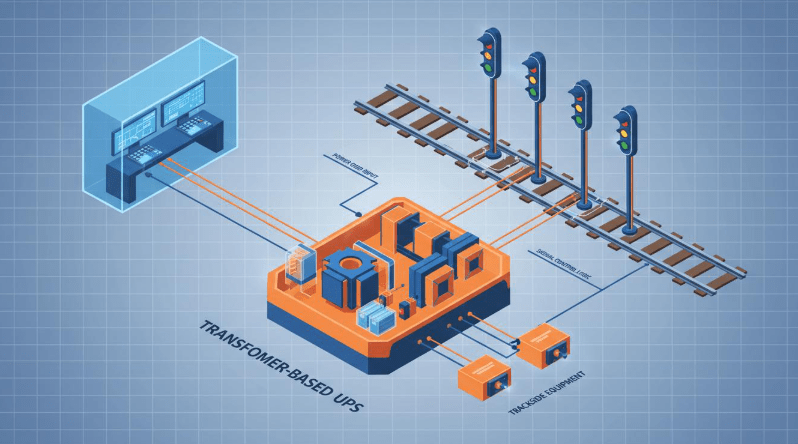
Figure 1: Railway Signaling System Architecture with Transformer-Based UPS
II. Technical Advantages of Transformer-Based UPS
1. What Is Transformer-Based UPS
Transformer-based UPS uses line-frequency transformers as core isolation and voltage conversion components. These systems differ fundamentally from high-frequency UPS designs.
Core components include:
- Line-Frequency Transformador de isolamento: Provides electrical isolation and voltage transformation
- Retificador: Converts AC power to DC power
- Inversor: Converts DC power back to AC power
- Banco de baterias: Stores energy for energia de reserva during outages
2. Core Advantages for Railway Applications
Transformer-based UPS offers distinct advantages in rail environments:
(1) Superior Electrical Isolation
Line-frequency transformers provide complete galvanic isolation. They effectively block surges, spikes, and noise from the utility grid. This protection is essential for sensitive signaling equipment.
(2) Exceptional Overload Capacity
Transformer-based UPS can withstand over 300% short-term overloads. This capability handles inrush currents from signaling equipment startup.
(3) Outstanding Surge Withstand Capability
Iron-core transformer structures naturally resist current surges. This suits railway environments with frequent load fluctuations.
(4) Higher Reliability
Simpler construction means fewer failure points. Mean time between failures (MTBF) exceeds 200,000 hours.
(5) Better Environmental Adaptability
Transformer-based UPS shows lower sensitivity to temperature, humidity, and altitude. This suits outdoor and harsh environment applications.
3. Transformer-Based UPS vs. High-Frequency UPS
| Comparison Factor | UPS baseada em transformador | UPS de alta frequência |
|---|---|---|
| Isolamento elétrico | Complete | Partial |
| Capacidade de sobrecarga | 300%+ | 150%-200% |
| Resistência a picos de tensão | Excelente | Moderado |
| Adaptabilidade ambiental | Excelente | Bom |
| Eficiência | 92%-95% | 95%-98% |
| Tamanho e peso | Larger | Compacto |
| Custo | Mais alto | Inferior |
| Maintenance Convenience | Excelente | Bom |
Table 1: Technical Comparison of Transformer-Based and High-Frequency UPS
The comparison shows transformer-based UPS trails slightly in efficiency and size. However, it leads decisively in electrical isolation, overload capacity, and environmental adaptability. These advantages make it the preferred choice for railway signaling systems.
III. Railway Standards and Compliance Requirements
1. EN 50121 Electromagnetic Compatibility Standards
Railway environments present complex electromagnetic conditions. Traction power systems, train operations, and communication equipment generate strong interference. The EN 50121 standard series addresses these challenges.
EN 50121 series includes:
- EN 50121-1: General requirements
- EN 50121-2: Emission of the whole railway system
- EN 50121-3-1: Rolling stock – Train and complete vehicle
- EN 50121-3-2: Rolling stock – Apparatus
- EN 50121-4: Signaling and telecommunications apparatus
- EN 50121-5: Fixed power supply installations and apparatus
Railway signaling UPS must comply with EN 50121-4 and EN 50121-5 requirements.
2. Key EN 50121 Test Requirements
EN 50121 mandates UPS passage of critical tests:
Emission Tests:
- Radiated Emission
- Conducted Emission
Immunity Tests:
- ESD: ±8kV contact discharge, ±15kV air discharge
- Radiated Immunity: 10V/m, 80MHz-6GHz
- EFT: ±2kV power ports, ±1kV signal ports
- Surge: ±4kV line-to-ground, ±2kV line-to-line
- Conducted Immunity: 10V, 150kHz-80MHz
- Voltage Dips and Short Interruptions
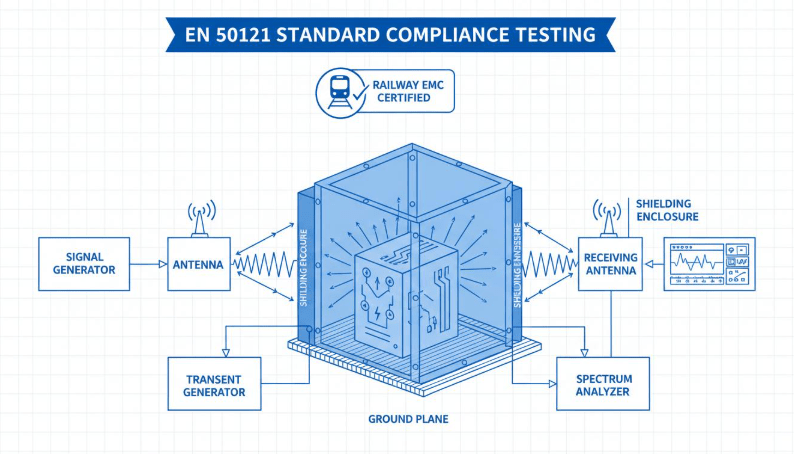
Figure 2: EN 50121 Electromagnetic Compatibility Testing Schematic
3. Additional Relevant Standards
Beyond EN 50121, railway UPS must meet:
- Série IEC 62040: UPS performance, safety, and EMC
- EN 50126/50128/50129: RAMS (Reliability, Availability, Maintainability, Safety)
- EN 50124-1: Insulation requirements
- NFPA 130: Life safety systems (minimum 2-hour support)
BKPOWER designs transformer-based UPS to strict adherence to these standards. Our products ensure compliance in railway projects worldwide.
IV. Wide Temperature Design for Harsh Environments
1. Temperature Challenges in Railway Environments
Railway signaling equipment often operates outdoors or in semi-outdoor conditions. These locations face severe temperature extremes:
- Cold Regions: Winter temperatures drop to -25°C or lower
- Hot Regions: Summer temperatures exceed +55°C
- Large Diurnal Variations: Some regions experience daily temperature swings over 30°C
- High Altitude: Plateau railways reach altitudes above 4,000 meters
Extreme temperatures affect UPS performance:
- Low temperatures reduce capacidade da bateria and can freeze electrolytes
- High temperatures accelerate component aging and reduce service life
- Rapid temperature changes cause condensation and insulation failures
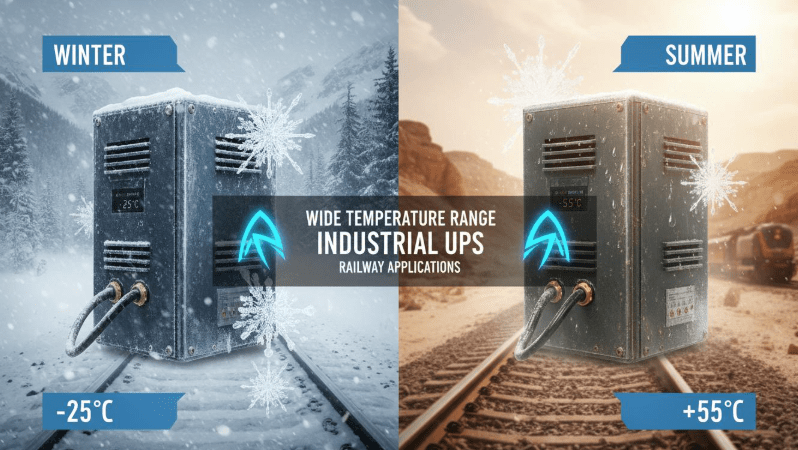
Figure 3: Wide Temperature Design UPS Operating in Extreme Conditions
2. BKPOWER Wide Temperature Solutions
BKPOWER develops wide-temperature transformer-based UPS for railway applications. Operating range spans -25°C to +55°C.
Key Wide-Temperature Technologies:
(1) Intelligent Temperature Control
- Multiple temperature sensors monitor critical components
- Smart fan speed control adjusts cooling based on temperature
- Automatic heating for low-temperature operation
(2) Wide-Temperature Battery Technology
- Special electrolyte formulation for low-temperature performance
- Independent battery compartment temperature control
- Support for VRLA, lithium, and nickel-cadmium batteries
(3) Component Selection
- Industrial-grade wide-temperature components (-40°C to +85°C)
- Solid-state or high-reliability electrolytic capacitors
- Power devices with ample temperature margins
(4) Structural Optimization
- Optimized airflow design for effective heat dissipation
- Dust and water protection (IP54 and above)
- Anti-condensation design prevents moisture issues
3. Real-World Application Cases
BKPOWER wide-temperature UPS succeeds in extreme railway environments:
Hungary-Serbia Railway:
- Serbian section winter minimum: -20°C
- BKPOWER UPS maintains stable operation
- Ensures reliable signaling power supply
China-Laos Railway:
- Laos section summer temperatures exceed +45°C
- UPS delivers excellent performance in high heat and humidity
Central Asia Railway Projects:
- High altitude (3,000+ meters) with large temperature variations
- UPS adapts to harsh conditions ensuring transport safety
V. Application Scenarios in Railway Signaling
1. Signaling Equipment Rooms
Signaling equipment rooms house critical nodes: interlocking systems, track circuits, and signals.
UPS functions in signaling rooms:
- Power interlocking computers without interruption
- Maintain track circuit operation
- Ensure correct signal displays
- Support switch machine power supply
Typical configuration: 10kVA-40kVA transformer-based UPS, 30 minutes to 2 hours tempo de backup.
2. Communication Centers
Railway communication systems carry dispatch, train control, and passenger information.
UPS functions in communication centers:
- Power transmission and switching equipment
- Support wireless communication base stations
- Ensure emergency communication availability
Typical configuration: 20kVA-100kVA transformer-based UPS, N+1 redundant configuration.
3. Dispatch Control Centers
Dispatch centers serve as the railway operations brain. They demand the highest power reliability.
UPS functions in dispatch centers:
- Power dispatch servers and workstations
- Maintain large-screen display systems
- Support network and storage equipment
Typical configuration: UPS modular, 100kVA-500kVA capacity, 2N redundant architecture.
4. Traction Substations
Traction substations provide train power. Their control systems also need UPS protection.
UPS functions in traction substations:
- Power SCADA systems
- Maintain protection equipment operation
- Support switchgear control power
Typical configuration: 5kVA-20kVA industrial UPS with strong anti-interference capability.
VI. BKPOWER Railway UPS Solutions
1. Company Profile
BKPOWER specializes in industrial power solutions as a high-tech enterprise. Our R&D team includes dozens of top professionals across structural, electrical, software, and industrial design disciplines.
BKPOWER products serve customers in 100+ countries and regions. We accumulate rich experience in railway, energy, medical, and industrial production sectors.
2. Railway-Specific UPS Product Lines
BKPOWER develops dedicated UPS products for railway applications:
BK-L33 Series (10kVA-40kVA):
- Three-phase high-frequency UPS em linha
- For signaling equipment rooms and communication centers
- EN 50121-4/5 compliant
- Wide temperature design (-25°C to +55°C)
BK-T33 Series (20kVA-120kVA):
- Transformer-based industrial UPS
- For large signaling buildings and dispatch centers
- Complete electrical isolation with strong anti-interference
- N+1 parallel redundancy support
BK-Rail Series (Custom):
- Custom development for specific project requirements
- Support for special voltage and frequency needs
- Meet specific standards and certification requirements
3. Success Stories
Hungary-Serbia Railway: BKPOWER provided complete UPS power solutions for the Serbian section. The project included 40+ transformer-based UPS units covering沿线 signal sites. Products have operated stably since commissioning. Customers highly praise our performance.
China-Laos Railway: The China-Laos Railway is a Belt and Road landmark project. BKPOWER supplied high-reliability UPS systems. Our products adapt to Laos’ high-temperature, high-humidity climate. We ensure safe railway operations.
Domestic High-Speed Rail Projects: BKPOWER products widely serve domestic high-speed rail lines. These include Beijing-Shanghai, Beijing-Guangzhou, and Shanghai-Kunming high-speed railways. We accumulate extensive railway application experience.
VII. Conclusion and Future Outlook
1. Key Takeaways
Transformer-based UPS represents the ideal power solution for railway signaling systems. Core advantages include:
- Superior Electrical Isolation: Effectively blocks grid interference protecting sensitive equipment
- Strong Overload and Surge Capacity: Adapts to signaling equipment’s special load characteristics
- Excellent Environmental Adaptability: Wide temperature design ensures stable operation in harsh conditions
- Compliance with Railway Standards: Meets strict EN 50121 EMC and safety requirements
- High Reliability and Long Life: Simple structure, easy maintenance, lower lifecycle costs
2. Industry Development Trends
Railway UPS technology evolves toward:
(1) Intelligence
- Monitorização remota and diagnostics
- Predictive maintenance
- Digital twin technology
(2) Green Technology
- Higher efficiency (>96%)
- Lithium batteries replacing lead-acid
- Energy regeneration technology
(3) Modularity
- Hot-swappable module design
- Flexible capacity expansion
- Rapid maintenance
(4) Integration
- UPS integrated with power distribution
- Coordination with energy management systems
- Smart microgrid applications
3. BKPOWER Commitment
BKPOWER continues deepening expertise in railway power solutions. We provide global railway customers with:
- High-Quality Products: Strict quality control ensures product reliability
- Soluções personalizadas: Optimal solutions tailored to project requirements
- Rapid Response: 2-hour pre-sales inquiry response, 8-hour technical proposal delivery
- Professional Service: Expert engineering team provides lifecycle technical support
Choose BKPOWER transformer-based UPS. Choose safety and reliability for railway signaling systems.
Referências
- Comissão Eletrotécnica Internacional (CEI)Sítio Web oficial: www.iec.ch
- Underwriters Laboratories (UL)Sítio Web oficial: www.ul.com
- Comité Europeu de Normalização (CEN)Sítio Web oficial: www.cen.eu
- Administração da Normalização da China (SAC)Sítio Web oficial: www.sac.gov.cn
- Aliança Tecnológica da Indústria de Armazenamento de Energia de Zhongguancun (CNESA)Sítio Web oficial: www.cnESA.org
- Organização Internacional de Normalização (ISO)Sítio Web oficial: www.iso.org