Welcome to BKPOWER!












What is Three Phase Electricity?
In the realm of electrical power, understanding the differences between three – phase and single – phase electricity is crucial, especially when it comes to choosing the right Uninterruptible Power Supply (UPS) for your needs. Three – phase electricity, a cornerstone of modern industrial and commercial power systems, offers distinct advantages over its single – phase counterpart. In this comprehensive article, we’ll delve deep into what three – phase electricity is, how it works, its key differences from single – phase electricity, and how BKPOWER’s innovative UPS products are tailored to meet the power requirements of both systems.
Defining Three – Phase Electricity
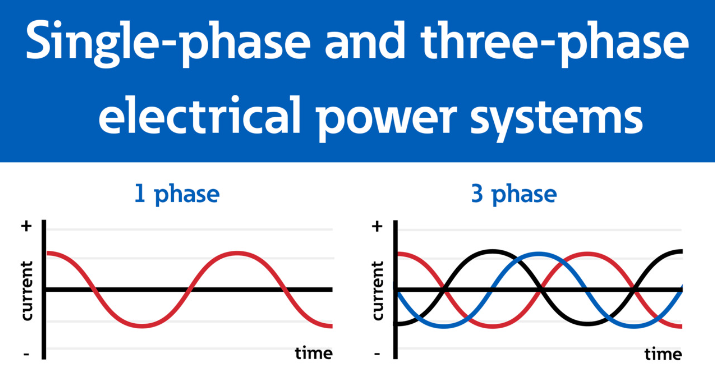
Three – phase electricity is a polyphase system of alternating current (AC) power transmission. It consists of three separate alternating currents, or phases, that are offset from each other by 120 degrees. These phases are typically labeled as A, B, and C. The voltage and current in each phase vary sinusoidally, and the combination of these three phases allows for a more efficient and balanced distribution of electrical power.
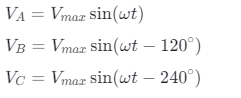
Mathematically, the voltage in a three – phase system can be represented as:
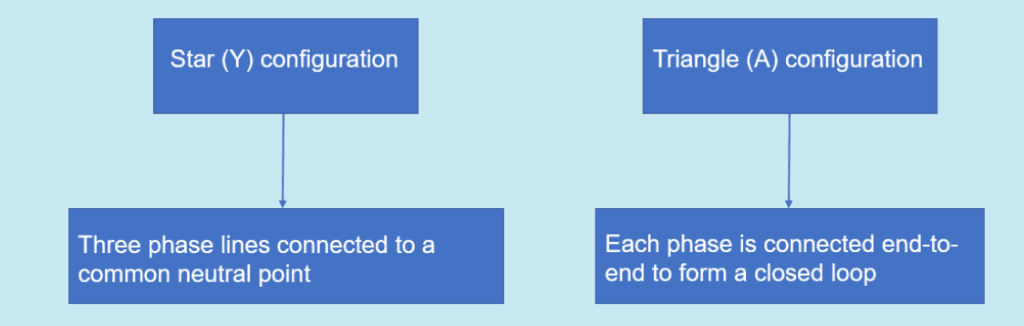
In a three – phase system, there are two common configurations: wye (Y) and delta (Δ). In a wye – connected system, the three phase conductors are connected to a common neutral point, while in a delta – connected system, the phases are connected end – to – end in a closed loop.
How Three – Phase Electricity Works
The generation of three – phase electricity typically starts at a power plant. Inside the generator, three sets of coils are arranged 120 degrees apart. As the generator’s rotor spins, it creates a magnetic field that induces an alternating current in each of these coils. Since the coils are offset, the currents generated in each coil have a 120 – degree phase difference.
These three – phase currents are then transmitted over high – voltage power lines to substations. At the substations, the voltage is stepped down to a more suitable level for distribution to end – users. In industrial and commercial settings, three – phase electricity is often used directly to power large – scale equipment such as motors, pumps, and air conditioners. In residential areas, three – phase power may be split into single – phase power for individual homes.
Key Differences Between Three – Phase and Single – Phase Electricity
1. Power Capacity
One of the most significant differences between three – phase and single – phase electricity is their power – delivering capacity. Single – phase electricity consists of a single alternating current and is primarily used for low – power applications such as household appliances, lighting, and small electronics. It typically provides a voltage of 110 – 120 volts in the United States or 220 – 240 volts in many other countries.
Three – phase electricity, on the other hand, can deliver much higher power levels. It can supply three times the power of a single – phase system of the same wire size and voltage. This makes it ideal for large – scale industrial operations, commercial buildings with heavy electrical loads, and applications that require high – power motors, like manufacturing plants and data centers.
2. Efficiency
Three – phase systems are generally more efficient than single – phase systems. In a single – phase system, the current flows in only one direction at a time, resulting in fluctuations in the power supply. This can lead to inefficiencies, especially when powering inductive loads such as motors.
In a three – phase system, the three phases work together to provide a more balanced and continuous flow of power. The constant total power output reduces the peak current requirements, minimizing power losses in the transmission lines and improving overall efficiency. This efficiency advantage translates into lower energy costs and reduced heat generation in electrical equipment.
3. Cost
The cost of implementing and maintaining three – phase and single – phase electrical systems can vary. Single – phase systems are generally less expensive to install, as they require fewer wires and simpler equipment. They are a cost – effective choice for residential and small – scale commercial applications.
Three – phase systems, due to their higher power – delivering capacity and more complex infrastructure, tend to be more expensive to install. However, for large – scale industrial and commercial operations, the long – term benefits in terms of higher power capacity, efficiency, and reliability often outweigh the initial investment costs.
UPS Considerations for Three – Phase and Single – Phase Systems
When it comes to selecting a UPS, understanding the differences between three – phase and single – phase electricity is essential. Different types of loads and applications will require either a single – phase or three – phase UPS.
Single – phase UPS systems are designed to handle the relatively low – power requirements of residential and small – office environments. They are suitable for protecting computers, printers, routers, and other small – scale electronic devices. These UPS units are typically more compact, easier to install, and more affordable.
Three – phase UPS systems, on the other hand, are built to handle the high – power demands of industrial and large – scale commercial settings. They can support heavy – duty equipment such as servers in data centers, large – capacity air – conditioning systems, and manufacturing machinery. Three – phase UPS systems are often more robust, with higher capacity batteries and more advanced power management features.
BKPOWER’s UPS Solutions for Three – Phase and Single – Phase Electricity
BKPOWER is a leading provider of UPS power supplies, offering a comprehensive range of products designed to meet the diverse needs of both three – phase and single – phase electrical systems.
Single – Phase UPS Products
Our single – phase UPS systems are engineered to provide reliable backup power for residential and small – business applications. With capacities ranging from 500VA to 10kVA, these units are suitable for protecting everything from a single computer to a small network of devices. They feature high – quality batteries that offer extended backup times, ensuring that your essential equipment remains operational during power outages.
Our single – phase UPS products also come with advanced features such as automatic voltage regulation (AVR), which stabilizes the incoming voltage to protect connected devices from voltage fluctuations. Additionally, they are equipped with intelligent battery management systems that optimize battery performance, extend battery lifespan, and reduce maintenance requirements.
Three – Phase UPS Products
For industrial and large – scale commercial applications, BKPOWER offers a wide range of three – phase UPS systems. Our three – phase UPS units have capacities ranging from 10kVA to several hundred kVA, making them suitable for powering data centers, manufacturing plants, hospitals, and other critical infrastructure.
These three – phase UPS systems are built with cutting – edge technology. They incorporate high – efficiency inverters that ensure reliable power conversion and minimize power losses. Our three – phase UPS products also feature advanced parallel – redundant technology, allowing multiple UPS units to work together seamlessly. This provides enhanced system reliability, as if one unit fails, the others can continue to support the load without interruption.
In addition, BKPOWER’s three – phase UPS systems are designed with user – friendly interfaces that make monitoring and controlling the UPS easy. They also offer remote management capabilities, enabling users to monitor the UPS status, perform diagnostics, and receive alerts from anywhere, at any time.
Conclusion
Three – phase electricity is a powerful and efficient form of electrical power that plays a vital role in modern industrial and commercial applications. Understanding its principles, differences from single – phase electricity, and the appropriate UPS considerations is crucial for ensuring reliable power supply.
BKPOWER’s diverse range of UPS products provides tailored solutions for both three – phase and single – phase electrical systems. Whether you need to protect a small home office or a large industrial facility, our UPS power supplies offer the reliability, performance, and advanced features you need. With BKPOWER, you can rest assured that your critical equipment will be safeguarded during power outages and electrical disturbances. Contact us today to explore our UPS product range and find the perfect solution for your power protection needs.
References
- International Electrotechnical Commission (IEC)Official website: www.iec.ch
- Underwriters Laboratories (UL)Official website: www.ul.com
- European Committee for Standardization (CEN)Official website: www.cen.eu
- Standardization Administration of China (SAC)Official website: www.sac.gov.cn
- Zhongguancun Energy Storage Industry Technology Alliance (CNESA)Official website: www.cnESA.org
- International Organization for Standardization (ISO)Official website: www.iso.org