Chào mừng đến với BKPOWER!












UPS Power Supply: Components and Working Principle Guide
TIPS:Understanding Bộ nguồn UPS components is essential for facility managers and engineers. This guide explains the core Bộ nguồn UPS elements including rectifiers, inverters, batteries, and static bypass switches. We explore how these UPS power supply components work together in double-conversion topology. You will learn the working principle of each module. We cover power flow paths. We detail protection mechanisms. Modern UPS nguồn điện systems achieve up to 99% efficiency through advanced IGBT technology and intelligent battery management. Whether you maintain existing systems or design new installations, this comprehensive breakdown of Bộ nguồn UPS components provides practical knowledge for optimizing reliability and performance in critical power applications.
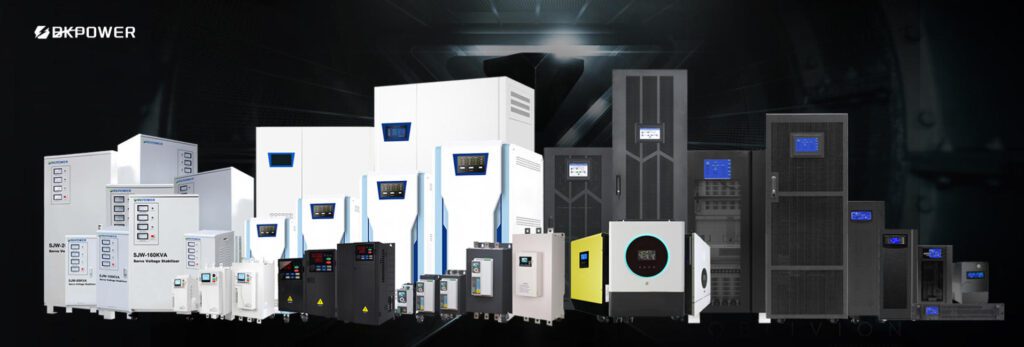
Ⅰ. Introduction to UPS Power Supply Systems
Power quality issues plague modern electrical networks. Voltage sags occur frequently. Harmonic distortion increases. Momentary interruptions damage sensitive equipment. Bộ nguồn UPS systems solve these problems. They provide conditioned power continuously. They offer backup during outages.
The global UPS market expands rapidly. It reached USD 13.34 billion in 2024. Growth continues at 7.7% CAGR through 2033. This expansion reflects digitalization trends. Data centers multiply. Manufacturing automates. Healthcare digitizes. All require reliable nguồn điện liên tục infrastructure.
This article examines four critical UPS power supply components. We explain the rectifier. We detail the inverter. We analyze battery systems. We discuss static bypass switches. Understanding these elements helps you select appropriate systems. It aids maintenance planning. It ensures optimal performance.
Ⅱ. The Rectifier: AC to DC Conversion
1. Function and Importance
The rectifier serves as the first processing stage. It converts incoming AC power to DC voltage. This conversion serves dual purposes. It charges the battery bank. It feeds the inverter section. Modern rectifiers use IGBT technology. They achieve high efficiency. They minimize harmonic distortion.

Figure 2: Standard online double-conversion UPS block diagram showing the rectifier-inverter power path with automatic static bypass and manual maintenance bypass switches.
2. Technical Specifications
Input voltage ranges vary widely. Industrial units accept 380-480V three-phase. Commercial models handle 208-240V single-phase. Hệ số công suất correction (PFC) circuits feature prominently. They maintain input PF above 0.99. This reduces utility loading. It minimizes infrastructure costs.
THD (Total Harmonic Distortion) remains critical. Modern rectifiers achieve THDi below 3%. This protects upstream transformers. It prevents neutral conductor overheating. Soft-start capabilities reduce inrush currents. This extends component lifespan.
3. Control Systems
Microprocessor control dominates modern designs. DSP chips regulate voltage precisely. They monitor temperature continuously. They communicate status to system controllers. Advanced units feature adaptive control. They adjust switching patterns based on load conditions. This optimizes efficiency across operating ranges.
Ⅲ. The DC Bus and Battery System
1. DC Bus Architecture
The DC bus connects multiple subsystems. It links the rectifier output to the inverter input. Standard voltages include 384V, 480V, or 720V DC. Capacitor banks stabilize voltage. They absorb ripple currents. They provide ride-through during switching transients.
Bus voltage directly affects battery configuration. Lower voltages use fewer cells. Higher voltages reduce copper losses. System designers balance these factors. They optimize for specific applications.
2. Battery Technologies
Lead-acid batteries remain common. They offer proven reliability. They cost less initially. However, they require maintenance. They occupy significant space. They have shorter lifespans.

Figure 3: Ắc quy UPS backup cabinet showing battery modules, protection circuits, and monitoring systems for critical power applications.
Lithium-ion solutions gain popularity. They last 8-15 years. They need no maintenance. They tolerate deep discharges. They operate across wider temperature ranges. Initial costs run higher. Total ownership costs often favor lithium for long-term deployments.
Battery management systems (BMS) prove essential. They monitor cell voltages. They balance charge levels. They predict remaining life. They prevent thermal runaway. Intelligent BMS maximizes battery performance.
3. Backup Time Calculations
Autonomy depends on load and capacity. Formula: Backup Time = Dung lượng pin × Voltage × Efficiency / Load Power. Typical configurations provide 10-15 minutes at full load. Extended backup requires external battery cabinets. Some applications need hours of protection. Generators complement short-duration UPS systems.
Ⅳ. The Inverter: DC to AC Conversion
1. Operating Principle
The inverter transforms DC bus voltage back to AC. It creates clean sinusoidal output. It regulates voltage precisely. It maintains frequency stability. Pulse-width modulation (PWM) techniques enable this conversion. High-frequency switching allows precise control.

Figure 4: High-power IGBT (Insulated Gate Bipolar Transistor) module used in modern UPS inverters for efficient DC to AC power conversion.
2. Output Quality
Online double-conversion topology isolates loads completely. Input disturbances never reach outputs. Voltage regulation stays within ±1%. Frequency variation remains below ±0.1%. THD typically measures under 3% at linear loads. These specifications exceed utility power quality.
Three-phase inverters handle industrial loads. They support motors and pumps. They maintain phase balance. Single-phase units serve commercial applications. They power IT equipment. They protect office electronics.
3. Efficiency Improvements
Traditional online UPS achieved 90-93% efficiency. New designs reach 96-99%. Eco-mode operation improves efficiency. The load connects directly to utility power. The inverter stands ready. Transfers occur within 2-4 milliseconds. This protects against outages. It maintains high efficiency during normal operation.
Transformerless designs reduce losses. They eliminate magnetic core heating. They decrease physical size. They lower weight. Modern IGBT modules switch faster. They reduce switching losses. They improve thermal management.
Ⅴ. Static Bypass Switch
1. Purpose and Function
The static bypass provides alternative power paths. It uses thyristors or IGBTs. These semiconductor switches operate rapidly. They transfer loads within milliseconds. Two types exist: automatic and manual.
Automatic bypass activates during UPS faults. It handles overload conditions. It manages excessive temperatures. It responds to internal failures. Loads continue receiving power. Maintenance becomes possible without interruption.

Figure 5: Static bypass switch configuration showing UPS output supply path, maintenance bypass path, and critical load protection scheme.
2. Maintenance Bypass
Manual bypass switches serve service needs. Technicians isolate the UPS completely. They work on units safely. Loads receive utility power directly. Maintenance bypasses require careful operation. Sequence matters. Safety interlocks prevent errors.
External maintenance bypass cabinets offer convenience. They mount separately. They connect via cables. They enable hot-swappable maintenance. Critical facilities require these features. Downtime costs exceed equipment costs.
3. Transfer Mechanisms
Make-before-break sequences ensure continuity. The new path closes before the old opens. Overlapping conduction lasts microseconds. No interruption occurs. Control circuits monitor synchronization. They match voltage amplitudes. They align phase angles. They ensure frequency compatibility.
Ⅵ. Control and Monitoring Systems
1. Microprocessor Control
Modern UPS units feature sophisticated controllers. 32-bit processors handle management tasks. They execute control algorithms. They process sensor data. They communicate with external systems. Real-time operating systems ensure deterministic responses. Events trigger immediate actions.
2. Human-Machine Interface
LCD displays present operating status. They show load levels. They indicate battery condition. They report input/output parameters. Touchscreens simplify interaction. Giám sát từ xa extends visibility. Network cards enable SNMP integration. Modbus protocols connect to building management systems.

Figure 6: UPS circuit board components showing sophisticated control electronics, gate drivers, and power management circuits that enable intelligent system operation.
3. Predictive Capabilities
AI algorithms analyze trends. They predict battery failures. They anticipate capacitor degradation. They schedule preventive maintenance. Cloud connectivity aggregates data. Machine learning improves predictions. System availability increases. Operational costs decrease.
Ⅶ. System Configurations and Applications
1. Single Module Systems
Standalone units suit small applications. They protect single racks. They support office equipment. Capacities range from 1-20 kVA. They install easily. They require minimal maintenance. Scalability remains limited.
2. Parallel Configurations
Multiple UPS modules share loads. They provide redundancy. They enable capacity expansion. N+1 configurations tolerate one failure. Distributed systems improve availability. They support large data centers. They protect critical manufacturing. Capacity reaches megawatts.
3. Transformer-Based vs. Transformerless
Traditional UPS includes isolation transformers. They provide galvanic isolation. They withstand harsh environments. They handle industrial loads. Transformerless designs suit clean environments. They offer higher efficiency. They reduce weight. They save space.

Figure 7: UPS Biến áp cách ly showing electrical circuit isolation principle and physical unit design for voltage transformation and galvanic isolation.
Conclusion: Optimizing UPS System Design
Understanding UPS power supply components enables informed decisions. Rectifier selection affects input quality. Battery choices determine backup duration. Inverter design influences output precision. Bypass switches ensure availability. Control systems provide visibility.
BKPOWER engineers apply these principles. We design systems for harsh industrial environments. We optimize for efficiency. We ensure reliability. Our nguồn điện liên tục solutions protect critical operations worldwide. Contact us for application-specific recommendations.
RTham chiếu
- Ủy ban Kỹ thuật Điện Quốc tế (IEC)Trang web chính thức: www.iec.ch
- Underwriters Laboratories (UL)Trang web chính thức: www.ul.com
- Ủy ban Tiêu chuẩn hóa Châu Âu (CEN)Trang web chính thức: www.cen.eu
- Cục Quản lý Tiêu chuẩn hóa Trung Quốc (SAC)Trang web chính thức: www.sac.gov.cn
- Liên minh Công nghệ Công nghiệp Lưu trữ Năng lượng Zhongguancun (CNESA)Trang web chính thức: www.cnESA.org
- Tổ chức Tiêu chuẩn hóa Quốc tế (ISO)Trang web chính thức: www.iso.org