مرحباً بك في BKPOWER!












Steel Mill UPS: Surviving High EMI and Voltage Sags
TIPS:In modern steel manufacturing environments, نظام يو بي إس للخدمة الشاقة units serve not merely as backup power for voltage sags, but as critical defense barriers against intense electromagnetic interference (EMI) from electric arc furnaces. EAFs generate harmonic distortions up to 20% and severe voltage fluctuations during melting operations. These power quality issues propagate through the grid and threaten automation control systems and precision sensors. This article explores how configuring أعلى for steel plant emi protection with industrial-frequency transformer shielding technology effectively isolates high-frequency EMI generated by arc furnaces. It ensures continuous stable operation of critical loads under extreme electrical conditions. Selecting professional نظام يو بي إس للخدمة الشاقة units proves decisive for protecting steel mill DCS systems and PLC controllers from ups for steel plant emi threats.
Ⅰ. The Brutal Electrical Environment of Modern Steel Mills
Steel manufacturing represents one of the most electrically hostile industrial environments on earth. The combination of massive الأحمال الحثية, extreme thermal conditions, and aggressive electromagnetic pollution creates challenges that standard power protection equipment simply cannot survive.
Electric Arc Furnaces (EAFs) draw currents exceeding 100,000 amperes during melting cycles. These furnaces create arc temperatures reaching 3,500°C. The resulting electromagnetic fields induce noise in nearby conductors. Voltage fluctuations called “flicker” propagate through the entire facility. معامل القدرة drops as low as 0.5 during scrap melting phases.
Concurrently, voltage sags represent the most costly power quality issue for steel manufacturers. The coincidental starting of large motors causes dips. Utility grid faults create sags lasting 100 milliseconds or longer. A single voltage sag to 70% of nominal voltage can trip synchronous motors driving rolling mills. Recovery time extends to several hours. Production losses exceed €100,000 per hour.
تقليدي مزود الطاقة غير المنقطع systems designed for data centers fail within weeks in steel mill environments. They lack electromagnetic immunity. Their transformers saturate under harmonic loads. Only purpose-built نظام يو بي إس للخدمة الشاقة architectures with advanced shielding techniques survive these conditions.
Ⅱ. Electric Arc Furnaces: The EMI Generation Challenge
Arc furnaces operate as non-linear, time-varying loads. They generate unique power quality disturbances that differ fundamentally from standard industrial equipment.
1. Harmonic Generation Mechanisms
The electric arc itself behaves as a non-linear resistance. Arc length varies continuously as scrap steel melts and collapses. This variation creates current الأشكال الموجية rich in harmonics. Research demonstrates that EAFs produce:
- 2nd harmonics up to 17% of fundamental
- 3rd harmonics reaching 29%
- 5th harmonics at 10%
- Interharmonics across the spectrum
These harmonics couple into control circuits. They induce errors in analog sensors. They corrupt digital communications. Without proper ups for steel plant emi protection, PLC systems misread process variables. Critical control decisions fail.
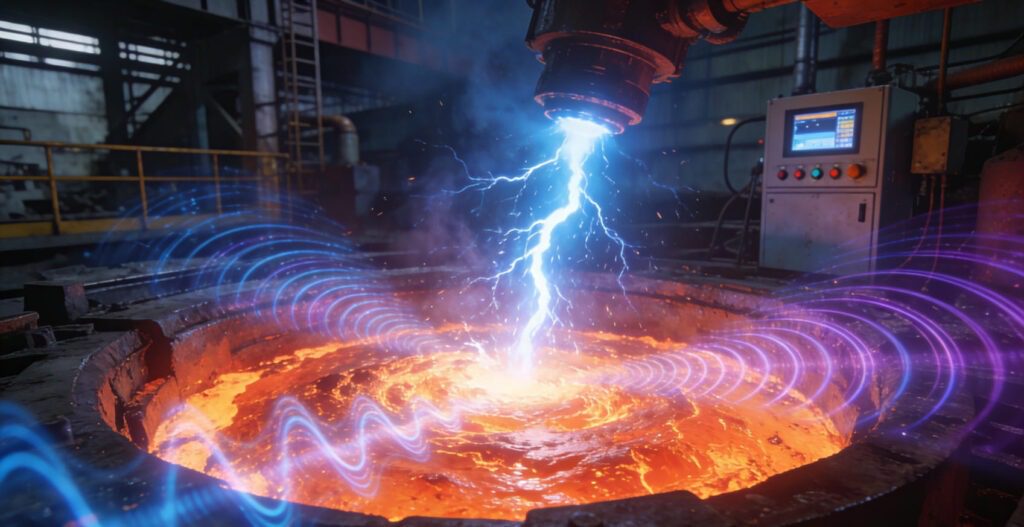
Figure 1: Electric Arc Furnaces generate extreme electromagnetic interference during steel melting operations
2. Rapid Voltage Fluctuations (Flicker)
EAF power consumption varies by 200% within seconds. This fluctuation creates voltage variations at the Point of Common Coupling (PCC). Flicker severity indices (Pst) often exceed 10.0. Safe limits remain below 1.0. These variations disrupt:
- Synchronous motor excitation systems
- Variable frequency drive operation
- Computer control systems
- Safety interlock circuits
البطارية الاحتياطية systems must respond within milliseconds to prevent control system crashes during these events.
3. Conducted and Radiated EMI
Arc furnaces emit electromagnetic interference across broad frequency ranges. Conducted EMI travels through power cables. Radiated EMI propagates through air. Both forms threaten sensitive electronics.
قياسي مزود طاقة UPS units lack adequate filtering. Their switching circuits compound the problem. Industrial-grade systems require comprehensive shielding strategies.
Ⅲ. Voltage Sags: The Silent Production Killer
Voltage sags cause more unplanned downtime in steel mills than actual power outages. Understanding their impact proves essential for designing effective protection.
1. Sag Characteristics and Sources
Voltage sags (or dips) represent reductions in RMS voltage between 10% and 90% of nominal. They persist from half a cycle to one minute. In steel mills, primary sources include:
- EAF electrode short-circuits to scrap metal
- Large motor starting inrush currents
- Utility grid faults cleared by protection relays
- تشغيل المحول
A voltage sag to 85% remaining voltage for 200 milliseconds typically trips standard industrial controls. Modern أنظمة UPS must maintain output within ±2% regardless of input variations.
2. Production Impact Analysis
Steel mill processes cannot tolerate interruption. Hot rolling mills operate continuously. Billets move through rollers at high temperatures. An unplanned stop leaves steel between rolls. Deformation results. The contact area cannot cool naturally. Equipment damage may total millions.
Similarly, blast furnace operations require continuous air injection. Synchronous blowers must maintain pressure. A voltage sag causing blower trip can solidify iron in draining holes. The furnace becomes unusable. Restart requires complete rebuild.
These consequences justify investment in premium نظام يو بي إس للخدمة الشاقة protection.
3. Financial Quantification
Studies indicate that steel industry voltage sag incidents cost:
- €100,000 per hour for hot rolling mill stoppages
- €50,000 per event for unplanned EAF shutdowns
- Additional costs for scrap materials, labor, and restart procedures
Protection systems paying for themselves after preventing a single incident.
Ⅳ. Industrial Frequency Transformer Shielding Technology
The transformer represents the most critical component for EMI isolation in لوازم التوصيل designed for steel mills. Standard transformers fail to provide adequate protection. Specialized shielding techniques prove essential.
1. The Physics of EMI Coupling
Transformers couple energy magnetically between windings. However, inter-winding capacitance creates direct electrical coupling paths. High-frequency EMI travels through these capacitances. It bypasses magnetic isolation. Standard transformers exhibit inter-winding capacitance of 100-1000 pF. This proves sufficient to transmit destructive noise.
2. Faraday Shield Implementation
ساري المفعول إمدادات الطاقة غير المنقطعة الصناعية transformers incorporate Faraday shields (electrostatic shields). These consist of conductive copper foils inserted between primary and secondary windings.
The shield connects to ground. It intercepts common-mode noise currents. These currents flow to ground rather than coupling to the secondary. Shielding effectiveness reaches 40-60 dB reduction in EMI transmission.
Key implementation details include:
- Single-layer shields for basic protection
- Double-shield configurations for critical applications
- Proper grounding to primary side reference
- Minimized impedance connections
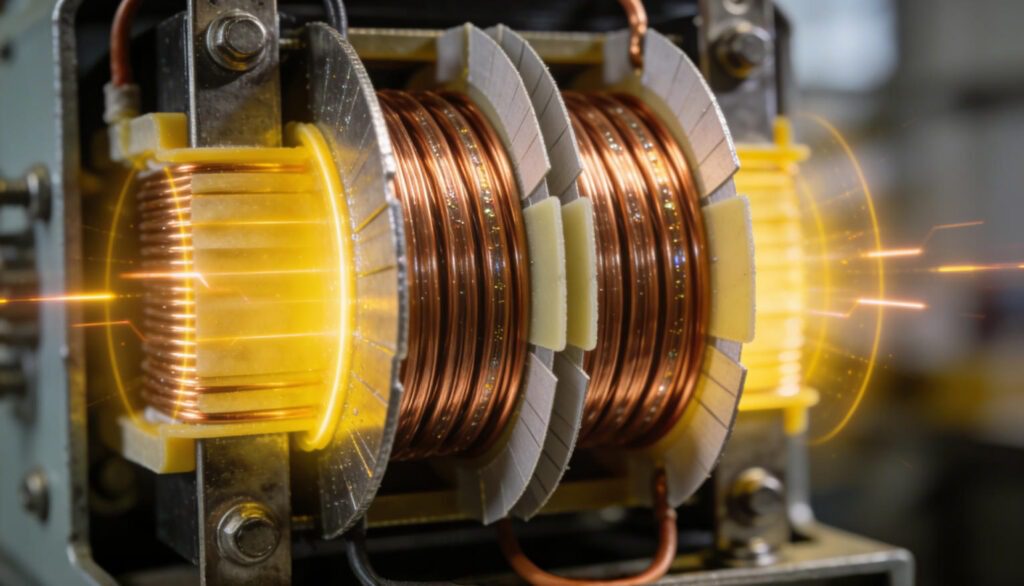
Figure 2: Faraday shielding in industrial transformers blocks EMI coupling between windings
3. Magnetic Shielding Enclosures
Extreme environments require additional protection. Mu-metal or silicon steel enclosures surround the transformer core. These capture stray magnetic flux. They prevent external fields from saturating the core.
Steel mill applications particularly benefit from this technology. Arc furnace magnetic fields can induce 10-20 volts in unshielded conductors. Proper magnetic shielding reduces this to millivolt levels.
4. Split Bobbin Construction
Low-power control transformers often utilize split bobbin designs. Primary and secondary windings occupy separate physical chambers. The increased separation reduces inter-winding capacitance to less than 50 pF.
This construction eliminates the need for additional shields in some applications. It provides inherent isolation suitable for sensor power supplies and control circuits.
Ⅴ. Heavy Duty UPS System Architecture for Steel Mills
ساري المفعول ups for steel plant emi protection requires purpose-built system architectures. Consumer-grade or commercial-grade equipment lacks necessary ruggedization.
1. Double-Conversion Online Topology
Online UPS configurations provide complete electrical isolation. The rectifier converts AC to DC. An inverter generates fresh AC output. This architecture blocks all incoming disturbances.
Double-conversion systems maintain zero transfer time. They provide clean power regardless of input quality. For steel mills, this proves essential. Voltage sags and EMI never reach protected loads.
Key specifications for نظام يو بي إس للخدمة الشاقة units include:
- Input voltage tolerance: ±25% or wider
- Input frequency tolerance: ±5 Hz
- Output voltage regulation: ±1%
- THD: <3% even with nonlinear loads
2. Industrial-Grade Components
Steel mill UPS systems require enhanced component specifications:
- Conformal coated circuit boards resist corrosive atmospheres
- IP54 or higher enclosures exclude conductive dust
- Sealed cooling systems prevent contamination
- Heavy-duty fans operate at 60°C ambient temperatures
- Reinforced busbars withstand vibration and thermal cycling
Uninterruptable power supply units must survive electrical, thermal, and mechanical stresses simultaneously.
3. Battery System Hardening
Batteries provide runtime during outages. However, they require protection in harsh environments.
- Temperature-controlled battery compartments
- Vibration isolation mounting
- Hydrogen detection and ventilation systems
- Sealed AGM or gel cells prevent acid exposure
Proper maintenance access allows testing and replacement without system shutdown. Modular battery configurations enable hot-swapping.
Ⅵ. Integration Strategies and Implementation
النشر مزود طاقة UPS systems in steel mills requires careful planning.
1. Zone Protection Philosophy
Rather than protecting the entire facility, engineers identify critical zones:
- DCS control rooms
- PLC I/O cabinets
- أنظمة السلامة الآلية
- Critical process sensors
- Emergency lubrication pumps
Distributed protection proves more cost-effective than centralized systems. It limits failure domains. It reduces cable lengths between UPS and loads.
2. EMI Filter Coordination
UPS installations coordinate with facility EMI filters. Active harmonic filters reduce distortion at the source. Passive filters block high-frequency noise. UPS transformers provide final isolation.
This layered approach ensures comprehensive protection. No single component bears the entire burden.
3. Grounding System Integrity
Effective shielding requires proper grounding. Steel mills employ extensive grounding grids. UPS installations must:
- Connect to dedicated ground busbars
- Avoid ground loops through single-point connections
- Utilize separate grounds for shields and safety
- Maintain low-impedance paths to earth
Improper grounding negates shielding effectiveness. It creates safety hazards.
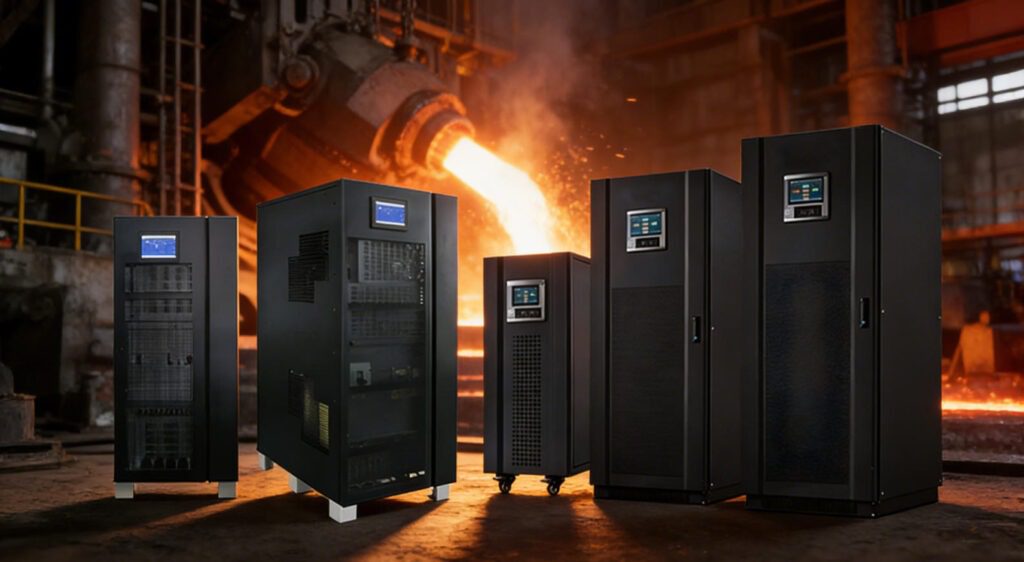
Figure 3: Heavy duty industrial UPS installations protect critical control systems in steel manufacturing environments
Ⅶ. Economic Justification and ROI
الاستثمار في الأقساط بطارية احتياطية protection requires business justification.
1. Prevented Loss Calculation
A single prevented voltage sag incident saves:
- Direct production losses: €50,000-€100,000
- Equipment damage costs: €20,000-€500,000
- Restart and cleanup labor: €10,000-€30,000
- Intangible reputation and contract penalties
نظام UPS عالي التحمل investments typically range €50,000-€200,000 per critical zone. Payback periods often measure in months rather than years.
2. Insurance and Compliance Benefits
Insurance underwriters recognize power protection investments. Premium reductions often result. Regulatory compliance improves. Safety system availability increases.
3. Competitive Advantage
Reliable power quality enables just-in-time manufacturing. It supports lean inventory practices. Steel mills with robust protection win contracts requiring delivery guarantees.
الخاتمة
Steel mills present the ultimate test for industrial power protection. Electric arc furnaces generate extreme EMI and voltage disturbances. Standard أنظمة UPS fail under these conditions. Only specialized نظام يو بي إس للخدمة الشاقة architectures with advanced transformer shielding survive.
ساري المفعول ups for steel plant emi protection requires understanding arc furnace physics. It demands proper shielding implementation. It necessitates ruggedized component selection.
The investment proves essential. A single prevented incident provides full return on investment. Continuous protection ensures production continuity. It safeguards equipment worth millions. It maintains competitive position in demanding markets.
For steel manufacturers, robust UPS protection represents not expense, but insurance against catastrophic loss. Implement comprehensive مزود الطاقة غير المنقطع solutions engineered for electromagnetic warfare. Your production lines will thank you.
المراجع
- اللجنة الكهروتقنية الدولية (IEC)الموقع الرسمي: www.iec.ch
- مختبرات أندررايترز (UL)الموقع الرسمي: www.ul.com
- اللجنة الأوروبية للتوحيد القياسي (CEN)الموقع الرسمي: www.cen.eu
- إدارة التوحيد القياسي في الصين (SAC)الموقع الرسمي: www.sac.gov.cn
- تحالف تشونغقوانكون لتكنولوجيا صناعة تخزين الطاقة (CNESA)الموقع الرسمي: www.cnESA.org
- الموقع الرسمي للمنظمة الدولية للتوحيد القياسي (ISO): www.iso.org