Willkommen bei BKPOWER!











Environmental Compliance Guide for Industrial UPS
TIPS:Global market entry requires stringent adherence to environmental and safety standards. Transformatorbasierte USV Systeme und CE certified industrial UPS products must navigate complex regulatory landscapes to access European markets. This comprehensive guide examines how CE certified industrial UPS manufacturers achieve compliance through RoHS directives and USV auf Trafobasis design adaptations. We analyze technical requirements, certification processes, and BKPOWER’s export compliance capabilities. The guide covers restriction of hazardous substances, electromagnetic compatibility, and low voltage directive compliance essential for international trade.
Ⅰ. Introduction to Environmental Compliance in UPS Manufacturing
International trade barriers extend beyond tariffs and logistics. Technical regulations govern product safety and environmental impact. UPS manufacturers targeting European markets must understand compliance frameworks. RoHS and CE marking represent two pillars of market access.
RoHS restricts hazardous substances in electrical equipment. CE marking demonstrates conformity with health, safety, and environmental protection standards. Together, they form the foundation of responsible manufacturing.
Transformatorbasierte USV systems face unique compliance challenges. Their isolation transformers contain significant amounts of copper and insulating materials. These components must meet stringent material restrictions. Design choices impact certification complexity.
BKPOWER recognizes compliance as competitive advantage. Certified products open doors to premium markets. They demonstrate commitment to quality and environmental responsibility. This guide explores the technical pathway to compliance.
Ⅱ. RoHS Directive: Hazardous Substance Restrictions
1. Regulatory Framework Overview The Restriction of Hazardous Substances (RoHS) Directive 2011/65/EU limits ten specific substances in electrical equipment. Amendment 2015/863 (RoHS 3) added four phthalates to the original six substances.
Restricted substances include:
| Substance | Limit | Common Application in UPS |
|---|---|---|
| Lead (Pb) | 0.1% | Soldering, battery terminals |
| Mercury (Hg) | 0.1% | Switches, sensors |
| Cadmium (Cd) | 0.01% | Contacts, plating |
| Hexavalent Chromium | 0.1% | Metal finishes |
| PBB/PBDE | 0.1% | Flame retardants |
| DEHP/BBP/DBP/DIBP | 0.1% | Plasticizers, cables |
2. Material Substitution Strategies UPS manufacturers must reformulate products. Lead-free soldering is now standard practice. Tin-silver-copper (SAC) alloys replace traditional tin-lead solder. These require higher processing temperatures. Equipment upgrades support reliable lead-free assembly.
Transformer manufacturing demands particular attention. Insulating varnish systems must eliminate restricted substances. Copper windings use lead-free coatings. Laminated steel cores require chromium-free passivation treatments.
Battery systems present ongoing challenges. Lead-acid batteries contain exempted lead for electrochemical purposes. However, plastic housings, terminals, and connectors must comply. Lithium-ion alternatives offer simpler compliance paths.
3. Supply Chain Verification Compliance extends through the supply chain. Component suppliers must provide material declarations. X-ray fluorescence (XRF) screening verifies homogeneous material composition. Laboratory testing confirms compliance at the finished product level.
Technical documentation includes:
- Bill of materials with substance declarations
- Supplier certificates of conformity
- Test reports from accredited laboratories
- Compliance risk assessments
Ⅲ. CE Marking Framework for Industrial UPS
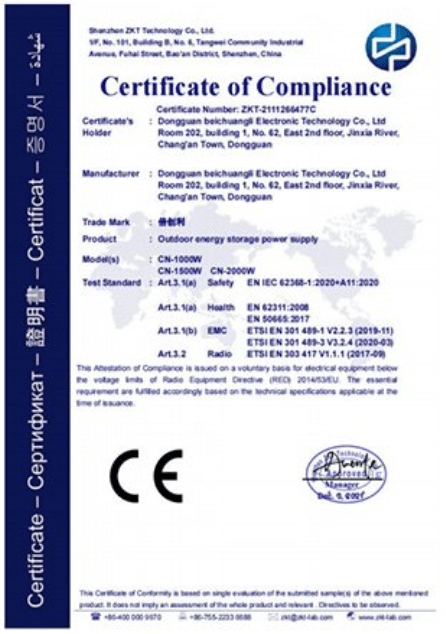
1. Applicable Directives and Standards CE marking requires compliance with multiple EU directives. For UPS systems, three directives apply:
Low Voltage Directive (2014/35/EU): Covers electrical equipment rated 50-1000V AC or 75-1500V DC. Safety requirements focus on protection against electric shock, mechanical risks, fire hazards, and excessive temperatures.
Electromagnetic Compatibility Directive (2014/30/EU): Ensures devices generate limited electromagnetic disturbance. Also ensures adequate immunity to expected interference.
RoHS Directive (2011/65/EU): Addresses hazardous substance restrictions as detailed previously.
2. Harmonized Standards Compliance Compliance presumption relies on harmonized standards. Key standards for UPS include:
EN IEC 62040-1: General and safety requirements for UPS used in operator access areas. This standard specifies:
- Protection against electric shock
- Energy hazards safeguards
- Fire resistance requirements
- Mechanical stability specifications
EN IEC 62040-2: EMC requirements for UPS. It categorizes UPS into:
- Category C1: Residential, commercial, and light industrial environments
- Category C2: Commercial and light industrial environments with restrictions
- Category C3: Industrial environments
EN IEC 62040-3: Performance requirements and test methods. It defines UPS topologies and efficiency benchmarks.
3. Conformity Assessment Procedures Manufacturers must follow structured assessment procedures:
Module A (Internal Production Control):
- Technical file compilation
- Internal testing to harmonized standards
- Declaration of Conformity (DoC) issuance
- CE marking application
Notified Body Intervention (if required): Some high-risk equipment requires third-party certification. Standard UPS typically falls under self-certification. However, specialized industrial applications may require notified body review.
Ⅳ. Technical Considerations for Transformer Based UPS
1. Trenntransformator Design ImplicationsTransformatorbasierte USV systems incorporate galvanic isolation. This design offers superior protection against common-mode noise. It also provides inherent surge protection. However, transformers add weight and material complexity.
CE certification for transformer UPS requires specific considerations:
Thermal management: Transformers generate heat. Enclosure design must prevent excessive surface temperatures. Fan cooling and thermal cutoffs protect against overheating.
Insulation systems: Transformers must withstand dielectric strength testing. Primary to secondary isolation barriers require reinforced insulation. Partial discharge testing verifies long-term reliability.
Magnetic field emissions: Transformers generate electromagnetic fields. Shielding measures may be necessary for sensitive environments. EMC testing verifies emissions remain within Category C2 or C3 limits.
2. Material Compliance Challenges Transformers contain substantial quantities of:
- Copper windings (often coated with enamel)
- Laminated steel cores
- Insulating paper and varnish
- Mounting hardware
Each material requires RoHS compliance verification. Traditional transformer varnish often contained restricted substances. Modern polyester or epoxy-based varnishes provide compliant alternatives.
3. Efficiency and Eco-Design CE marking increasingly incorporates eco-design requirements. Transformers impact UPS Effizienz. Core losses and copper losses must be minimized. High-efficiency transformer designs use:
- Amorphous metal cores
- Optimized winding configurations
- Low-loss magnetic materials
Efficiency testing under EN IEC 62040-3 considers transformer losses. Online double-conversion transformer UPS must achieve ≥95% efficiency at 50-100% load to meet premium efficiency classifications.
Ⅴ. Compliance Implementation and Documentation
1. Technical File Requirements Comprehensive technical documentation supports CE marking:
Technical description: Product specifications, block diagrams, and component lists. Photographs and exploded views illustrate construction.
Design calculations: Electrical safety distances, thermal calculations, and structural analysis. Risk assessments per EN ISO 12100 identify hazards and mitigation measures.
Test reports: EMC testing, safety testing, and environmental testing results. Reports must come from accredited testing laboratories (ISO 17025).
Quality system documentation: Manufacturing procedures, inspection protocols, and calibration records. ISO 9001 certification supports consistent production quality.
2. Declaration of Conformity (DoC) The DoC is a legal document. It declares product compliance with applicable directives. Essential elements include:
- Product identification (model numbers, serial ranges)
- Applicable directives and harmonized standards
- Manufacturer and authorized representative information
- Date and signature of responsible person
The DoC must remain available for market surveillance authorities. It accompanies the product through distribution channels. BKPOWER maintains current DoCs for all exported models.
3. Labeling and Traceability CE marking appears on the product itself. The mark must be:
- Visible, legible, and indelible
- Minimum height of 5mm
- Accompanied by notified body identification (if applicable)
Traceability labels include:
- Manufacturer name and address
- Model designation
- Serial number or batch code
- Rated electrical parameters
- Environmental operating conditions
Ⅵ. BKPOWER Export Compliance Capabilities
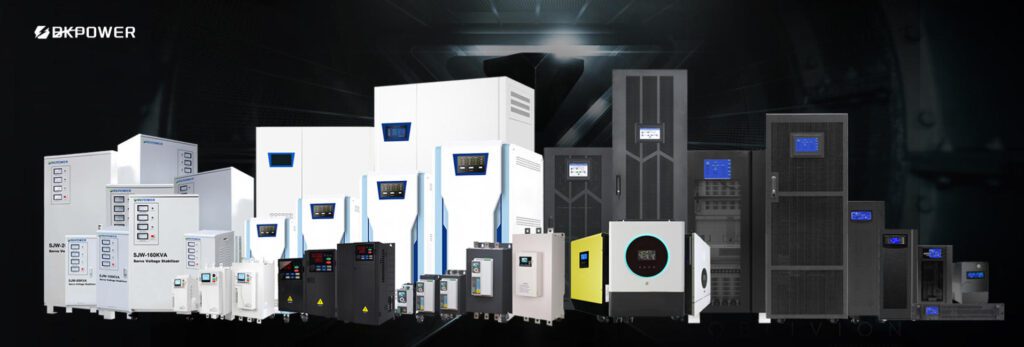
1. Certification Portfolio BKPOWER maintains comprehensive certification coverage. Our CE certified industrial UPS products comply with all applicable directives. Testing conducted by internationally accredited laboratories (SGS, TÜV, Intertek) provides market confidence.
Certification coverage includes:
- LVD compliance per EN IEC 62040-1
- EMC compliance per EN IEC 62040-2 (C2 and C3 categories)
- RoHS 3 compliance per 2011/65/EU
- Energy efficiency verification per EN IEC 62040-3
2. Quality Management Systems ISO 9001:2015 certification governs our manufacturing processes. Incoming inspection verifies component compliance. Production controls prevent cross-contamination with restricted substances. Final testing confirms safety and performance.
Our supply chain management ensures:
- Supplier qualification and audits
- Material declaration collection
- XRF screening of critical components
- Batch traceability from raw materials to finished goods
3. Market-Specific Adaptations Different markets require specific adaptations. While CE marking covers European Economic Area, other regions have distinct requirements:
North America: UL 1778 compliance for safety, FCC Part 15 for emissions Australia/New Zealand: AS 62040 series, RCM marking Middle East: SASO, IECEx for hazardous locations Russia/Eurasia: EAC certification (TR CU 004/2011)
BKPOWER guides customers through multi-market certification strategies. Common platform designs minimize redundant testing. Modular architecture allows regional configurations from standardized components.
4. Technical Support and Documentation Export customers receive complete documentation packages:
- Technical construction files (TCF) for customs clearance
- Test reports with accredited laboratory accreditation
- User manuals in local languages
- Installation and maintenance guides
- Spare parts lists and recommended stocking levels
Our engineering team assists with regulatory interpretation. We clarify technical requirements for specific applications. This support accelerates customer certification processes in destination countries.
Ⅶ. Market Trends and Future Compliance Evolution
1. Expanding RoHS Scope Future RoHS amendments may restrict additional substances. Candidate substances include:
- Perfluorinated compounds (PFAS)
- Additional flame retardants
- Microplastic additives
BKPOWER monitors regulatory developments through industry associations. Our design teams evaluate alternative materials proactively. This prevents costly redesigns when regulations change.
2. Circular Economy Requirements The EU Circular Economy Action Plan affects UPS design. Future requirements may mandate:
- Design for disassembly and recycling
- Recycled content minimums
- Repairability scoring
- Extended producer responsibility
Modulare USV designs support these trends. User-replaceable modules extend product lifecycles. Standardized components simplify remanufacturing.
3. Digital Product Passports Proposal for Digital Product Passports (DPP) would require comprehensive digital documentation. Each product would carry scannable data. This would provide:
- Complete material composition
- Carbon footprint data
- Recycling instructions
- Repair documentation
BKPOWER prepares IT systems to support these requirements. Blockchain-based traceability may become standard practice.
4. Cybersecurity Legislation The Cyber Resilience Act introduces security requirements for connected devices. Network-enabled UPS systems fall under this regulation. Requirements include:
- Secure boot and firmware signing
- Vulnerability management processes
- Security update provision for defined periods
- CE marking expansion to include cybersecurity
Our product development roadmaps incorporate these requirements. Network cards receive regular security updates. Secure supply chains prevent firmware tampering.
Schlussfolgerung Environmental compliance and safety certification form the gateway to global markets. Transformatorbasierte USV systems and industrial power protection equipment must meet stringent RoHS and CE requirements. These standards protect users and the environment. They also ensure product quality and reliability.
BKPOWER’s commitment to compliance extends beyond minimum requirements. Our quality systems ensure consistent production. Our technical documentation supports smooth customs clearance. Our forward-looking approach anticipates regulatory evolution.
Organizations procuring CE certified industrial UPS systems gain more than regulatory compliance. They acquire products designed for global deployment. They demonstrate supply chain due diligence. They position themselves as responsible corporate citizens.
As regulations evolve toward circular economy principles and digital accountability, BKPOWER continues adapting. We view compliance not as burden but as opportunity. Certified products access premium markets. They command customer trust. They build sustainable business relationships across international borders.
Referenzen
- Internationale Elektrotechnische Kommission (IEC)Offizielle Website: www.iec.ch
- Underwriters Laboratories (UL)Offizielle Website: www.ul.com
- Europäisches Komitee für Normung (CEN)Offizielle Website: www.cen.eu
- Standardization Administration of China (SAC)Offizielle Website: www.sac.gov.cn
- Zhongguancun Energy Storage Industry Technology Alliance (CNESA)Offizielle Website: www.cnESA.org
- Internationale Organisation für Normung (ISO)Offizielle Website: www.iso.org