Willkommen bei BKPOWER!












Top 10 Industries Relying on Industrial UPS Power Supply
TIPPS:Unterbrechungsfreie Stromversorgung für die Industrie systems serve as the backbone of modern critical infrastructure. This article explores what industries using industrial UPS depend on these systems for operational continuity. From data centers to oil rigs, unterbrechungsfreie Stromversorgung für die Industrie technology protects sensitive equipment worth billions. We examine ten sectors where industries using industrial UPS solutions cannot afford power interruptions. Market data shows the 10-100 kVA segment dominates with 50.3% market share, reflecting broad industrial adoption. Understanding these applications helps facility managers select appropriate power protection strategies for their specific operational environments.

Ⅰ. Introduction: The Critical Role of UPS Systems
Power disruptions cost global industries billions annually. Unterbrechungsfreie Stromversorgung für die Industrie systems prevent these losses. They provide seamless Reservestrom during outages. They also condition power during normal operations. This dual function makes them essential across multiple sectors.
The global UPS market reached USD 13.34 billion in 2024. It projects growth to USD 26.01 billion by 2033. This 7.7% CAGR reflects rising demand for power reliability. Digitalization drives this trend. Automation accelerates it. Regulatory requirements enforce it.
This article examines ten critical industries. Each depends on robust USV-Stromversorgung infrastructure. We explore specific use cases. We detail capacity requirements. We highlight unique environmental challenges.
Ⅱ. Data Centers and Telecommunications
1. The Digital Backbone
Data centers consume massive amounts of power. They cannot tolerate interruptions. Even milliseconds of downtime cause data corruption. Online USV-Anlagen provide zero-transfer-time protection. They continuously convert AC to DC and back to AC. This double-conversion topology isolates sensitive servers from grid disturbances.
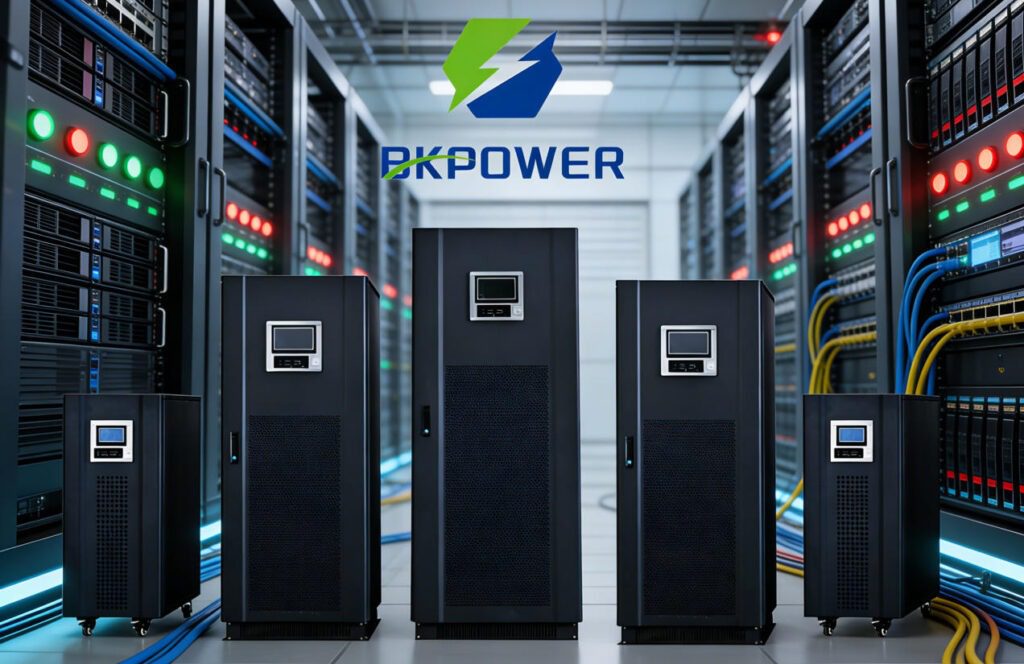
Figure 1: Modern Rechenzentrum UPS installation providing seamless power protection for critical server infrastructure.
2. Telecommunications Infrastructure
Cell towers need constant power. 5G networks increase this demand. Battery backup systems bridge gaps during outages. They maintain network connectivity. Fernüberwachung capabilities help. They alert technicians to issues before failures occur.
Market analysis shows this sector holds 38.2% of industrial UPS applications.
The shift to cloud computing drives growth. Edge computing expands requirements. Hyperscale facilities need megawatt-class protection.
Ⅲ. Oil and Gas Industry
1. Hazardous Environment Operations
Oil rigs operate in extreme conditions. They face temperature fluctuations. They encounter corrosive salt air. They sustain constant vibration. Unterbrechungsfreie Stromversorgung für die Industrie units for this sector need ruggedized enclosures. They require special certifications. They must operate safely in explosive atmospheres.

Figure 2: Industrial-grade UPS systems designed for harsh oil and gas environments, ensuring continuous operation of critical control systems.
2. Critical Process Protection
Drilling operations use UPS systems for blowout preventers. These safety devices stop uncontrolled well flows. They need instant power. Refineries protect process control systems. Distillation units require stability. Pipeline monitoring stations use UPS liefert for leak detection.
Applications span upstream, midstream, and downstream operations. SCADA systems monitor thousands of miles of pipelines. Valve actuators need reliable power. Emergency shutdown systems (ESD) depend on uninterruptable power supply units for immediate response.
Ⅳ. Healthcare and Medical Facilities
1. Life-Critical Applications
Hospitals cannot lose power. Operating rooms need absolute reliability. ICU equipment sustains patients. USV-Anlagen provide bridge power. Generators start within seconds. UPS fills this gap. It prevents device malfunction.

Figure 3: Medical-grade UPS systems with isolation transformers protecting sensitive healthcare equipment and patient data systems.
2. Diagnostic Imaging Protection
MRI machines cost millions. CT scanners require precise power. Voltage fluctuations damage components. Battery backup systems stabilize power. They protect imaging resolution. They prevent costly recalibrations.
Healthcare UPS market grows at 10.4% CAGR. Telemedicine expands requirements. Remote patient monitoring needs reliability. Electronic health records (EHR) systems demand uptime. Modern hospitals integrate centralized UPS architectures. They replace distributed units. This improves efficiency. It reduces maintenance complexity.
Ⅴ. Manufacturing and Industrial Automation
1. Smart Factory Requirements
Industry 4.0 transforms manufacturing. Robotics need clean power. PLCs control production lines. CNC machines perform precision work. Power quality affects product quality. Unterbrechungsfreie Stromversorgung für die Industrie systems prevent scrap. They reduce downtime.

Figure 4: UPS systems protecting automated manufacturing lines and robotic systems in modern smart factories.
2. Continuous Process Industries
Chemical plants run 24/7. Batch interruptions ruin products. They create safety hazards. Pharmaceutical manufacturing follows strict protocols. Power loss contaminates batches. Food processing requires consistency. USV-Stromversorgung ensures regulatory compliance.
The 10-100 kVA range dominates this sector. It powers mid-sized facilities. It supports automation cells. It protects quality control systems. Modulare USV designs enable scalability. Factories add capacity as they expand.
Ⅵ. Transportation and Infrastructure
1. Railway Signaling Systems
Railways ensure passenger safety. Signaling systems prevent collisions. Track circuits detect train positions. Switch controls route traffic. These systems need unterbrechungsfreie Spannungsversorgung protection. failures cause delays. They risk accidents.
2. Air Traffic Control
Airports manage thousands of flights. Radar systems track aircraft. Communication links coordinate movements. Navigation aids guide pilots. All require UPS protection. FAA regulations mandate backup power. Redundancy ensures zero failures.
3. Intelligent Transportation
Traffic signals use UPS. Smart tolling systems need uptime. Vehicle detection loops require power. USV-Anlagen support ITS infrastructure. They prevent traffic congestion. They maintain public safety during outages.
Ⅶ. Additional Critical Sectors
1. Financial Services
Banks process transactions continuously. Trading floors execute orders instantly. Data loss costs millions. Battery backup protects transaction records. ATMs need power integrity. Data centers support mobile banking.
2. Electric Power Utilities
Power plants control generation. Substations manage distribution. Grid operators monitor loads. SCADA systems require UPS protection. Nuclear facilities face strict regulations. They use multiple redundancy layers.
3. Chemical Processing
Petrochemical plants handle volatile materials. Process stability prevents accidents. Environmental controls protect workers. UPS liefert maintain ventilation. They preserve containment systems.
4. Water Treatment Facilities
Municipal plants provide drinking water. Wastewater facilities prevent pollution. Treatment processes need continuous power. Pumps require backup. Control systems monitor quality. UPS ensures public health protection.
5. Research and Development
Laboratories conduct sensitive experiments. Precision instruments detect tiny variations. Power fluctuations invalidate results. Clean rooms maintain environments. Unterbrechungsfreie Stromversorgung für die Industrie systems support innovation.
Ⅷ. Conclusion: Selecting the Right UPS Strategy
Understanding industry-specific requirements guides UPS-Auswahl. Data centers prioritize efficiency. Oil fields need ruggedization. Hospitals emphasize safety. Manufacturers focus on availability.
The 10-100 kVA capacity range serves most industrial applications. It offers optimal cost-effectiveness. It scales with growth needs. Online double-conversion topology provides best protection. It isolates loads from grid disturbances.
BKPOWER provides USV-Anlagen tailored to these demanding environments. Our solutions combine transformer technology with advanced power electronics. We support critical operations worldwide. Contact our team for application-specific recommendations.
Referenzquelle
| Referenz | URL |
|---|---|
| Market.us Industrial UPS Market Analysis | https://market.us/report/industrial-ups-market/ |
| Mordor Intelligence UPS Market Analysis | https://www.mordorintelligence.com/industry-reports/uninterruptible-power-supply-market |
| Straits Research Global UPS Market | https://straitsresearch.com/report/uninterruptible-power-supply-market |
| IEC 62040 UPS Standard | https://webstore.iec.ch/publication/66912 |
| BKPOWER Industrial UPS Products | https://bkpowers.com/products/ups-system/ifups/ |
| BKPOWER USV-Anlage Range | https://bkpowers.com/products/ups-system/ |
FAQ
1. Which industry uses the most industrial UPS power supply?
Data centers and telecommunications lead. They hold 38.2% of the market. Cloud computing drives this demand. 5G expansion accelerates it. Hyperscale facilities need megawatt-class protection.
2. What capacity range dominates industrial UPS applications?
The 10–100 kVA segment dominates. It holds 50.3% market share. This range serves mid-sized facilities. It supports automation cells. It protects quality control systems.
3. Why do oil and gas operations need special UPS systems?
Oil rigs face extreme conditions. They encounter corrosive salt air. They sustain constant vibration. Unterbrechungsfreie Stromversorgung für die Industrie units need ruggedized enclosures. They require explosion-proof certifications. They must operate safely in hazardous atmospheres.
4. How does UPS protect healthcare facilities?
Hospitals cannot lose power. Medical grade UPS provides bridge power. It fills the gap before generators start. It stabilizes voltage for MRI and CT scanners. It prevents costly recalibrations.
5. What topology is best for industrial applications?
Online-Doppelwandlung UPS provides the best protection. It isolates loads from grid disturbances. It conditions power continuously. For heavy industry, USV auf Trafobasis handles high inrush. It provides galvanic isolation.