Welcome to BKPOWER!












Data Centre World Frankfurt: UPS Power Trends 2026
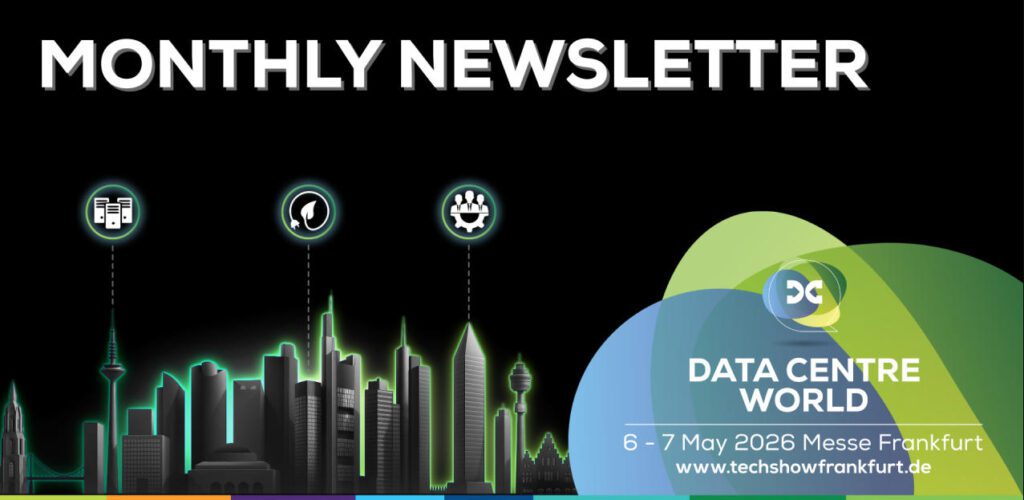
TIPS:Data Centre World Frankfurt 2026, taking place May 6-7 at Messe Frankfurt, brings together over 280 industry leaders to explore the latest advancements in UPS system and Voltage stabilizer technologies for modern data centers. As a professional power solutions provider, BKPOWER closely monitors the signals from this premier DACH region tech event—from modular UPS system architectures to intelligent Voltage stabilizer applications, data center power infrastructure is undergoing significant technological evolution. This article delves into the trends behind the exhibition, examining how uninterruptible power supply and voltage stabilizer solutions work together to ensure high availability and energy efficiency optimization in data center environments.

Ⅰ. Exhibition Background and Industry Focus
Data Centre World Frankfurt 2026 will take place on May 6-7, 2026, at Messe Frankfurt. As a key component of Tech Show Frankfurt, this exhibition has become the most influential data center industry event in the DACH region (Germany, Austria, Switzerland). The show will gather over 280 exhibitors, covering the entire industry chain from infrastructure to cloud services.
The exhibition focuses on core themes of efficient, resilient, and sustainable data center operations. For BKPOWER, the technical signals released at this industry event align closely with product development directions—particularly in UPS system, Voltage stabilizer, and data center power protection domains.
Ⅱ. Data Center UPS Power Supply Market Growth Trends
1. Market Size Continues Expanding
According to research from Fortune Business Insights, the global data center UPS market reached USD 6.12 billion in 2025. It is projected to grow to USD 6.58 billion in 2026 and reach USD 11.71 billion by 2034, with a compound annual growth rate (CAGR) of 7.50%. Key drivers include:
- Rapid adoption of cloud computing services
- Surging demand for high-density computing from AI workloads
- Widespread deployment of edge data centers
- Backup power needs due to grid instability
2. Regional Market Distribution
North America led the market with a 37.20% share in 2025. The European market stood at USD 1.58 billion in 2025, representing 25.70% of global demand, and is projected to grow to USD 1.69 billion in 2026. Germany, as Europe’s largest single market, is expected to reach USD 0.31 billion in 2026.
Asia Pacific shows the strongest growth momentum, with a market size of USD 1.43 billion in 2025, projected to reach USD 1.57 billion in 2026. China, Japan, and India are the primary growth engines, with China expected to reach USD 0.36 billion in 2026.
Ⅲ. UPS System Technology Evolution Trends
1. High Efficiency Becomes Core Metric
Modern data centers increasingly demand higher efficiency from UPS systems. Traditional double-conversion online UPS achieves 88-92% efficiency, while latest models using Silicon Carbide (SiC) technology reach 97% efficiency levels.
| UPS Topology | Efficiency Range | Application Scenario |
|---|---|---|
| Traditional double-conversion (pre-2020) | 88-92% | Legacy facilities |
| Modern double-conversion (SiC inverter) | 93-97% | New data centers |
| Modular UPS | 96% typical | Scalable deployments |
| HVDC | ~92% | AI hyperscale facilities |
For a 10MW IT load, using 96% efficiency UPS versus 88% efficiency saves approximately 940kW of power. At USD 0.10/kWh, this translates to annual electricity cost savings of approximately USD 830,000.
2. Modular Architecture Dominates Design Direction
Modular UPS systems are becoming the industry mainstream. This architecture supports “Pay-As-You-Grow” expansion models, enabling operators to add capacity gradually based on actual load growth, avoiding upfront over-investment.
Core advantages of modular design include:
- Support for N+X redundancy configuration, enhancing system availability
- Hot-swappable maintenance capability, reducing downtime risk
- Load matching optimization, maintaining high-efficiency operation
- Shortened deployment cycles, accelerating business go-live
3. Lithium Batteries Replace Traditional Lead-Acid
Lithium battery technology is rapidly gaining adoption in UPS applications. Compared to traditional VRLA lead-acid batteries, lithium batteries offer significant advantages:
- 3-5x higher energy density, saving data center space
- Extended cycle life of 10-15 years (versus 3-5 years for lead-acid)
- Support for higher rate charge/discharge, faster response
- No periodic replacement required, reducing O&M costs
Manufacturers like N1 Critical have introduced lithium UPS systems with 15-year design life and 10-year warranty.
Ⅳ. Voltage Stabilizer Synergy Value in Data Centers
1. Complementary Roles of Stabilizers and UPS
In data center power architecture, Voltage stabilizer and UPS system serve different but complementary functions:
- UPS system: Provides outage protection, ensuring critical loads continue operating during main power failures
- Voltage stabilizer: Regulates voltage fluctuations, ensuring equipment receives stable input despite grid voltage variations
For data centers equipped with online double-conversion UPS, the UPS itself provides voltage regulation. However,Pre-regulator still offer important value in these scenarios:
- Grid voltage fluctuations exceed ±10%
- Frequent voltage sags or surges occur
- Extending UPS battery life is desired (reducing frequent switching due to voltage fluctuations)
- Voltage coordination is needed in multi-source power environments
2. Technical Requirements for Data Center Stabilizers
Modern data centers impose higher requirements on Voltage stabilizer:
Precision Requirements: Core data center equipment demands voltage fluctuations ≤±1%. Traditional stabilizers with ±3-5% precision no longer meet these needs.
Response Speed: When rack power density exceeds 20kW, delayed response from traditional stabilizers may trigger cascading power outages. Contactless voltage stabilizers achieve millisecond-level response times, better suited for high-density scenarios.
Harmonic Management: Distributed power access in modular data centers often results in grid total harmonic distortion (THD) exceeding 8%. Stabilizers with harmonic filtering capabilities can effectively improve power quality.
Efficiency Standards: Under carbon neutrality goals, stabilizer efficiency must be ≥95% to optimize PUE values. BKPOWER’s SJW/SBW/ZBW/AVR series stabilizer products are designed for such requirements.
3. Hybrid Deployment Solutions
For high-risk operational environments (financial trading, medical imaging, industrial control), best practice adopts a “stabilizer + UPS” hybrid architecture:
- Stabilizer deployed upstream of UPS, filtering grid voltage fluctuations
- UPS focuses on outage protection and power conditioning
- Dual protection covers all scenarios from slow voltage drift to complete power loss
BKPOWER’s UPS dedicated bypass isolation voltage stabilizer cabinet is a targeted solution for such applications, featuring input isolation, automatic output voltage regulation, bypass maintenance, phase loss protection, overload protection, overvoltage protection, short circuit protection, and delayed output functions.
Ⅴ. Data Center Power Challenges in the AI Era
1. Rack Power Density Surge
AI workloads are reshaping data center power architecture. NVIDIA DGX H100 systems consume 10.2kW, while GB200 NVL72 systems can reach 120kW per rack. This power density presents new challenges for traditional UPS system and Voltage stabilizer:
- Significantly increased conductor cross-section requirements
- Exponentially rising cooling design complexity
- Higher short-term overload capacity demands
2. HVDC Architecture Emergence
For hyperscale AI facilities, High-Voltage Direct Current (HVDC) distribution architecture is displacing traditional AC systems. NVIDIA’s 800V DC initiative, supported by Eaton, Schneider Electric, and Vertiv, aims to provide efficient power distribution for racks above 200kW.
HVDC architecture advantages include:
- Reduced AC-DC conversion stages, overall efficiency improved to 92%
- Lower copper conductor usage, reduced line losses
- Support for higher power density deployment
3. Edge Data Center Special Requirements
Not all workloads belong in hyperscale data centers. In 2026, edge data centers are becoming ideal hosts for latency-sensitive AI inference and data-intensive applications.
Edge scenario requirements for UPS power supply and Voltage stabilizer:
- Compact size, adapting to limited data center space
- Wide voltage input range, coping with unstable grids in remote areas
- Intelligent monitoring, supporting remote operations
- High reliability, reducing on-site maintenance needs
Ⅵ. BKPOWER Product Portfolio and Technical Capabilities
1. UPS Product Lines
BKPOWER’s UPS products cover multiple series, meeting different scale data center requirements:
- G33/GH33/G31/G11 Series Tower UPS: Suitable for industrial applications, providing online double-conversion protection
- Modular UPS: Supports flexible expansion, adapting to business growth
- Industrial Frequency UPS: Designed for harsh environments in power, petrochemical, and industrial mining sectors
2. Voltage Stabilizer Product Lines
BKPOWER’s stabilizer products provide precise voltage protection for data centers:
- SJW/SBW/ZBW/AVR Series: Covering Contactless voltage stabilizer and Servo motor voltage stabilizer
- ZHB Series VFD Inverters: Achieving motor soft start and energy-saving operation
- ZHR Series Soft Starters: Reducing starting current impact
3. Solution Capabilities
BKPOWER has accumulated extensive experience in data center power:
- Products sold to over 100 countries and regions
- Participation in major Belt and Road projects such as Hungary-Serbia Railway and China-Laos Railway
- Partnerships with top industry partners in railway, energy, medical, and industrial production
Ⅶ. Industry Outlook and Recommendations
1. Technology Development Trends
Looking ahead, data center power infrastructure will exhibit these trends:
- Intelligent: AI-driven predictive maintenance will become standard, using machine learning algorithms to predict equipment failures and optimize maintenance schedules
- Green: Energy efficiency regulations are becoming stricter, driving adoption of high-efficiency UPS and stabilizers
- Modular: Scalable architecture becomes mainstream, supporting flexible deployment and incremental investment
- Integrated: UPS, stabilizer, and energy storage systems deeply integrate, forming unified energy management platforms
2. Procurement Recommendations
For operators planning to build or upgrade data center power infrastructure, consider these key points:
- Define availability tier: Determine N, N+1, or 2N architecture based on business requirements—this is the largest driver of cost variation
- Focus on real efficiency: New projects should adopt modern UPS with 96%+ efficiency; the legacy 88% baseline is outdated
- Consider total cost of ownership: Look beyond purchase price to calculate 10-15 year lifecycle energy and maintenance costs
- Verify power factor: Modern servers achieve 0.90-0.99 power factor; use accurate values in planning
- Reserve growth space: Add 20-30% capacity margin for future load growth
3. Conclusion
The technology trends revealed at Data Centre World Frankfurt 2026 clearly indicate that data center power infrastructure is undergoing profound transformation. From high-efficiency UPS system to intelligent Voltage stabilizer, from modular architecture to HVDC distribution, each innovation drives the industry toward greater efficiency, reliability, and sustainability.
As a professional power solutions provider, BKPOWER will continue monitoring industry developments, constantly optimizing product performance, and providing trustworthy UPS power supply and Voltage stabilizer products for global data center operators—supporting the robust development of the digital economy.