Bem-vindo à BKPOWER!












Como calcular watts: Um guia prático
DICAS: Domine o cálculo da potência para um dimensionamento preciso de UPS e estabilizadores. Aprenda as fórmulas de potência para adequar o equipamento industrial da BKPOWER e evitar riscos de sobrecarga.
Ⅰ. Por que razão o cálculo preciso da potência é importante em ambientes industriais
Nos sistemas de energia industriais, cálculos incorretos de potência podem conduzir a falhas catastróficas. Um UPS com potência insuficiente entra em colapso durante as flutuações da rede, enquanto uma tensão sobredimensionada estabilizador desperdiça capital. Os engenheiros da BKPOWER constataram que cerca de 67% das avarias em equipamentos elétricos resultam de erros na estimativa da potência durante o dimensionamento inicial.
Um cálculo preciso da potência em watts determina não só a capacidade operacional, mas também tem um impacto direto em:
- Fiabilidade do sistema: Evitar o desligamento do UPS ao passar para o modo de bateria em caso de sobrecarga
- Otimização energética: Garantir que os transformadores e estabilizadores funcionar nas zonas de eficiência máxima (normalmente entre 70% e 80% da capacidade nominal)
- Proteção de segurança: Evitar o sobreaquecimento dos cabos, disparos indesejados dos disjuntores e riscos de incêndio elétrico
- Controlo de custos: Reduzir investimentos desnecessários em equipamento e despesas com eletricidade
Ⅱ. Fórmulas e variações para o cálculo da potência do núcleo
1. Fórmula básica para circuitos de corrente contínua e de corrente alternada puramente resistivos
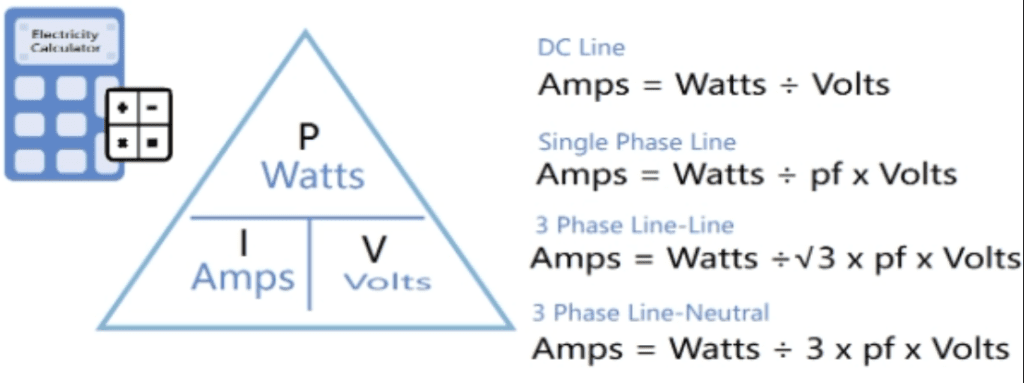
Para sistemas de corrente contínua ou puros cargas resistivas (por exemplo, aquecedores elétricos, lâmpadas incandescentes), o cálculo da potência segue a derivada fundamental da Lei de Ohm:
P(W) = V(V) × I(A)
Onde:
P = Potência ativa (unidade: Watts, W)
V = Tensão (unidade: volts, V)
I = Corrente (unidade: amperes, A)
Exemplo prático: Uma fábrica precisa de configurar um interruptor de proteção a montante de um BKPOWER Regulador de tensão trifásico sem contacto. A tensão nominal de entrada do aparelho é de 380 V, com uma corrente medida de 45 A. A potência é: 380 V × 45 A = 17 100 W (17,1 kW).
2. Fórmula corrigida para sistemas de corrente alternada monofásica
A maioria dos equipamentos industriais contém cargas indutivas, como motores e transformadores. O Fator de potência (PF) deve ser introduzido para correção:
P(W) = V(V) × I(A) × PF
O fator de potência representa a relação entre a potência real e a potência aparente. Os valores típicos incluem:
- Cargas puramente resistivas: FP = 1,0
- Motores de indução: PF = 0,7 – 0,85
- Fontes de alimentação para servidores: PF = 0,9 – 0,99
- BKPOWER UPS em linha: PF ≥ 0,9
3. Cálculos de nível industrial para sistemas de corrente alternada trifásica
As instalações industriais utilizam, de forma generalizada, energia trifásica. Os UPS e estabilizadores de alta potência da BKPOWER são concebidos para funcionamento trifásico. A fórmula incorpora o coeficiente √3 (aproximadamente 1,732):
P(W) = √3 × V(V) × I(A) × PF
Exemplo prático: Um centro de dados implementa um BKPOWER BK-G33 UPS industrial de 60 kVA à frequência da rede elétrica. A tensão de entrada na linha é de 380 V, a corrente em plena carga é de 91 A e o fator de potência é de 0,9. A potência ativa real é: 1,732 × 380 V × 91 A × 0,9 ≈ 54 000 W (54 kW).
Ⅲ. De watts para kVA: conversão da capacidade de UPS e estabilizadores
O equipamento de energia industrial é normalmente classificado em Potência aparente, medida em volt-amperes (VA) ou quilovolt-amperes (kVA). É fundamental compreender a diferença em relação à potência ativa (watts):
S(VA) = V(V) × I(A) (Monofásico)
S(VA) = √3 × V(V) × I(A) (Trifásico)
A relação entre a potência ativa e a potência aparente:
P(W) = S(VA) × PF
Legenda das tamanhos: A BKPOWER UPS BK-G33 de 100 kVA Com um fator de potência de 0,9, consegue, de facto, suportar uma carga de 90 kW. Ignorar o fator de potência e configurar para uma carga de 100 kW cria um défice de capacidade de 10%, com sérios riscos de sobrecarga.
Ⅳ. Cinco passos práticos para o cálculo da potência de carga industrial
Passo 1: Elaborar o inventário de equipamentos e o perfil de potência
Enumere todos os dispositivos a proteger, indicando os parâmetros indicados na placa de identificação. Distinga entre:
- Potência nominal: Potência de funcionamento contínuo do dispositivo
- Corrente de arranque: Potência de arranque de equipamentos com motor, atingindo 3 a 7 vezes o valor nominal
- Fator de potência: Obtidos a partir de placas de identificação ou manuais técnicos
Passo 2: Calcular a procura total de potência ativa
Utilize a fórmula P = √3 × V × I × PF para calcular a potência de cada dispositivo. Some os valores para obter a potência ativa total P_total.
Passo 3: Reservar margem de expansão e redundância
Os engenheiros da BKPOWER recomendam reservar Margem de capacidade 20%-30% para cenários industriais:
P_design = P_total × 1,25 (Norma Industrial)
P_design = P_total × 1,3 (Aplicações críticas: setor médico, centros de dados)
Passo 4: Converter para potência aparente e adequar o equipamento
Com base no fator de potência do equipamento em questão, calcule a capacidade em kVA necessária:
S_necessária = P_de projeto / PF_ups
Exemplo: Uma linha de produção tem uma potência ativa total de 80 kW. Utilizando um UPS da BKPOWER (PF = 0,9), o valor necessário é: 80 kW / 0,9 ≈ 88,9 kVA, arredondado para 100 kVA especificação.
Passo 5: Verificar a corrente de arranque e a resposta dinâmica
No caso de cargas de motores e compressores, verifique se a UPS ou o estabilizador capacidade de sobrecarga. O UPS industrial da BKPOWER suporta um funcionamento em sobrecarga 150% durante 60 segundos, garantindo um arranque suave do motor.
Ⅴ. Tabela de referência rápida para cargas industriais comuns
| Tipo de carga | Fator de potência típico | Fator Startup | Combinação recomendada pela BKPOWER |
|---|---|---|---|
| Servidores/Equipamento de TI | 0,9 – 0,99 | 1,0 – 1,2 | UPS online + estabilizador sem contacto |
| Motores de indução (<10 HP) | 0,75 – 0,85 | 3,0 – 5,0 | UPS de frequência de rede + arrancador suave |
| Motores de indução (>10 HP) | 0,8 – 0,9 | 5,0 – 7,0 | UPS de alta potência + VFD |
| Sistemas de iluminação LED | 0,9 – 0,95 | 1.0 | Estabilizador ou UPS fora de rede |
| Equipamento médico (TC/RM) | 0,8 – 0,9 | 2,0 – 3,0 | UPS online + CVT |
| Soldadura/Corte por plasma | 0,6 – 0,7 | 2,0 – 4,0 | Estabilizador industrial + filtro |
Ⅵ. Ferramentas de cálculo de potência e apoio técnico da BKPOWER
Para facilitar a seleção por parte dos utilizadores industriais, a BKPOWER disponibiliza:
- Calculadora de potência online: Tensão, corrente e fator de potência de entrada para a saída automática em kW/kVA
- Serviço de Avaliação de Cargas: Realização de levantamentos no local com soluções de energia personalizadas
- Correspondência completa do portfólio de produtos: De Sistemas UPS, Estabilizadores de tensão para Transformadores de tipo seco, soluções completas de proteção de energia
Quer se trate de conceber um sistema completo de distribuição de energia para novas instalações ou de modernizar energia de reserva No caso de equipamentos críticos, o cálculo preciso da potência é o primeiro passo. Contacte as equipas técnicas da BKPOWER para obter aconselhamento profissional soluções de qualidade de energia.
Fontes de referência
| Organização de origem | Tipo de recurso | URL |
|---|---|---|
| Comissão Eletrotécnica Internacional (IEC) | Normas internacionais relativas a UPS e estabilizadores | https://www.iec.ch |
| Underwriters Laboratories (UL) | Normas de certificação de segurança para equipamentos motorizados | https://www.ul.com |
| Administração de Normalização da China (SAC) | Norma Nacional GB/T 7260 para UPS | https://www.sac.gov.cn |
| Centro de Produtos da BKPOWER | Parâmetros técnicos de UPS e estabilizadores industriais | https://bkpowers.com/products/ups-system/ |
| Blog Técnico da BKPOWER | Análise das diferenças entre o UPS e o Stabilizer Core | https://bkpower.cn/service/comparison-of-line-interactive-online-offline-ups/ |
FAQ
1. Como posso calcular rapidamente os requisitos de potência de um motor trifásico?
Utilize a fórmula P = √3 × V × I × PF. Por exemplo, um motor de 380 V com corrente nominal de 15 A e fator de potência de 0,85: P = 1,732 × 380 × 15 × 0,85 ≈ 8,4 kW. Ao dimensionar UPS ou estabilizadores, tenha também em conta 3 a 5 vezes a corrente de arranque.
2. De que forma o fator de potência afeta o dimensionamento do UPS?
O fator de potência determina diretamente a capacidade real de carga do UPS. Um UPS de 100 kVA com FP = 0,9 fornece 90 kW. Se o FP da carga for de apenas 0,7, a capacidade real desce para 70 kW. O UPS online da BKPOWER utiliza a tecnologia de correção do fator de potência (PFC) para garantir um funcionamento com um FP elevado.
3. Os estabilizadores de tensão requerem cálculos de potência?
Sem dúvida. A capacidade do estabilizador é expressa em kVA e deve ser calculada a partir da potência total da carga e do fator de potência. O BKPOWER Estabilizador trifásico sem contacto A série abrange 10-150 kVA com uma ampla gama de tensão de entrada (±20%). Assegure que a capacidade do estabilizador seja ≥ potência aparente da carga × fator de segurança de 1,2.
4. Como se calcula o tempo de autonomia da bateria do UPS?
Tempo de autonomia (horas) = Energia total do banco de baterias (Wh) × Eficiência do inversor / Potência da carga (W). Exemplo: banco de baterias de 192 Vcc, capacidade de 100 Ah, energia total de 19 200 Wh, suportando uma carga de 8 kW com uma eficiência de 0,92: Tempo de autonomia = 19 200 × 0,92 / 8 000 ≈ 2,2 horas.
5. Qual é a relação entre a capacidade do transformador e a potência de carga?
A capacidade do transformador (kVA) deve ser superior à potência aparente da carga. Os transformadores de tipo seco da BKPOWER devem funcionar abaixo da capacidade nominal 80%, de modo a prolongar a vida útil do isolamento e a fazer face a picos de carga. Exemplo: Uma instalação com uma potência aparente total de 200 kVA deve optar por um transformador de 250 kVA.