Chào mừng đến với BKPOWER!












Oil & Gas Platform UPS: Safety-Critical Power Protection
MỘT SỐ LƯU Ý:Heavy duty UPS system solutions provide essential protection for offshore oil and gas platforms. These Hệ thống UPS công suất lớn units withstand extreme salt spray, explosive atmospheres, and severe temperature fluctuations. Standard UPS equipment fails rapidly in marine environments. Corrosion destroys electronics within months. Safety-critical systems lose power protection when it matters most. Heavy duty Hệ thống UPS designs incorporate ATEX certification and marine-grade coatings. BKPOWER IP21/IP31 enclosures ensure reliable operation through decades of harsh offshore service. This article explores how specialized UPS technology safeguards life and production in the world’s most demanding energy environments.
Ⅰ. Introduction: The Unforgiving Offshore Environment
Offshore oil and gas platforms operate in Earth’s most hostile industrial environments. Salt-laden air corrodes unprotected metal within weeks. Explosive gas mixtures create constant ignition risks. Temperature swings from tropical heat to Arctic cold stress every component. Humidity reaches 95% with condensing conditions. These factors destroy conventional electrical equipment rapidly.
Safety regulations demand continuous power for critical systems. Emergency shutdown systems (ESD) must activate instantly during well control emergencies. Fire and gas detection networks alert crews to invisible hazards. Navigation equipment prevents collisions with supply vessels. Process control systems maintain stable production flows. Any power interruption risks catastrophic accidents, environmental disasters, and loss of life.
Standard UPS systems designed for office environments fail catastrophically offshore. Their IP20 enclosures admit corrosive salt spray. Printed circuit boards erode within months. Power modules overheat in tropical sun. Battery cells vent explosive gases in confined spaces. These failures create dangerous blind spots in platform safety systems.
BKPOWER Hệ thống UPS công suất lớn solutions address these challenges directly. Our designs incorporate decades of offshore engineering experience. ATEX certification ensures explosion protection. Marine-grade coatings resist salt corrosion. IP21/IP31 enclosures block water spray and dust ingress. UPS for oil and gas offshore installations achieve two-decade service life with minimal maintenance.
Ⅱ. Understanding Offshore Environmental Challenges
1.Salt Spray Corrosion Mechanisms
Seawater contains 3.5% dissolved salts, primarily sodium chloride. Airborne salt particles travel kilometers inland from coastlines. Offshore platforms sit directly in this corrosive atmosphere. Salt spray deposits on every exposed surface. Electronic components face accelerated electrochemical degradation.
Copper traces on circuit boards corrode rapidly. Galvanic reactions between dissimilar metals cause contact failures. Connector pins develop insulating oxide layers. Transformer windings suffer insulation breakdown. Standard UPS units show 20-30% annual failure rates in these conditions.
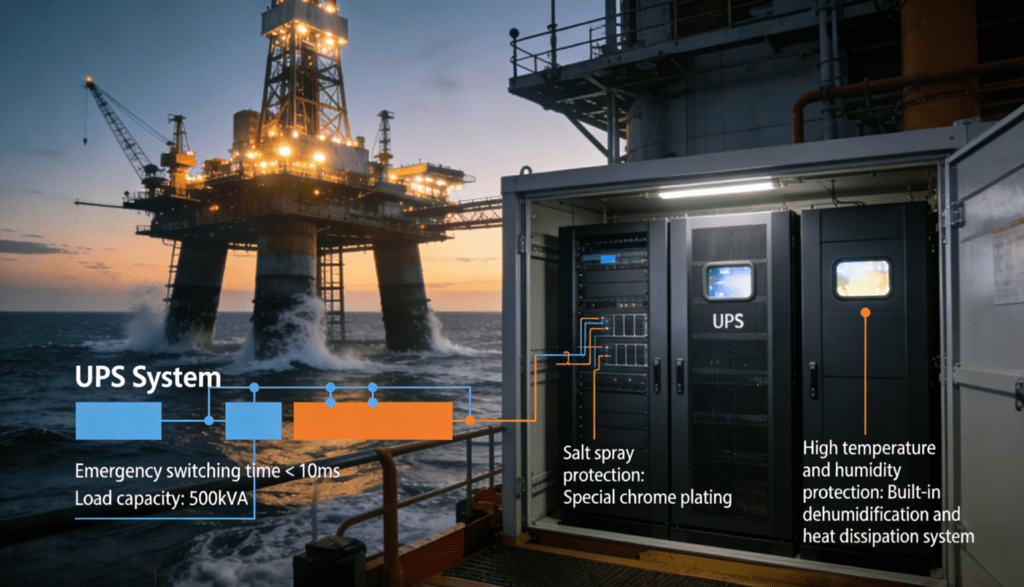
BKPOWER Hệ thống UPS công suất lớn designs combat corrosion through multiple strategies. External enclosures receive C4/C5 marine-grade powder coating. Internal components feature 100-micron conformal coating on all circuit boards. Stainless steel hardware resists rust formation. Isolation transformers use vacuum-impregnated windings. These measures extend equipment life to 15-20 years.
2.Explosive Atmosphere Requirements
Hydrocarbon processing releases flammable gases continuously. Methane, propane, and hydrogen sulfide accumulate in enclosed spaces. Electrical equipment must prevent ignition under all fault conditions. International regulations classify hazardous areas as Zone 0, Zone 1, and Zone 2.
Zone 1 classifications cover areas where explosive gas mixtures exist normally during operations. UPS installations in these areas require ATEX or IECEx certification. Equipment enclosures must contain internal explosions without transmitting flame to external atmospheres. Surface temperatures must remain below auto-ignition temperatures of present gases.
BKPOWER cung cấp ATEX UPS solutions rated for Zone 1 and Zone 2 installations. Our flameproof enclosures withstand 10-bar internal explosion pressure. Rotating spark gaps extinguish arcs safely. Thermal management systems monitor surface temperatures continuously. These systems maintain SIL (Safety Integrity Level) ratings required for emergency shutdown systems.
3.Temperature and Humidity Extremes
Equatorial platforms experience ambient temperatures exceeding 55°C. Steel decks reach 70°C under direct tropical sun. Electronic components derate significantly at these temperatures. Standard UPS systems trip thermal protection circuits repeatedly. Battery life degrades to 2-3 years in hot climates.
Arctic platforms face opposite challenges. Cold starts at -25°C stiffen lubricants. Dung lượng pin drops 50% in freezing conditions. Condensation forms when equipment cycles between cold exterior and heated interior spaces. Moisture ingress destroys unprotected electronics.
BKPOWER UPS for oil and gas offshore designs operate across -25°C to +55°C ranges. Tropicalized designs include heater elements for cold climate battery management. Dehumidification systems maintain internal humidity below 60% RH. Thermal derating curves ensure full capacity up to 40°C ambient. Conservative component ratings maintain reliability at temperature extremes.
Ⅲ. IP Rating and Enclosure Protection Standards
Ingress Protection (IP) codes define enclosure resistance to solid objects and liquids. Standard IT UPS systems carry IP20 ratings. These provide finger protection only. Fine dust enters freely. Water spray penetrates unprotected openings. IP20 equipment requires climate-controlled installation rooms.
Marine applications demand higher protection levels. IP21 ratings block objects larger than 12mm. Vertical dripping water cannot enter. IP31 provides equivalent dust protection plus water spray resistance. These ratings permit installation in machinery rooms without additional protection.
Machine rooms on offshore platforms present special challenges. HVAC systems fail periodically. Bilge pumps spray seawater during heavy weather. Cleaning crews pressure-wash deck areas. IP21/IP31 enclosures survive these conditions indefinitely.
BKPOWER standard enclosures meet IP21 specifications. Optional IP31 upgrades include enhanced sealing gaskets and stainless steel hardware. Both configurations pass salt spray testing per IEC 60068-2-11. C5-M corrosivity ratings ensure 20-year paint system life. These salt spray resistant UPS designs eliminate premature failure from environmental exposure.
Ⅳ. BKPOWER Heavy Duty Design Philosophy
1.Industrial Frequency Architecture
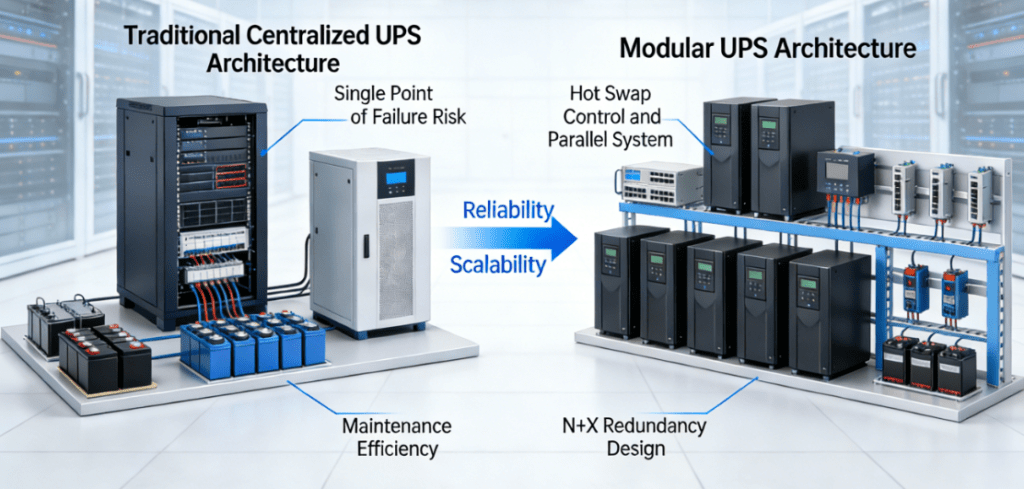
BKPOWER builds Hệ thống UPS công suất lớn platforms on industrial frequency topologies. These designs utilize iron-core isolation transformers at line frequency (50/60Hz). This approach offers distinct advantages over transformerless high-frequency designs.
First, isolation transformers provide galvanic separation between grid and load. Common-mode surges dissipate in transformer windings. Lightning-induced transients cannot reach protected equipment. This protection proves critical for platforms with poor grounding systems.
Second, magnetic components tolerate severe overloads. Industrial frequency transformers absorb 300-500% surge currents momentarily. Inrush currents from motor starting cannot damage UPS components. High-frequency designs rely on semiconductor current limiting. They fail catastrophically during severe grid disturbances.
Third, wide input voltage ranges reduce battery cycling. BKPOWER units accept ±25% input variation. Batteries engage only during genuine outages. Battery life extends to 10-15 years in these conditions.
2.Marine-Grade Component Selection
Every component undergoes rigorous screening for marine service. Aluminum electrolytic capacitors receive extended temperature ratings (105°C). Fan bearings use sealed designs with stainless steel shafts. Power semiconductors mount on thermal substrates with phase-change materials. PCBs utilize high-TG epoxy with thicker copper traces.
Battery cabinets feature separate ventilation systems. Acid-resistant materials prevent frame corrosion. Flame arrestors prevent gas ignition. Temperature sensors monitor every cell string. These measures ensure safe battery operation in confined platform spaces.
3.Structural Engineering
Platform installations subject equipment to severe mechanical stress. Vibration from compressors and generators travels through steel structures. Wave action rocks floating platforms continuously. Earthquake zones impose additional seismic requirements.
BKPOWER enclosures use 2mm carbon steel or 316 stainless steel construction. Reinforced mounting feet withstand 2G vibration loads. Internal components mount on elastomeric isolators. Doors feature captive fasteners with anti-vibration locking. These measures ensure structural integrity through platform lifetime.
Ⅴ. Safety-Critical Application Coverage
1.Emergency Shutdown Systems (ESD)
ESD systems represent the platform’s last defense against catastrophic accidents. These networks monitor wellhead pressures, flow rates, and temperatures. Automatic logic triggers valve closures when parameters exceed safe limits. Power interruption disables critical safety functions.
ESD systems typically require SIL 2 or SIL 3 reliability ratings. UPS systems powering these networks must maintain availability above 99.9%. BKPOWER safety-critical power protection designs incorporate redundant battery strings. Parallel UPS configurations provide N+1 redundancy. These architectures eliminate single points of failure.
2.Fire and Gas Detection
Flammable gas detectors continuously sniff for hydrocarbon leaks. Smoke and heat detectors monitor platform compartments. These sensors connect to central alarm systems. Automatic suppression systems activate when detectors confirm hazards.
Power loss during fire and gas events creates deadly blind spots. Heavy duty UPS system backup ensures detection capability persists through blackouts. BKPOWER systems provide 30-120 minutes autonomy for detection systems. This duration bridges generator startup delays reliably.
3.Process Control Systems
Distributed Control Systems (DCS) manage production processes. These networks control pumps, compressors, and separators. Safe shutdown sequences require orderly equipment sequencing. Abrupt power loss causes process upsets and equipment damage.
DCS power requirements emphasize voltage stability. Analog I/O cards measure 4-20mA signals precisely. Voltage ripple causes measurement errors and control oscillations. BKPOWER UPS systems provide ±1% voltage regulation. Isolation eliminates ground loop interference. These characteristics ensure control system accuracy and stability.
4.Navigation and Communication
Helicopter landing areas require illuminated wind direction indicators. Platform navigation lights prevent vessel collisions. Marine radios maintain contact with shore facilities. These systems require continuous power per international maritime regulations.
BKPOWER UPS for oil and gas offshore solutions support these applications through extended autonomy. Optional external battery cabinets provide 4-8 hour backup. AC and DC output options power mixed load requirements. These configurations satisfy regulatory requirements without compromise.
Ⅵ. Certification and Compliance Framework
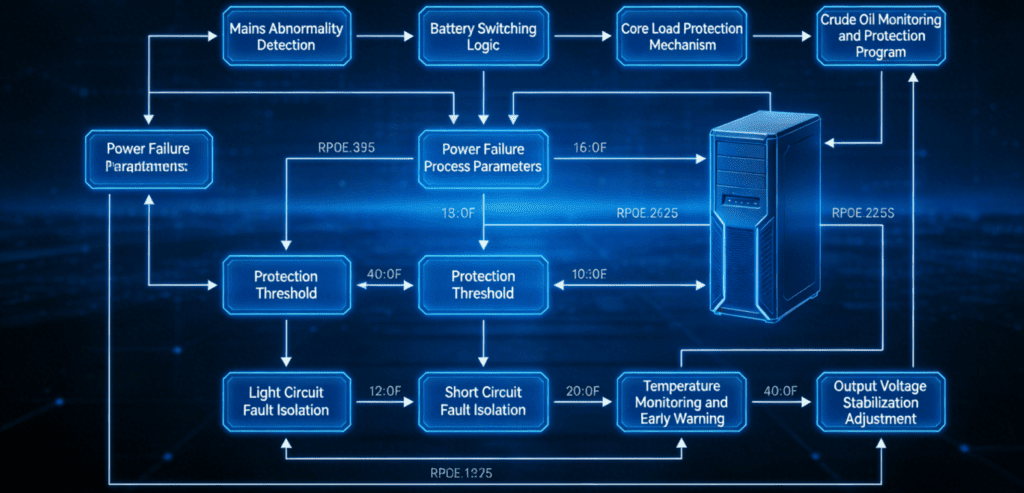
Offshore electrical equipment must satisfy multiple regulatory schemes. International standards ensure interoperability and safety. National regulations impose additional requirements. Equipment manufacturers must navigate complex certification processes.
1.ATEX and IECEx Certification
European directives require ATEX certification for equipment used in explosive atmospheres. IECEx provides international equivalent certification. Both schemes evaluate equipment design, manufacturing quality, and documentation.
BKPOWER ATEX UPS products carry Zone 1 and Zone 2 certifications. Gas groups cover IIA (propane), IIB (ethylene), and IIC (hydrogen). Temperature classes include T4 (135°C) and T5 (100°C). These ratings satisfy virtually all offshore hydrocarbon processing applications.
Certification requires extensive testing. Enclosures undergo explosion pressure testing at 1.5x maximum pressure. Surface temperature measurements verify thermal limits under fault conditions. Quality audits ensure manufacturing consistency. These rigorous requirements justify the investment in certified equipment.
2.Marine Classification Society Approvals
Classification societies certify vessels and offshore structures. Lloyd’s Register, DNV GL, ABS, and Bureau Veritas evaluate electrical equipment for marine service. Their rules address environmental resistance, electromagnetic compatibility, and failure modes.
BKPOWER maintains certifications from major classification societies. Type approval certificates simplify platform design approval. Surveys verify compliance during commissioning. These approvals provide traceability and regulatory confidence.
3.IEC Standards Compliance
IEC 62040 defines UPS performance and safety requirements. Part 3 specifies electromagnetic compatibility (EMC) requirements. Offshore platforms contain sensitive radio equipment. UPS systems must not interfere with VHF, radar, or satellite communications.
BKPOWER systems meet IEC 62040-3 Class 1 voltage regulation requirements. EMC certifications ensure conducted and radiated emissions remain below limits. Immunity testing verifies operation during radio frequency interference. These certifications confirm system compatibility with platform electronics.
Ⅶ. Installation and Maintenance Best Practices
Proper installation ensures UPS systems achieve design life and reliability. Marine environments demand special considerations beyond standard practices.
1.Site Preparation
UPS rooms require adequate ventilation and climate control. Temperature should remain below 30°C for optimal battery life. Positive air pressure prevents dust infiltration. Sealed cable penetrations prevent gas migration between compartments.
Battery rooms need separate ventilation. Explosion-proof fans exhaust any hydrogen gas venting. Acid-resistant floors contain electrolyte spills. Eye wash stations and safety showers protect maintenance personnel.
2.Commissioning Procedures
Factory acceptance testing (FAT) verifies UPS performance before shipment. Site acceptance testing (SAT) confirms proper installation. Load bank testing validates capacity and voltage regulation. Battery discharge testing confirms runtime capability.
Thermal imaging identifies hot spots during initial operation. Power quality analyzers verify harmonic performance. Documentation packages include test reports, certificates, and operating manuals.
3.Preventive Maintenance
Marine UPS systems require quarterly inspections. Technicians check enclosure seals for damage. Filter cleaning maintains ventilation airflow. Connection torque verification prevents thermal failure. Battery impedance testing detects cell deterioration.
BKPOWER provides cloud-based monitoring platforms. Sensors track temperature, humidity, and electrical parameters. Analytics predict battery replacement needs. Remote diagnostics reduce offshore service visits. These capabilities minimize platform downtime for maintenance.
Ⅷ. Economic Analysis: Total Cost of Ownership
Offshore maintenance costs exceed onshore equivalents by factors of 5-10. Helicopter transport costs thousands per hour. Platform personnel accommodation costs hundreds daily. Equipment failures trigger expensive emergency responses.
Standard UPS systems may cost 30-40% less initially. However, 3-year replacement cycles accumulate rapidly. Each failure requires offshore service personnel. Production losses during replacement compound costs. Ten-year ownership costs typically exceed industrial-grade alternatives by 200%.
BKPOWER Hệ thống UPS công suất lớn investments pay dividends through extended service life. Twenty-year operational life eliminates multiple replacement cycles. Predictive maintenance reduces service visits. Reliability improvements prevent production losses. Life-cycle cost analyses consistently favor ruggedized designs.
Consider 100kVA platform UPS protecting ESD systems. Initial cost differential: $15,000 more for heavy-duty design. Avoided replacements over 20 years: 4 units at $25,000 each. Avoided helicopter service: 8 visits at $15,000 each. Total savings exceed $180,000. Return on investment exceeds 1000%.
Ⅸ. Conclusion: Protecting Life and Production
Offshore oil and gas platforms represent humanity’s most challenging industrial environments. Power protection equipment must survive conditions that destroy standard electronics. Safety regulations demand reliability that commercial-grade equipment cannot provide.
BKPOWER Hệ thống UPS công suất lớn solutions meet these challenges through purpose-built design. ATEX UPS certifications ensure explosion safety. Salt spray resistant UPS construction survives marine corrosion. IP21/IP31 enclosures protect against environmental ingress. Industrial frequency architectures provide surge immunity and wide voltage tolerance.
The investment in specialized offshore UPS technology protects far more than equipment. Continuous power for emergency shutdown systems prevents blowouts and explosions. Fire and gas detection networks protect platform crews. Navigation systems prevent maritime accidents. Process control stability maintains production revenues.
Platform operators choosing BKPOWER UPS for oil and gas offshore solutions gain peace of mind through proven reliability. Two decades of field experience inform every design decision. Certification to international standards ensures regulatory compliance. Comprehensive service support maintains system readiness throughout platform lifetime.
The alternative—relying on standard UPS equipment in marine environments—accepts unacceptable risks. Premature failures create safety blind spots. Repeated maintenance drains operational budgets. Production interruptions cost millions in lost revenue. Protect your platform, your people, and your investment with BKPOWER heavy duty power protection.
Tài liệu tham khảo
- Ủy ban Kỹ thuật Điện Quốc tế (IEC)Trang web chính thức: www.iec.ch
- Underwriters Laboratories (UL)Trang web chính thức: www.ul.com
- Ủy ban Tiêu chuẩn hóa Châu Âu (CEN)Trang web chính thức: www.cen.eu
- Cục Quản lý Tiêu chuẩn hóa Trung Quốc (SAC)Trang web chính thức: www.sac.gov.cn
- Liên minh Công nghệ Công nghiệp Lưu trữ Năng lượng Zhongguancun (CNESA)Trang web chính thức: www.cnESA.org
- Tổ chức Tiêu chuẩn hóa Quốc tế (ISO)Trang web chính thức: www.iso.org