Bem-vindo à BKPOWER!












Efficiency Trade-Offs in Transformer-Based UPS Systems
DICAS:UPS com base em transformador systems present an intriguing paradox in power protection. While efficiency of industrial UPS with transformers typically measures 90-93% versus 96-97% for transformerless alternatives, the reliability advantages often justify the energy trade-off. This article examines why UPS com base em transformador technology sacrifices 5-7% efficiency to achieve 39% higher MTBF ratings. We analyze transformer core losses, energy dissipation mechanisms, and long-term total cost of ownership implications. For mission-critical industrial applications, understanding these efficiency of industrial UPS trade-offs enables informed decisions. The data reveals that transformer magnetic buffering, surge current tolerance, and electrical isolation create measurable reliability benefits. These advantages often offset incremental energy costs when evaluated over 10-15 year operational lifecycles.
Ⅰ. Understanding the Efficiency Differential
1. Quantifying the Gap
Eficiência da UPS ratings reveal a consistent 5-7% differential between topologies. UPS com base em transformador systems achieve 90-93% efficiency in double-conversion mode. Transformerless designs reach 95-97%. This gap widens at partial loads. Transformer-based efficiency drops to 88% at 50% load. Transformerless maintains 94%.
The difference stems from fundamental architecture. Transformers introduce magnetic and resistive losses. High-frequency switching eliminates these components. However, the efficiency advantage comes with trade-offs.
2. Transformer Loss Mechanisms
Two primary loss types occur in transformers. Core losses (iron losses) consume 2-2.5% of input power. Copper losses (winding resistance) account for 1.5-2%. Combined, these explain the efficiency differential.
Core losses comprise hysteresis and eddy current components. Hysteresis losses result from magnetic domain realignment. Eddy currents circulate within the lamination material. Both generate heat. Both represent energy dissipation.
Copper losses follow Ohm’s law. Current squared times resistance equals power loss. Transformers sized for overload capability have substantial conductor cross-sections. Resistance remains low. However, losses persist.
High-frequency UPS eliminates these transformer losses. IGBT-based conversion achieves higher efficiency. But semiconductor switching creates different challenges. Conduction losses and switching losses emerge. Thermal management becomes critical.
Ⅱ. Reliability Advantages of Lower Efficiency
1. Component Count and Failure Modes
UPS com base em transformador contains fewer active electronic components. The transformador de isolamento is a passive device. It has no moving parts. It has no semiconductor junctions. Its MTBF exceeds 1,000,000 hours.
Transformerless UPS relies entirely on power electronics. Multiple IGBT modules operate in parallel. Electrolytic capacitors filter DC bus voltage. Fans cool dense electronic assemblies. Each component introduces failure risk.
Data demonstrates the reliability impact. UPS com base em transformador achieves 250,000 hours MTBF. Transformerless systems average 180,000 hours
. The 39% improvement reflects fundamental design robustness.
2. Overload and Surge Tolerance
Transformer magnetic cores absorb transient energy. During motor starting or fault conditions, the transformer presents high impedance. Current rises gradually. Semiconductors experience reduced stress.
Transformerless UPS faces transients directly. IGBTs must withstand instantaneous current demands. Protection circuits activate frequently. Loads may transfer to bypass during surges.
Test data quantifies this difference. Transformer-based systems handle 200-300% overload for 10 minutes continuously. Transformerless units typically provide 125-150% for 60 seconds. Industrial applications with motor loads benefit significantly.
3. Environmental Ruggedness
Transformers tolerate harsh conditions effectively. They withstand temperature extremes from -10°C to +50°C. Humidity affects them minimally. Dust accumulation does not impair function. Vibration resistance is inherent.
High-frequency electronics prove more sensitive. Capacitor life halves for each 10°C rise above rated temperature. Dust blocks cooling airflow. Humidity causes board corrosion. Vibration loosens connections.
Industrial facilities present challenging environments. Manufacturing dust, chemical vapors, and mechanical vibration occur regularly. Transformer-based designs thrive in these conditions. Transformerless units require controlled environments.
Ⅲ. Total Cost of Ownership Analysis
1. Capital Expenditure Comparison
UPS com base em transformador costs more initially. The isolation transformer adds 15-20% to equipment cost. Larger enclosures increase installation expenses. Heavier units need reinforced floors.
Transformerless UPS offers capital savings. Compact designs reduce footprint by 40%. Weight reductions reach 60%. Installation requires minimal structural support. These savings prove attractive for budget-constrained projects.
2. Operating Expenditure Over 10 Years
Energy costs accumulate differently over time. Assuming 100 kW load, 90% efficiency, and $0.10/kWh:
Transformer-based annual energy loss: $8,760 (10 kW × 8760 hours × $0.10) Transformerless annual energy loss: $3,504 (4 kW × 8760 hours × $0.10) Annual difference: $5,256.
However, maintenance costs diverge. Transformer-based UPS requires minimal maintenance. Transformer inspections occur annually. No semiconductor replacements needed during normal life.
Transformerless UPS needs proactive maintenance. Capacitor replacement every 5-7 years costs $5,000-8,000. Fan replacement every 3-4 years adds $2,000. Module failures require emergency service calls averaging $10,000 per incident.
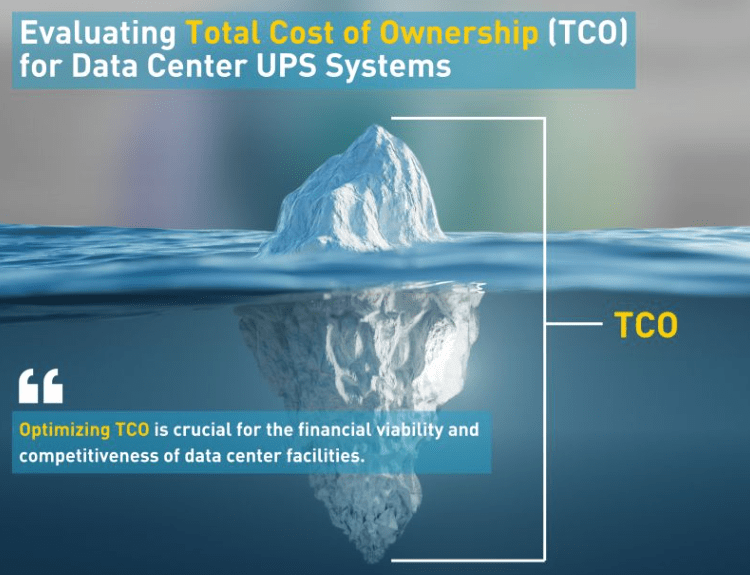
Figure 1: TCO iceberg visualization showing initial purchase price represents only a fraction of total cost, with operational expenses, maintenance, and downtime costs forming the larger hidden portion over system lifecycle.
3. Break-Even Point and Long-Term Value
TCO analysis reveals interesting dynamics. The first chart in Figure 1 shows cumulative costs over 10 years. Transformer-based UPS starts higher. Operating costs grow slower. Break-even occurs at year 6-7. Beyond this point, transformer-based systems prove more economical.
Reliability impacts TCO significantly. Unplanned downtime costs $10,000-50,000 per hour for industrial facilities. Transformerless UPS with 180,000-hour MTBF expects one failure every 20 years. Transformer-based UPS with 250,000-hour MTBF expects one failure every 28 years.
Expected failure cost over 15 years: Transformer-based: 0.53 failures × $30,000 = $16,000 Transformerless: 0.73 failures × $30,000 = $22,000
Net 15-year TCO advantage: $6,000 plus energy savings differential plus extended service life.
Ⅳ. Application-Specific Recommendations
1. When to Choose Transformer-Based UPS
Industrial manufacturing represents the primary application. Motor loads, welders, and process equipment generate harmonics and surges. Transformer isolation protects sensitive controls. BKPOWER TF Series installations in automotive plants demonstrate 99.99% availability over 10-year periods.
Petrochemical facilities benefit similarly. Explosion-proof environments favor robust construction. Transformer-based UPS tolerates temperature extremes. They handle inductive loading from pumps and compressors effectively.
Healthcare applications require patient safety. Isolation transformers provide 4 kV dielectric barriers. Leakage current remains below 500 μA. MRI and CT scanners operate without interference from ground noise.
2. When Transformerless UPS Excels
Data centers prioritize efficiency. IT loads are stable and predictable. Controlled environments minimize thermal stress. High-frequency designs reduce cooling costs. The 5-7% efficiency advantage translates to significant energy savings at 1 MW scale.
Telecom facilities value compact size. Small shelters accommodate high-density equipment. Transformerless UPS fits limited footprints. Modular designs scale with load growth.
Commercial office buildings balance cost and performance. Non-critical loads tolerate brief interruptions. Initial capital constraints favor lower-cost solutions.
3. Hybrid and Emerging Solutions
Modern IGBT-based transformer designs narrow the efficiency gap. Advanced three-level converter topologies achieve 95-96% efficiency. These systems retain isolation benefits. They approach transformerless efficiency levels.
BKPOWER Innovation
BKPOWER develops optimized transformer designs. Grain-oriented silicon steel reduces core losses. Advanced winding techniques minimize copper losses. Digital control systems optimize efficiency across load ranges.
The BKPOWER TF Series achieves 92-93% full-load efficiency. This represents only 3-4% disadvantage versus transformerless. However, reliability remains superior. MTBF ratings exceed 250,000 hours. Surge tolerance reaches 300%.
For industrial applications, this balance proves optimal. The minimal efficiency penalty delivers substantial ruggedness benefits.
Ⅴ. The Physics of Transformer Losses
1. Core Loss Deep Dive
Hysteresis losses follow the Steinmetz equation. Loss equals constant × frequency × flux density raised to a power (typically 1.6-2.0). At 60 Hz, these losses remain manageable. Transformer designers select materials with narrow hysteresis loops.
Eddy current losses depend on lamination thickness. Thinner laminations reduce losses but increase cost. Modern transformers use 0.23-0.35 mm silicon steel. Laser-etched domains align crystal structures. This advanced processing reduces losses by 30% compared to conventional materials.
BKPOWER transformers specify high-grade M6 silicon steel. Core losses measure below 2 W per kg. For a 100 kVA unit, core losses total approximately 500 W. This represents 0.5% of rated capacity.
2. Copper Loss Optimization
Winding resistance creates I²R losses. Designers balance conductor size against cost. Larger conductors reduce losses but increase material expense. Optimal designs achieve 99% conductor efficiency.
BKPOWER uses Class H insulation systems. Windings operate at 80°C rise. This conservative rating extends insulation life. It permits temporary overloads. Emergency operation continues during cooling failures.
Copper losses vary with loading. At 50% load, losses drop to 25% of full-load value. This explains why partial-load efficiency falls for transformer-based systems. Transformerless UPS maintains flatter efficiency curves.
3. Comparing Loss Mechanisms
Table 1 summarizes key differences:
| Loss Type | Transformer-Based | Transformerless |
|---|---|---|
| Core/Iron | 2.0-2.5% | 0% |
| Copper/Winding | 1.5-2.0% | 0% |
| Semiconductor | 1.5-2.0% | 2.0-3.0% |
| Switching | Mínimo | 1.0-2.0% |
| Cooling | Inferior | Mais alto |
Total losses converge when considering system-level efficiency. Transformer-based cooling requirements are lower. Heat dissipation spreads across larger volumes. Fan power consumption reduces.
Ⅵ. Making the Right Decision
1. Evaluation Framework
Facility managers should evaluate Seleção da UPS systematically. Consider these factors:
Load characteristics:
- Linear vs non-linear loading
- Motor content and starting requirements
- Harmonic generation potential
Environmental conditions:
- Temperature range and extremes
- Dust and contamination levels
- Vibration and mechanical shock
Operational requirements:
- Availability targets (99.9% vs 99.999%)
- Maintenance accessibility
- Load growth projections
Financial parameters:
- Electricity cost per kWh
- Expected operational lifespan
- Cost of downtime per hour
2. Decision Matrix
Use this guide:
Escolher UPS com base em transformador when:
- Motor loads exceed 30% of total capacity
- Environmental conditions are harsh
- Electrical noise is present on utility supply
- Reliability requirements exceed 99.95%
- 15+ year operational life expected
Choose transformerless UPS when:
- Primary load is IT equipment
- Physical space is severely constrained
- Energy costs exceed $0.15/kWh
- Budget limitations are severe
- Environment is tightly controlled
3. BKPOWER Recommendations
BKPOWER engineers conduct site assessments. We measure load profiles. We analyze power quality. We recommend appropriate solutions.
For most industrial applications, TF Series transformer-based UPS proves optimal. The efficiency penalty is modest. Reliability benefits are substantial. TCO analysis favors long-term value.
Data centers and telecom facilities may benefit from hybrid approaches. Modular transformerless units handle base loads. Transformer-based modules protect critical subsystems. This architecture balances efficiency and reliability.
Conclusion: The Value Proposition
UPS com base em transformador efficiency ratings of 90-93% appear disadvantaged versus 96-97% alternatives. However, this analysis reveals the metric requires broader context. Transformer core and copper losses enable magnetic buffering, electrical isolation, and surge tolerance. These capabilities deliver measurable reliability improvements.
MTBF data demonstrates 39% higher reliability for transformer-based designs. Over 15-year operational lifecycles, reduced downtime and maintenance costs offset energy expenses. TCO analysis shows break-even at 6-7 years. Thereafter, transformer-based systems prove more economical.
Industrial applications particularly benefit. Motor loads, harsh environments, and reliability requirements favor robust construction. Efficiency of industrial UPS evaluated in isolation misses these critical factors.
BKPOWER TF Series optimizes the efficiency-reliability balance. Advanced materials minimize transformer losses. Conservative ratings ensure long service life. For mission-critical industrial power protection, the 5-7% efficiency penalty represents sound investment in operational continuity.
When specifying UPS systems, consider total value rather than isolated efficiency metrics. Transformer-based technology delivers comprehensive protection. It ensures availability when it matters most. The efficiency trade-off proves worthwhile for applications where reliability is paramount.
Contact BKPOWER engineering for application-specific analysis. We help navigate efficiency-reliability trade-offs. We ensure optimal UPS selection for your operational requirements.
Referências
- Comissão Eletrotécnica Internacional (CEI)Sítio Web oficial: www.iec.ch
- Underwriters Laboratories (UL)Sítio Web oficial: www.ul.com
- Comité Europeu de Normalização (CEN)Sítio Web oficial: www.cen.eu
- Administração da Normalização da China (SAC)Sítio Web oficial: www.sac.gov.cn
- Aliança Tecnológica da Indústria de Armazenamento de Energia de Zhongguancun (CNESA)Sítio Web oficial: www.cnESA.org
- Organização Internacional de Normalização (ISO)Sítio Web oficial: www.iso.org