Bem-vindo à BKPOWER!












UPS monofásico x trifásico: Guia completo de compra para 2026
DICAS: A escolha entre sistemas de UPS monofásicos e trifásicos é uma decisão crucial para qualquer empresa. Isso UPS monofásico x trifásico Este guia comparativo detalha as principais diferenças em termos de capacidade, eficiência, fiação e custo. Se você precisa de energia de reserva para um escritório em casa ou para um centro de dados, este Guia de compra de no-breaks ajuda você a fazer a escolha certa. Os engenheiros da BKPOWER explicam tudo, desde a física da onda senoidal até casos práticos de implantação.
I. Qual é a diferença entre um no-break monofásico e um trifásico?
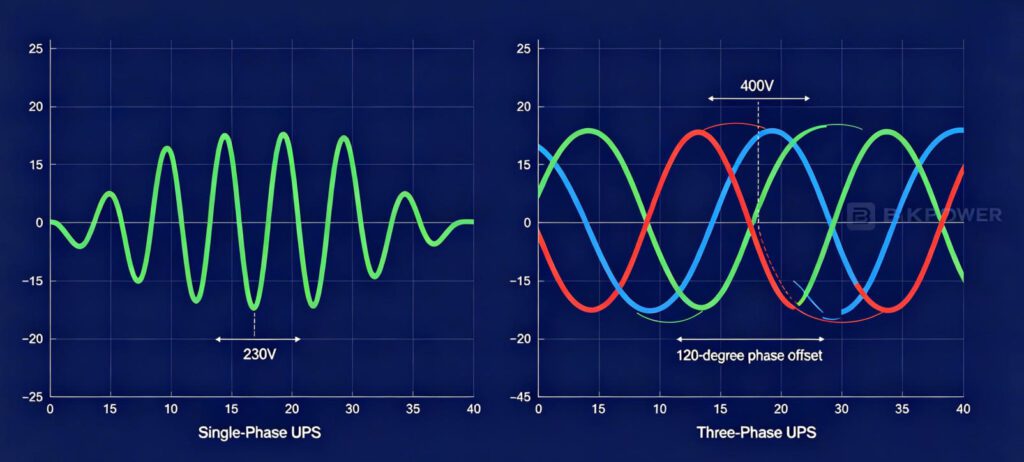
1. O princípio elétrico fundamental
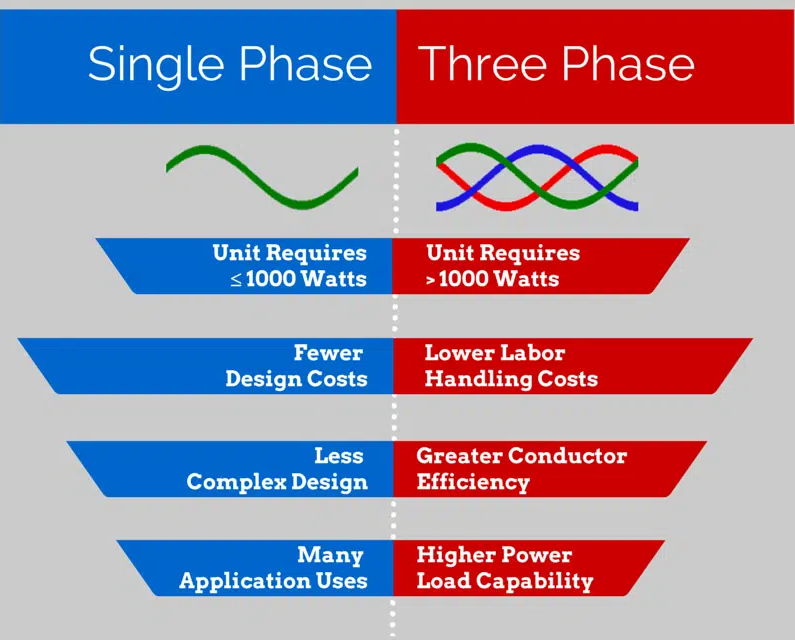
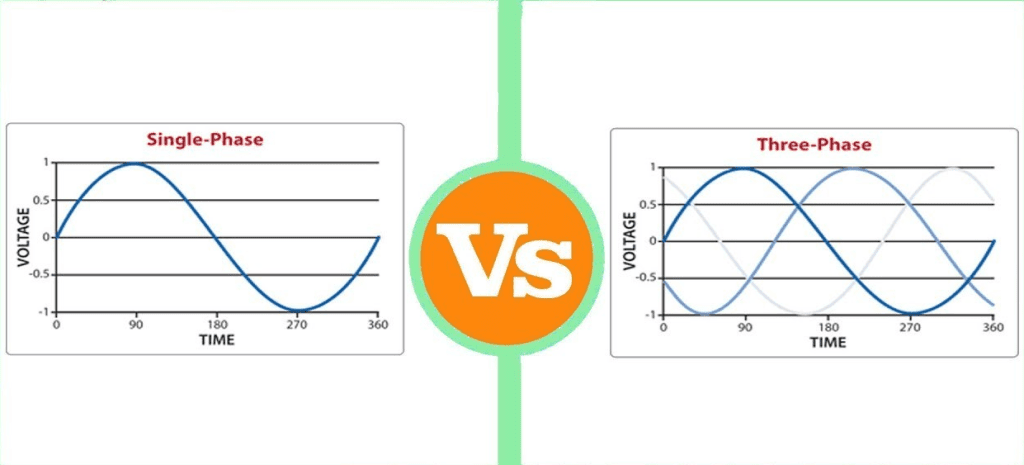
A monofásico UPS fornece energia por meio de uma forma de onda de corrente alternada (CA). Utiliza dois condutores: um fio de fase e um fio neutro. A tensão aumenta e diminui em uma única onda senoidal. A potência cai para zero duas vezes por ciclo.
A UPS trifásico fornece energia por meio de três fontes de corrente alternada formas de onda. Cada forma de onda está deslocada em 120 graus. Isso gera um fornecimento de energia praticamente constante. O sistema utiliza três condutores sob tensão e um fio neutro (na configuração em estrela). O resultado é uma energia mais suave e estável para cargas pesadas.
2. Por que isso é importante para a sua empresa
As interrupções no fornecimento de energia custam às empresas globais $150 bilhões anualmente. O sistema UPS adequado evita a perda de dados, danos aos equipamentos e tempo de inatividade. Mas escolher o tipo errado representa um desperdício de dinheiro ou deixa você desprotegido.
Os sistemas UPS monofásicos são adequados para pequenos escritórios, residências e cargas leves de TI. Os sistemas UPS trifásicos atendem a centros de dados, hospitais e instalações industriais. A diferença entre eles não se resume apenas ao tamanho. Trata-se de qualidade de energia, eficiência e escalabilidade.
II. Comparação das especificações técnicas
1. Tensão e fiação
| Recurso | UPS monofásico | UPS trifásico |
|---|---|---|
| Maestros | 2 (fase + neutro) + PE | 3 fases + neutro + PE |
| Tensão IEC | 230 V (L-N) | 400 V (L-L) / 230 V (L-N) |
| Tensão na América do Norte | 120 V / 240 V em fase dividida | 208 V / 480 V |
| Complexidade da fiação | Simples, basta conectar e usar | É necessário um eletricista profissional |
| Tamanho do cabo | Calibre maior para a mesma potência | Calibre menor por condutor |
Os sistemas trifásicos transportam a mesma potência com menos cobre. Com potência, tensão e fator de potência, cada condutor transporta cerca de 57,71 TP3T da corrente que um sistema monofásico precisaria. Isso significa cabos menores e menores perdas de transmissão.
2. Faixa de capacidade
| Tipo de UPS | Faixa típica | Capacidade máxima |
|---|---|---|
| Monofásico | 1 kVA – 20 kVA | ~30 kVA |
| Trifásico | 10 kVA – 600 kVA | Mais de 1.000 kVA (modular) |
Os no-breaks monofásicos atingem um limite máximo de cerca de 20 a 30 kVA. Acima desse valor, a corrente se torna alta demais para a fiação padrão. Os no-breaks trifásicos variam de 10 kVA a mais de 1.000 kVA em configurações modulares.
3. Eficiência em diferentes cargas
| Nível de carga | Monofásico Eficiência da UPS | Eficiência do no-break trifásico |
|---|---|---|
| Carga 25% | 85-90% | 88-92% |
| Carga 50% | 90-93% | 93-96% |
| Carga 75% | 92-94% | 95-97% |
| Carga 100% | 93-95% | 96-98% |
Em cargas baixas (abaixo de 10 kVA), os no-breaks monofásicos costumam se destacar em termos de eficiência. Em cargas médias a altas, os no-breaks trifásicos assumem a liderança. As unidades trifásicas modernas com modo ECO podem atingir uma eficiência de 99%.
4. Fator de potência e balanceamento de carga
O no-break trifásico oferece balanceamento natural da carga. Em um sistema balanceado, cada fase suporta um terço da carga total. Isso reduz a corrente no neutro e o acúmulo de calor. O no-break monofásico não possui recurso de balanceamento de carga. Toda a carga recai sobre uma única fase.
A correção do fator de potência (PFC) é padrão em ambos os tipos. No entanto, os sistemas trifásicos lidam muito melhor com cargas reativas (motores, compressores). O campo magnético rotativo nos motores trifásicos é de partida automática. Os motores monofásicos precisam de capacitores para dar a partida.
III. Vantagens e desvantagens
1. UPS monofásica: prós e contras
Vantagens:
- Custo inicial mais baixo. Os preços das unidades começam abaixo de $200 para os modelos de 1 kVA.
- Instalação simples. A maioria das unidades se conecta a tomadas de parede padrão.
- Tamanho compacto. Cabe embaixo de mesas ou em pequenos racks de servidores.
- Ampla disponibilidade. É comum em residências e pequenos escritórios em todo o mundo.
- Fácil manutenção. Baterias substituíveis sem desligar o aparelho na maioria dos modelos.
Desvantagens:
- Capacidade limitada. Não é possível aumentar a potência para além de ~20 kVA sem o uso de várias unidades.
- Custo de transmissão por watt mais elevado. Requer cabos mais grossos para altas intensidades de corrente.
- Dificuldade na partida do motor. Os motores monofásicos têm dificuldade para lidar com cargas de alta inércia.
- Sem redundância. A falha de uma unidade significa perda total da proteção.
- Sensibilidade às flutuações de tensão. Os sistemas monofásicos são mais sensíveis às quedas de tensão na rede.
2. UPS trifásica: prós e contras
Vantagens:
- Alta capacidade. Suporta potências de 20 kVA a 600 kVA e acima.
- Eficiência superior em grande escala. Custos operacionais mais baixos ao longo do tempo.
- Equilíbrio natural de carga. Distribui a potência uniformemente pelas três fases.
- Adequado para motores. Torque de partida para bombas, ventiladores e compressores.
- Arquitetura escalável. Opções modulares de redundância N+1 e N+2.
- Condutores menores. Menos cobre necessário por watt fornecido.
- Preparado para o futuro. Fácil de expandir sem precisar substituir a infraestrutura.
Desvantagens:
- Custo inicial mais alto. As unidades trifásicas básicas custam a partir de cerca de $5.000.
- Instalação complexa. Requer eletricistas habilitados e aterramento adequado.
- Ocupa mais espaço. Requer uma sala elétrica exclusiva ou espaço físico dedicado.
- Manutenção profissional. Não é um serviço para ser feito por conta própria.
- Requisitos do local. É necessário fornecimento de energia trifásica da rede pública ou transformador.
IV. Aplicações na prática
1. Casos de uso de UPS monofásicas
Escritórios domésticos e pequenas empresas:
- Computadores de mesa e estações de trabalho
- Roteadores e modems para redes domésticas
- Pequenos dispositivos de armazenamento NAS
- Terminais de ponto de venda (POS)
- Sistemas de câmeras de segurança (menos de 10 câmeras)
- Dispositivos médicos em clínicas (cadeiras odontológicas, visores de raios-X)
TI e Telecomunicações:
- Servidores montados em rack (1 a 5 unidades)
- Switches de rede e firewalls
- Sistemas de telefonia VoIP
- Pequenos no-breaks para estações base de telecomunicações (locais remotos)
Faixa de carga típica: 500 VA a 10 kVA
2. Casos de uso de UPS trifásicas
Centros de dados:
- Parques de servidores e infraestrutura em nuvem
- Instalações de colocation
- Nós de computação de ponta
- Centros de operação de rede (NOC)
Setor industrial e de manufatura:
- Máquinas CNC e braços robóticos
- Automação da linha de montagem
- Estações de bombeamento e sistemas de climatização
- Centros de controle de motores (MCC)
Saúde:
- Aparelhos de ressonância magnética e tomografia computadorizada
- Energia elétrica na sala de cirurgia
- Sistema de energia de emergência para todo o hospital
- Refrigeração de bancos de sangue
Edifícios comerciais:
- Sistemas de elevadores para edifícios altos
- UPS grande para shoppings
- Complexos de cinema e teatro
- Manuseio de bagagens no aeroporto
Faixa de carga típica: 20 kVA a 600 kVA
V. Como escolher: o modelo de decisão
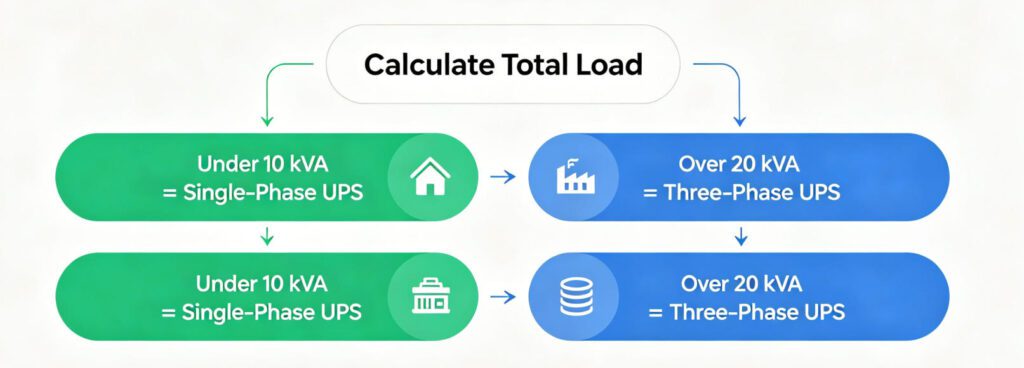
1. Primeiro passo: calcule sua carga total
Some a potência em watts de todos os equipamentos que você precisa proteger. Use esta fórmula:
Carga total (W) = Soma das potências de todos os aparelhos × 1,25 (margem de segurança)
Converter para kVA: kVA = Watts / Fator de potência
Utilize um fator de potência de 0,8 para cargas gerais de TI. Utilize 0,9 para servidores modernos com PFC ativo.
Regra de decisão:
- Menos de 10 kVA → UPS monofásica
- 10-20 kVA → Monofásico ou trifásico de baixa potência (configuração 3/1)
- Mais de 20 kVA → UPS trifásica (configuração 3/3)
2. Segunda etapa: Avalie sua infraestrutura de energia
Verifique quais são os materiais de construção que você tem:
- Apenas monofásico (a maioria das residências e pequenos escritórios)
- Disponível em trifásico (edifícios comerciais e industriais)
- É necessário modernizar os serviços públicos (orçamento: $5.000 a $20.000)
Se o seu local dispuser apenas de alimentação monofásica, um no-break trifásico precisará de um conversor de fase ou de um transformador. Isso aumenta o custo e a complexidade.
3. Terceira etapa: Avaliar o crescimento futuro
Planeje com 3 a 5 anos de antecedência. Faça as seguintes perguntas:
- Vocês vão adicionar mais servidores ou equipamentos?
- Você está se mudando para um local maior?
- Vocês fazem a instalação de equipamentos acionados por motor?
- Você precisa de redundância N+1 para garantir o tempo de atividade?
O no-break trifásico com design modular permite adicionar módulos de potência sem precisar substituir todo o sistema. O no-break monofásico geralmente exige a compra de uma nova unidade, de maior capacidade.
4. Quarta etapa: Equilibrar custo e confiabilidade
| Fator | Monofásico | Trifásico |
|---|---|---|
| Custo inicial | $200 – $5.000 | $5.000 – $100.000+ |
| Instalação | Faça você mesmo ou eletricista básico | Procura-se eletricista habilitado |
| Custo operacional | Maior por kVA | Custo por kVA mais baixo em grande escala |
| Manutenção | Baterias simples, que podem ser substituídas pelo próprio usuário | Contrato de prestação de serviços profissionais |
| Risco de tempo de atividade | Ponto único de falha | Opções de redundância disponíveis |
5. Etapa cinco: Considere os requisitos especiais
Cargas do motor: Se você utiliza bombas, compressores ou elevadores, a alimentação trifásica é essencial. Motores monofásicos com potência superior a 2,2 kW são ineficientes e pouco confiáveis.
Qualidade de energia: Para equipamentos de laboratório sensíveis ou na fabricação de semicondutores, o no-break trifásico de dupla conversão em linha fornece a energia mais pura.
Restrições de espaço: As unidades monofásicas cabem em espaços apertados. Os sistemas trifásicos exigem salas exclusivas com ventilação adequada.
VI. Erros comuns a evitar
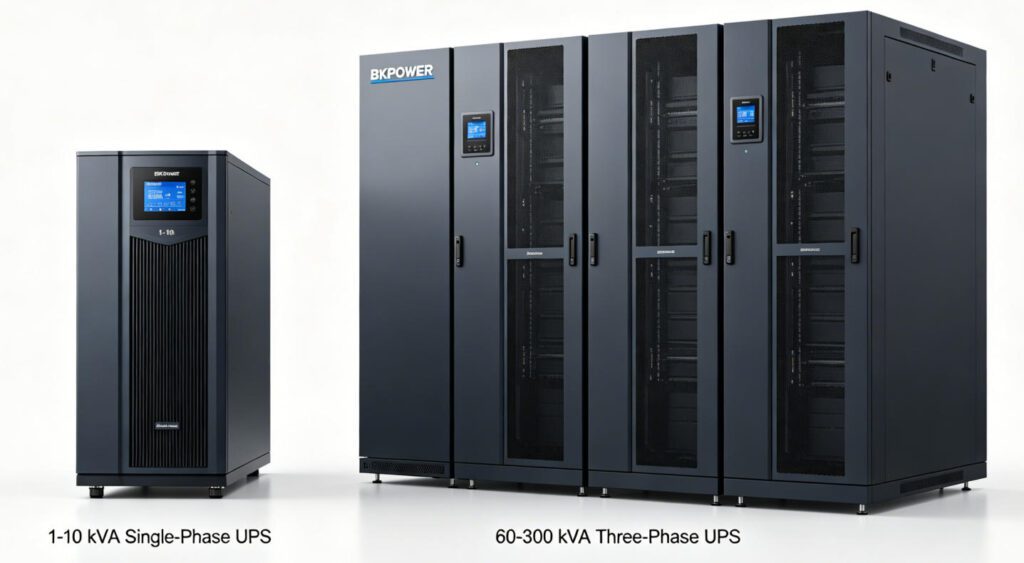
1. Escolher um no-break com capacidade insuficiente
Muitos compradores escolhem o no-break levando em conta apenas a carga atual. Eles se esquecem do crescimento futuro. Um no-break operando com capacidade de 90% não tem margem de segurança. Além disso, ele funciona com menor eficiência. Escolha um modelo com capacidade mínima para 125% de carga.
2. Ignorar o fator de potência
As especificações antigas dos no-breaks (UPS) utilizavam VA (volt-ampere) sem levar em conta o fator de potência. Os equipamentos modernos de TI apresentam um fator de potência próximo a 0,9. No entanto, os motores podem ter um fator de potência tão baixo quanto 0,6. Sempre calcule a potência real (watts) e a potência aparente (VA) separadamente.
3. Combinação de cargas monofásicas e trifásicas
Um no-break trifásico pode fornecer energia monofásica (configuração 3/1). No entanto, isso representa um desperdício de capacidade. Se a maior parte da sua carga for monofásica, considere utilizar unidades monofásicas separadas. Ou utilize um no-break trifásico com distribuição monofásica balanceada.
4. Descuidar da autonomia da bateria
Tempo de funcionamento do no-break Depende do tamanho da bateria e da carga. Um no-break de 10 kVA com baterias padrão pode fornecer apenas 5 a 10 minutos em carga total. Calcule cuidadosamente o tempo de autonomia necessário. Adicione gabinetes de baterias externos, se necessário.
5. Não recorrer à instalação profissional
A instalação de um no-break trifásico não é algo para se fazer por conta própria. O aterramento inadequado causa riscos à segurança. O dimensionamento incorreto dos cabos gera riscos de incêndio. Sempre recorra a eletricistas certificados para instalações trifásicas.
VII. Resumo e Recomendações Finais
1. Escolha um no-break monofásico quando:
- A carga total é inferior a 10 kVA
- Você precisa de uma proteção simples e acessível
- Seu local dispõe apenas de energia monofásica da rede pública
- Os equipamentos incluem computadores, redes e pequenos servidores
- O espaço é limitado (debaixo da mesa ou em um rack pequeno)
- O orçamento está abaixo de $5.000
2. Escolha um no-break trifásico quando:
- A carga total ultrapassa 20 kVA
- Você opera motores, bombas ou compressores
- Sua instalação conta com fornecimento de energia trifásica
- É necessária redundância N+1 para garantir a disponibilidade de sistemas críticos
- Vocês planejam ampliar as necessidades de energia nos próximos 3 a 5 anos
- O orçamento prevê instalação e manutenção profissionais
3. A vantagem da BKPOWER
Seja um no-break monofásico para um pequeno escritório ou um no-break trifásico para um data center, a BKPOWER oferece:
- Conhecimento especializado em engenharia: Mais de 20 anos de experiência em projeto de proteção de energia
- Certificações globais: CE, UL, ISO 9001, IEC 62040
- Soluções personalizadas: Adaptado às suas necessidades de tensão, frequência e condições ambientais
- Suporte completo ao ciclo de vida: Da concepção até o descomissionamento
Entre em contato com a BKPOWER hoje mesmo para uma avaliação gratuita do consumo de energia. Nossos engenheiros analisarão seu perfil de carga, as condições do local e seus planos de crescimento. Recomendaremos a solução ideal de UPS monofásica ou trifásica para suas necessidades.
Referências – Fonte
| Fonte | URL | Descrição |
|---|---|---|
| Norma IEC 62040 | https://webstore.iec.ch/publication/66912 | Normas internacionais de segurança e desempenho para no-breaks (UPS) |
| IEEE 446 (Livro Laranja) | https://standards.ieee.org/standard/446-1995.html | Práticas recomendadas para sistemas de energia de emergência e de reserva |
| Departamento de Energia dos EUA | https://www.energy.gov/eere/femp/uninterruptible-power-supplies | Diretrizes do programa federal de gestão de energia para UPS |
| Associação Europeia de Fabricantes de UPS | https://www.eupse.com/ | Normas e melhores práticas do setor europeu de fontes de alimentação |
| Noções básicas sobre UPS da Schneider Electric | https://www.se.com/us/en/faqs/FAQ000243825/ | Perguntas frequentes técnicas sobre sistemas de UPS monofásicos versus trifásicos |
PERGUNTAS FREQUENTES
Posso usar um no-break trifásico com equipamentos monofásicos?
R: Sim. Um no-break trifásico com configuração 3/1 recebe alimentação trifásica e fornece energia monofásica. No entanto, isso é menos eficiente do que usar um no-break monofásico dedicado para cargas pequenas. Para cargas inferiores a 10 kVA, o no-break monofásico costuma ser a melhor opção.
Qual é a vida útil típica de uma bateria de UPS?
R: As baterias VRLA (chumbo-ácido) duram de 3 a 5 anos em condições normais. As baterias de íon-lítio duram de 8 a 15 anos. A vida útil da bateria depende da temperatura, dos ciclos de descarga e do perfil de recarga. O sistema de recarga inteligente da BKPOWER prolonga a vida útil da bateria em até 30%.
Como faço para calcular a capacidade adequada do no-break para as minhas necessidades?
R: Siga estas etapas: (1) Liste as potências em watts de todos os equipamentos. (2) Some-as. (3) Multiplique pelo 1,25 para obter uma margem de segurança. (4) Divida pelo fator de potência (0,8 para cargas gerais, 0,9 para equipamentos modernos de TI). (5) O resultado é a potência mínima em kVA do seu no-break. Por exemplo: 6.000 W × 1,25 ÷ 0,8 = 9,375 kVA. Escolha um no-break de 10 kVA.
Um no-break trifásico é sempre mais eficiente do que um monofásico?
R: Nem sempre. Em cargas baixas (abaixo de 10 kVA), os no-breaks monofásicos podem ser mais eficientes. Os no-breaks trifásicos demonstram sua vantagem em cargas médias a altas (20+ kVA). As unidades trifásicas modernas com modo ECO atingem uma eficiência de até 99% em cargas parciais.
Que tipo de manutenção um sistema UPS requer?
R: Os no-breaks monofásicos requerem inspeção visual anual e teste das baterias a cada 6 meses. A substituição das baterias deve ser feita a cada 3 a 5 anos. Os no-breaks trifásicos requerem manutenção preventiva trimestral realizada por técnicos certificados. Isso inclui varredura térmica, verificação do torque das conexões, inspeção dos ventiladores e teste de impedância das baterias. A BKPOWER oferece contratos de manutenção anual para ambos os tipos.
A BKPOWER oferece serviços de ponta a ponta Suprimentos UPSsistemas UPS e suporte a UPS. Dos setores doméstico ao industrial, nossos produtos atendem a diversas demandas de continuidade de energia. Entre em contato conosco para personalizar sua solução de UPS hoje mesmo.