Bem-vindo à BKPOWER!












Why Oil & Gas Platforms Require Explosion-Proof UPS
TIPS:Offshore oil and gas platforms operate in hazardous environments where explosive atmospheres pose constant threats. An industrial uninterruptible power supply must carry ATEX and IECEx certification for Zone 1 and Zone 2 areas to ensure safety. These explosion-proof UPS systems protect critical equipment like emergency shutdown systems and fire detection during power failures. Understanding hazardous area classifications helps facility managers select appropriate uninterruptible power supply systems that meet strict oil and gas industry regulations.
Ⅰ. Introdução
Oil and gas platforms operate in some of the world’s most demanding environments. Remote offshore locations, corrosive salt air, extreme temperatures, and constant vibration challenge every piece of equipment. Most critically, these facilities handle flammable gases and vapors that create explosion risks.
An industrial uninterruptible power supply in these locations must do more than provide energia de reserva. It must operate safely in hazardous atmospheres without becoming an ignition source. Standard UPS systems cannot meet these requirements. Explosion-proof UPS with ATEX and IECEx certification is essential.
This article examines why UPS for oil and gas industry requires specialized explosion protection. We explore hazardous area classifications, certification standards, and critical applications. Understanding these requirements ensures safe, compliant power protection for offshore platforms, refineries, and drilling operations.
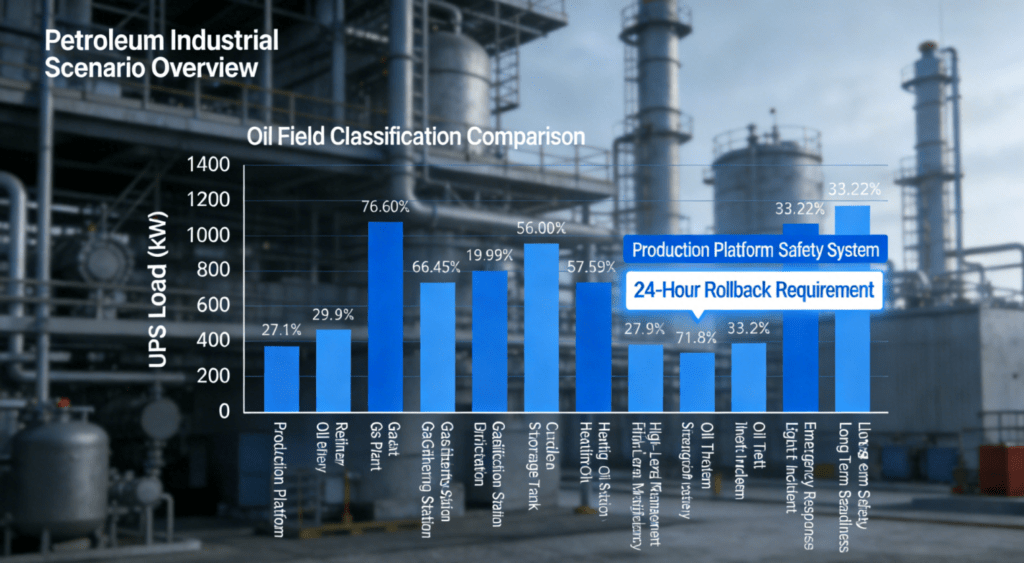
Figure 1: Critical UPS load requirements and backup duration across different oil and gas applications. Production platforms need 24-hour backup for safety systems.
Ⅱ. Hazardous Area Classifications
1. Understanding ATEX Zones
ATEX Directive 2014/34/EU defines equipment requirements for explosive atmospheres. The directive classifies hazardous areas into zones based on explosion risk probability.
Zone 0 represents areas where explosive gas mixtures are present continuously or for long periods. These include inside process vessels and storage tanks. Only intrinsically safe equipment (Ex ia) is permitted here.
Zone 1 covers areas where explosive mixtures are likely to occur during normal operation. Process equipment surroundings, sampling points, and maintenance areas fall into this category. UPS systems for Zone 1 require flameproof (Ex d) or increased safety (Ex e) protection.
Zone 2 includes areas where explosive mixtures are unlikely during normal operation, and if they occur, exist only briefly. These areas surround Zone 1 locations and include ventilation outlets. UPS with protection type Ex n or Ex p can operate here.
Most industrial uninterruptible power supply equipment for oil and gas falls into Zone 1 or Zone 2 categories. The Zone 1 rating provides higher protection and wider application flexibility.
2. IECEx Global Certification
While ATEX applies to European markets, IECEx provides international recognition. The IECEx Certified Equipment Scheme operates under IEC standards (IEC 60079 series). Certification in one member country receives recognition in others.
IECEx uses the same zone classifications as ATEX but adds Equipment Protection Levels (EPL). These specify equipment reliability:
- EPL Ga: Suitable for Zone 0 (very high protection level)
- EPL Gb: Suitable for Zone 1 (high protection level)
- EPL Gc: Suitable for Zone 2 (general protection level)
For UPS in oil and gas applications, EPL Gb is typically required. This ensures the equipment will not ignite explosive atmospheres even during equipment faults.
3. Gas Groups and Temperature Classes
Explosion protection must match the specific gases present. The standards define gas groups:
- Group IIA: Propane and similar gases (least hazardous)
- Group IIB: Ethylene and equivalent gases
- Group IIC: Hydrogen and acetylene (most hazardous)
Most hydrocarbon processing uses Group IIB or IIB+H2 certifications. Hydrogen presence requires Group IIC.
Temperature classes indicate maximum surface temperatures:
- T1: 450°C maximum
- T2: 300°C maximum
- T3: 200°C maximum
- T4: 135°C maximum
- T5: 100°C maximum
- T6: 85°C maximum
UPS equipment typically requires T3 or T4 classification for oil and gas. T6 is rarely needed but provides additional safety margin for low-ignition-temperature gases.
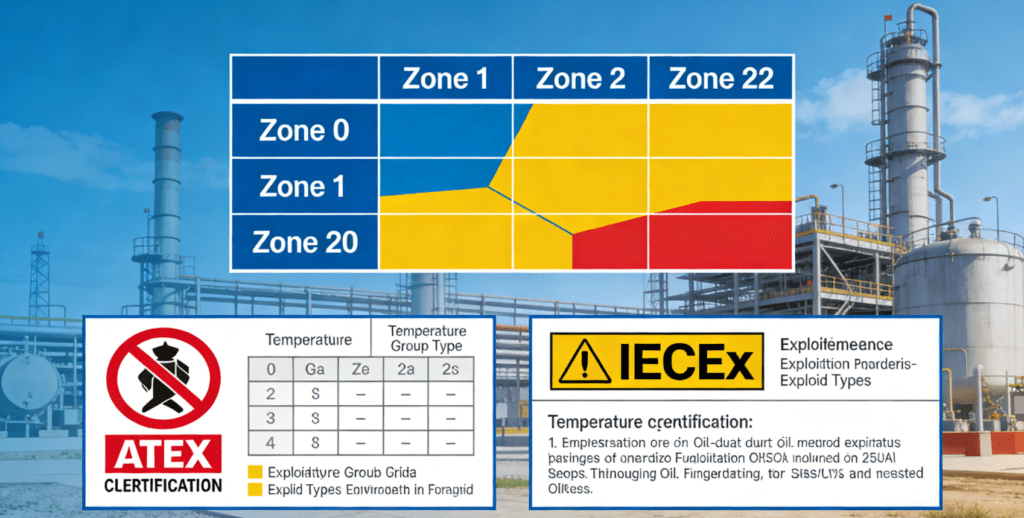
Figure 2: ATEX/IECEx hazardous area zones and certification requirements for industrial UPS systems in oil and gas facilities.
Ⅲ. Technical Requirements for Explosion-Proof UPS
1. Protection Methods (Ex d, Ex e, Ex p)
Different explosion protection techniques suit different applications. Understanding these methods helps specify appropriate UPS systems.
Flameproof Enclosure (Ex d): The UPS housing contains any internal explosion. Thick walls and tight joints prevent flame propagation to the external atmosphere. This is the most common protection for Zone 1 UPS. Equipment operates at rated power with full safety.
Increased Safety (Ex e): Enhanced design features prevent arcs, sparks, and excessive temperatures during normal operation. Ex e UPS must also be certified for fault conditions. This method suits lower power applications and Zone 1/2 boundaries.
Pressurization (Ex p): Clean air or inert gas maintains positive pressure inside the UPS enclosure. Any gas entry is prevented by outward airflow. This allows use of standard UPS internally but requires complex support systems. Ex p suits large power ratings where flameproof construction becomes impractical.
For industrial uninterruptible power supply in oil and gas, Ex d (flameproof) dominates the market. It provides robust protection without requiring external support systems.
2. Environmental Hardening
Offshore platforms present environmental challenges beyond explosion risks. UPS systems require special design features.
Corrosion Resistance: Salt air corrodes standard electronics. Explosion-proof UPS uses stainless steel enclosures (316 grade) or aluminum with marine-grade coatings. Internal components receive conformal coating protection.
Temperature Range: Offshore platforms experience -40°C to +55°C ambient. Arctic operations demand heating elements. Desert locations require enhanced cooling. The UPS must maintain full functionality across these extremes.
Vibration Tolerance: Drilling operations create constant vibration. UPS systems must meet IEC 60068-2-6 vibration standards. Shock mounts and ruggedized internal construction prevent damage.
Humidity Protection: 100% humidity is common offshore. Sealed enclosures prevent moisture ingress. Desiccant breathers and sealed gaskets maintain internal dry conditions.
3. Battery Considerations
Batteries present unique challenges in hazardous areas. Lead-acid batteries release hydrogen during charging—an explosive gas. Special precautions are mandatory.
Battery Enclosure Separation: Batteries typically install in separate Ex e enclosures from the UPS electronics. This isolates hydrogen sources from potential ignition sources. Ventilation systems remove any gas buildup.
Battery Types: Sealed lead-acid (VRLA) batteries reduce gas emission compared to flooded types. Nickel-cadmium batteries offer better temperature tolerance but higher cost. Lithium-ion systems are emerging but require careful thermal management certification.
Temperature Compensation: Battery charging must adjust for ambient temperature. Hot environments reduce battery life if overcharged. Cold environments require reduced charging rates. The UPS controller must provide automatic compensation.
Ⅳ. Critical Applications in Oil & Gas
1. Emergency Shutdown (ESD) Systems
Emergency shutdown systems represent the most critical UPS load. ESD systems detect hazardous conditions and initiate platform shutdown. Power loss could prevent emergency response during critical moments.
ESD systems include:
- Process shutdown valves
- Wellhead isolation systems
- Blowout preventer (BOP) controls
- Fire and gas detection systems
- Public address and alarm systems
These systems require UPS backup ranging from 30 minutes to 24 hours depending on platform type. Drilling rigs need shorter duration—emergency evacuation is the primary response. Production platforms need longer backup to manage controlled shutdown sequences.
IESD certification requirements are stringent. The UPS must achieve Safety Integrity Level (SIL) ratings when powering safety instrumented functions. Single points of failure must not compromise emergency response capabilities.
2. Fire and Gas Detection
Fire and gas detection systems protect personnel and assets. These continuous-monitoring systems cannot tolerate power interruptions.
Detection Devices: Smoke detectors, heat detectors, and combustible gas sensors require continuous power. Signal processing units analyze sensor data and trigger alarms. UPS backup ensures detection continues during power failures.
Alarm Systems: Audible alarms, visual beacons, and public address systems warn personnel of danger. These systems must function during emergencies when normal power may fail.
Fire and gas UPS systems typically require 24-hour backup. This ensures overnight power outages do not compromise safety. The systems must also survive extreme events like explosions or fires that may damage normal power distribution.
3. Process Control and Instrumentation
Modern oil and gas platforms rely heavily on automated control systems. Distributed Control Systems (DCS) manage production processes. Loss of control leads to production interruptions and safety risks.
Control System Components: Controllers, I/O modules, network switches, and operator stations require UPS power. While not safety-critical like ESD, these systems maintain stable operations.
Instrumentation: Flow meters, pressure transmitters, level sensors, and analyzers provide process data. Uninterrupted power ensures accurate monitoring and control.
Process control UPS typically provides 30 minutes to 2 hours backup. This allows orderly shutdown of production processes. Longer backup is rarely needed since controlled shutdown completes within this timeframe.
4. Navigation and Communication
Offshore platforms require navigation aids for marine traffic. Helicopter landing lighting guides emergency medical evacuations. Communication systems maintain contact with onshore operations and emergency services.
Navigation Aids: Radar beacons, fog horns, and lighting systems mark platform locations. These systems must function continuously, especially during storms when power failures are likely.
Helideck Lighting: Landing zone lighting, perimeter lighting, and obstruction lighting guide helicopters. UPS backup ensures medical evacuations can proceed during power failures.
Radio and Satellite Communication: VHF radios provide emergency communication. Satellite links maintain operational data transmission. UPS ensures these systems remain available during crises.
Navigation and communication UPS typically provides 4-8 hours backup. This covers typical power outage durations while maintaining emergency capabilities.
Ⅴ. Certification and Standards Compliance
1. ATEX Directive 2014/34/EU
European oil and gas facilities must comply with ATEX requirements. The directive addresses both equipment design and workplace safety.
Equipment must bear CE marking with Ex designation:
- CE and Ex symbol on equipment label
- Category number (1 for Zone 0, 2 for Zone 1, 3 for Zone 2)
- G for gas (D for dust)
- Protection level (Ga, Gb, or Gc)
- Certificate number from notified body
Quality assurance notification (QAN) is required for Category 1 and 2 equipment. Manufacturers must maintain certified quality management systems. Production follows strict quality protocols with third-party audits.
Declaration of Conformity documentation must accompany each UPS system. This document proves the equipment meets all essential health and safety requirements.
2. IECEx Scheme Requirements
IECEx provides global certification acceptance. The scheme includes:
IECEx Certified Equipment: Testing by IECEx Certification Bodies (ExCBs) in member countries. Certificates are recognized internationally, avoiding redundant testing.
IECEx Quality Assessment Report (QAR): Confirms manufacturer quality systems meet IECEx requirements. QAR audits verify ongoing compliance.
IECEx Test Reports (ExTR): Detailed test documentation supporting certification. These reports provide technical evidence of compliance.
For UPS manufacturers, IECEx certification opens global markets. A single certification process satisfies requirements in Australia, Singapore, UAE, and many other oil and gas producing regions.
3. Regional Standards
Different regions impose additional requirements beyond ATEX/IECEx:
United States (UL/NEC): Class I, Division 1 and 2 classifications correspond to Zones 0/1 and 2. UL 1203 and UL 1012 standards apply. Area classification follows National Electrical Code (NEC) Article 500.
Canada (CSA): Similar to US requirements with CSA certification. Canadian Electrical Code Part I governs installation.
Brazil (INMETRO): Requires national certification in addition to IECEx. Portaria 179/2010 establishes requirements.
Russia (GOST-R and TR CU): Technical regulations of the Customs Union apply. EAC marking is mandatory.
Middle East (SASO, GOST): Saudi Arabia, UAE, and other Gulf states recognize IECEx but may require additional local certification.
Successful UPS deployments require understanding all applicable standards. Multi-certification strategies address diverse market requirements.
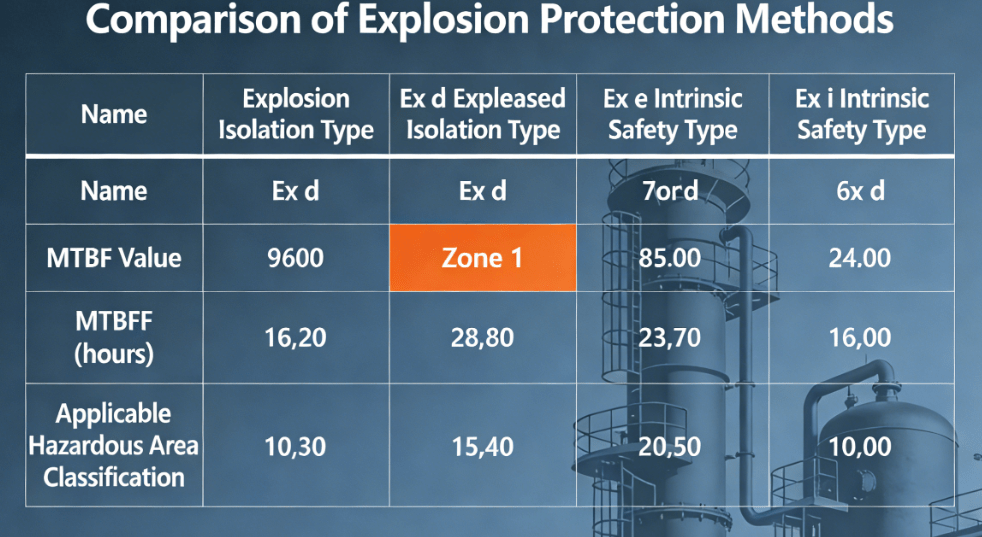
Figure 3: Explosion protection methods comparison and MTBF requirements for critical oil and gas UPS applications. Ex d flameproof provides highest Zone 1 suitability.
Ⅵ. System Design Considerations
1. Redundancy Strategies
Critical oil and gas applications cannot tolerate UPS failure. Redundancy strategies ensure continuous protection.
N+1 Redundancy: One spare UPS supports multiple critical loads. If one unit fails, the spare assumes the load. This balances cost and reliability.
2N Redundancy: Complete duplication of UPS systems. Each critical load has two independent power sources. Automatic transfer switches select active supply.
Parallel Redundancy: Multiple UPS units operate in parallel sharing the load. If one fails, remaining units pick up the load without interruption.
For ESD and Fire & Gas systems, 2N redundancy is often mandatory. Process control systems may use N+1. Navigation systems typically accept single UPS with battery backup.
2. Battery Backup Duration
Battery sizing determines backup duration. Requirements vary by application and platform type.
Calculation Factors:
- Load power (kW)
- Required tempo de backup (hours)
- End-of-discharge voltage
- Battery aging factor (typically 0.8)
- Temperature derating factor
Battery rooms require ventilation and temperature control. Hydrogen detection systems monitor for gas accumulation. Maintenance access must allow safe battery replacement without entering hazardous areas.
3. Monitoring and Remote Management
Modern UPS systems provide extensive monitoring capabilities. Remote management is essential for unmanned platforms.
Critical Parameters:
- Input/output voltage and current
- Battery voltage and state of charge
- Temperature readings (ambient and internal)
- Fan status and cooling system operation
- Alarm conditions and fault codes
Modbus, OPC-DA, or OPC-UA protocols interface with platform control systems. Integration with SCADA allows centralized monitoring. Remote diagnostics reduce maintenance visits to hazardous areas.
Ⅶ. Conclusão
Oil and gas platforms demand specialized industrial uninterruptible power supply systems. Explosion hazards require ATEX and IECEx certified equipment designed for Zone 1 and Zone 2 locations. Standard UPS systems cannot meet these rigorous safety requirements.
The critical nature of ESD systems, fire detection, and process control makes UPS confiável essential. Power failures during emergencies could disable safety systems when they are most needed. Explosion-proof UPS provides protection against both power loss and ignition hazards.
Successful implementation requires understanding hazardous area classifications, protection methods, and application requirements. Ex d flameproof construction dominates the market for its robust protection and relative simplicity. Battery systems require special attention due to hydrogen generation during charging.
As oil and gas operations move into harsher environments—deeper waters, arctic regions, higher temperatures—the demands on UPS systems will increase. Certification standards will evolve to address new challenges. Only specialized explosion-proof UPS systems can meet these growing requirements.
Referências
- Comissão Eletrotécnica Internacional (IEC)Site oficial: www.iec.ch
- Underwriters Laboratories (UL)Site oficial: www.ul.com
- Comitê Europeu de Padronização (CEN)Site oficial: www.cen.eu
- Administração de Padronização da China (SAC) Site oficial: www.sac.gov.cn
- Zhongguancun Energy Storage Industry Technology Alliance (CNESA)Site oficial: www.cnESA.org
- Site oficial da International Organization for Standardization (ISO): www.iso.org