Bem-vindo à BKPOWER!












Port Crane Operation UPS: Prevent Load Drop Accidents
TIPS:In port container crane operations, UPS de energia industrial systems serve not merely as backup devices for grid fluctuations, but as the ultimate safety barrier preventing load drop accidents. When crane hoisting mechanisms experience sudden power loss, brake system de-energization directly causes containers to plummet from heights of tens of meters, resulting in catastrophic injuries and cargo damage. This article explores how deploying port crane ups safety systems with dynamic braking energy feedback capabilities ensures zero-interruption brake power supply while efficiently regenerating braking energy back to the grid. This achieves dual protection for both safety and energy efficiency. Selecting professional potência industrial UPS units proves strategically irreplaceable for building port crane ups safety frameworks and preventing container drop incidents.
Ⅰ. The Zero-Tolerance Safety Imperative in Port Operations
Port container terminals operate as high-velocity logistics ecosystems. Ship-to-Shore (STS) cranes hoist containers weighing up to 50 tons. Lifting heights reach 40 meters above deck. Rubber-Tired Gantry (RTG) cranes stack containers in yard blocks. These operations occur within meters of personnel, vehicles, and vessels.
A power interruption during hoisting creates immediate mortal danger. Container brakes require continuous electrical holding power. Loss of supply causes electromagnetic brakes to release. Gravity takes over. A 40-ton container free-falls from 30 meters. Impact energy exceeds 12 million joules. This equals 3 kilograms of TNT explosive force. Fatalities become inevitable. Cargo losses extend to millions of dollars per incident.
Traditional emergency generators fail to meet this challenge. They require 10-15 seconds to start and stabilize. Crane brakes need power within milliseconds. Only UPS de energia industrial systems provide the instantaneous response that port crane ups safety demands. Modern systems add another dimension: they capture and recycle the massive energy generated during container lowering operations.
Ⅱ. The Physics of Load Drop Accidents
Understanding crane brake systems explains why power continuity matters absolutely.
1. Electromagnetic Brake Design Principles
Container crane brakes operate as “fail-safe” systems. Spring-applied hydraulic brakes remain engaged by default. Electric holding currents release them during normal operation. Interrupting this current causes immediate brake engagement. This design protects against mechanical failures.
However, the control systems managing these brakes require clean, stable power. Control voltage sags cause spurious brake releases. PLC-controlled variable frequency drives (VFDs) manage hoisting motion. Power fluctuations corrupt position feedback. Unexpected emergency stops jolt loads. Cables snap. Spreader bars fail.
2. Dynamic Loading Scenarios
Container hoisting involves complex load dynamics. Acceleration forces add 20% to static weight. Swaying motions during vessel movement compound stresses. Emergency stops generate shock loads of 200% rated capacity. These dynamic factors multiply the consequences of power interruptions.
When power fails mid-hoist, containers swing uncontrolled. Momentum carries them outward. They strike vessel superstructures. They collide with adjacent containers. Structural failures cascade through lashings. Multi-container drops occur simultaneously. The accident scope expands exponentially.
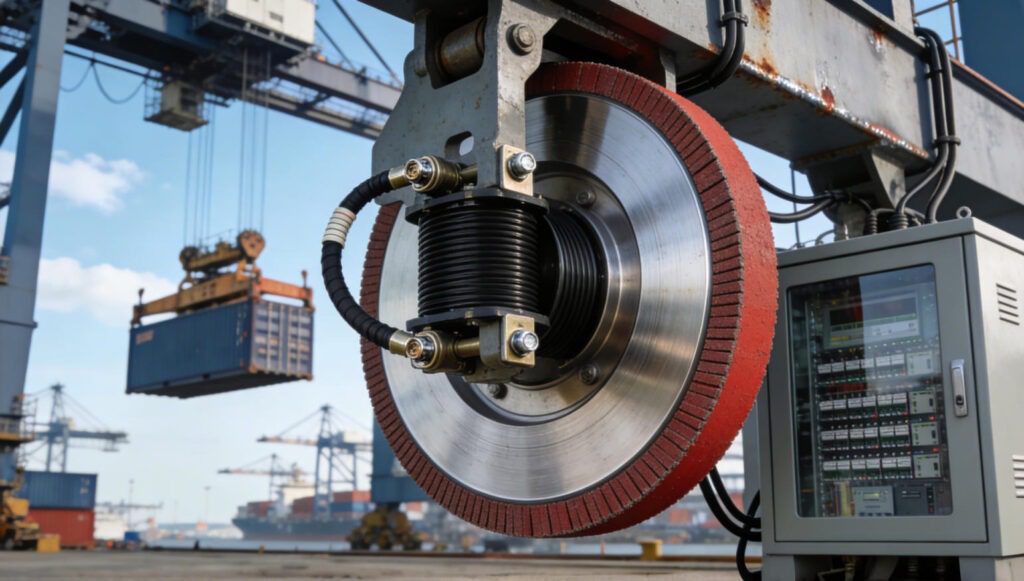
Figure 1: Electromagnetic brake systems in port cranes require uninterrupted power to prevent load drops
Ⅲ. Conventional Power Protection Limitations
Standard backup strategies prove inadequate for crane safety requirements.
1. Generator Response Time Gap
Diesel generators provide runtime extension. However, they exhibit startup delays. Even fast-start units require 8-12 seconds to synchronize. Crane brake control systems crash within 50 milliseconds of power loss. Reboot sequences require 30-60 seconds. During this interval, brakes may cycle unpredictably. Load security depends entirely on mechanical backups.
2. Deficiências na qualidade da energia elétrica
Generator output voltage fluctuates during startup. Frequency varies by ±3 Hz. Crane VFDs trip on under-voltage. Control systems reboot. Position data initializes to zero. Operators lose situational awareness. Safe crane functions suspend until full control restoration.
3. Energy Waste During Braking
Container lowering operations generate substantial regenerative power. Hoisting motors act as generators. Conventional braking systems dissipate this energy as heat through resistor banks. Terminal facilities waste megawatt-hours daily. Cooling systems consume additional power. This inefficiency increases operational costs and carbon footprints.
Ⅳ. Industrial Power UPS for Crane Safety
Purpose-built UPS de energia industrial systems address these critical gaps.
1. Millisecond Response Capability
Online double-conversion UPS architectures provide zero-transfer protection. Rectifiers convert AC to DC continuously. Inverters regenerate AC at stable voltage and frequency. When grid power fails, batteries instantaneously supply the DC bus. No interruption occurs. Brake control systems maintain continuous operation.
Advanced systems achieve transfer times below 1 millisecond. Crane PLCs never detect disturbances. Position encoders maintain accuracy. Safety interlocks remain active. Operators retain full control throughout grid events.
2. Clean Power Conditioning
Industrial-grade UPS units filter grid disturbances. They block voltage sags, surges, and harmonic distortion. Output THD remains below 3%. This clean power extends VFD lifespan. It reduces maintenance on brake control electronics. It ensures consistent calibration of load monitoring systems.
3. Extended Runtime Architectures
Battery configurations provide 10-30 minutes autonomy. This duration covers generator startup and stabilization. It allows controlled crane shutdowns during extended outages. Operators can lower suspended loads to safe positions. Brake power remains assured throughout emergency sequences.
Ⅴ. Dynamic Braking Energy Feedback Technology
Moderno port crane ups safety systems incorporate regenerative capabilities that transform safety infrastructure into profit centers.
1. Regenerative Braking Physics
Lowering a 40-ton container by 20 meters releases 8 megajoules of potential energy. Traditional systems convert this to waste heat. Regenerative UPS systems capture this energy. They synchronize with grid phases. They feed clean AC power back to the terminal distribution network.
Energy recovery rates reach 40-60% of hoisting consumption. Terminals operating 20 cranes achieve annual savings of 2-4 million kilowatt-hours. This offsets 30-50% of crane power costs. Carbon emissions reduce by 1,500-3,000 tons annually per terminal.
2. Integrated Energy Storage
Advanced UPS configurations utilize lithium-ion battery banks. These systems serve dual functions. They provide energia de reserva during outages. They also absorb rapid regenerative pulses. This buffering smooths grid feedback. It prevents voltage elevation that would trigger protective disconnects.
Battery cycling during normal operations maintains optimal charge states. Deep discharge cycles occur only during outages. This operational pattern extends battery lifespan beyond 15 years.
3. Smart Grid Integration
Modern UPS systems communicate with terminal operating systems (TOS). They report real-time energy flows. They optimize charging cycles based on vessel schedules. They participate in demand response programs. Grid operators pay terminals for frequency regulation services.
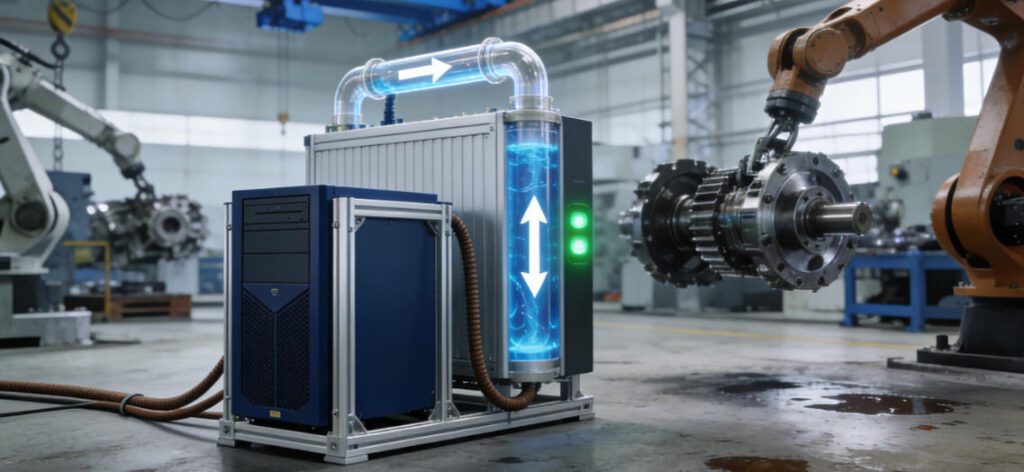
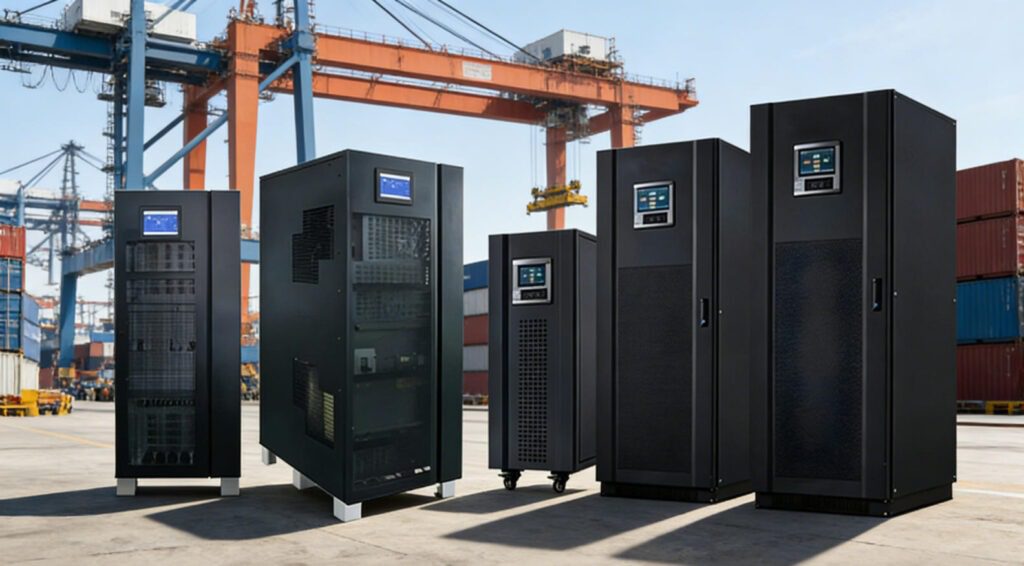
Figure 2: Industrial UPS systems with regenerative capabilities capture braking energy while ensuring safety power continuity
Ⅵ. Safety Standards and Compliance Requirements
Implementing port crane ups safety systems satisfies rigorous international mandates.
1. ISO 4301-1 Crane Safety Standards
International standards mandate reliable power for safety-critical functions. Crane brakes and limit switches require Category 3 safety circuits. These circuits demand uninterruptible power per ISO 13849. UPS para uso industrial systems achieve these PLd/PL’e performance levels through redundant architectures.
2. OSHA 1926.1400 Compliance
U.S. occupational safety regulations require protection against falling loads. Employers must implement safeguards preventing contact between loads and personnel. UPS backup for brake systems directly satisfies these requirements. Regulatory inspectors increasingly verify power continuity documentation.
3. PEMA Guidelines
Port Equipment Manufacturers Association recommendations emphasize electrical safety. Guidelines specify backup power for control systems in high-risk zones. Insurance underwriters reference these standards when assessing terminal liability coverage.
Ⅶ. Melhores práticas de implementação
Deploying crane UPS systems requires systematic engineering approaches.
1. Classificação de carga crítica
Not all crane circuits require UPS protection. Critical classification includes:
- Hoisting brake control circuits
- Main hoist VFD control boards
- Spreader twist-lock controls
- Safety PLC systems
- Emergency stop circuits
Non-critical loads such as lighting and HVAC may use generator backup. This prioritization optimizes UPS capacity and cost.
2. Redundancy Architectures
Single UPS units create vulnerability. N+1 redundant configurations ensure continuous protection even during unit maintenance. Distributed architectures place UPS systems at individual cranes rather than central locations. This topology limits single-point failure domains.
3. Maintenance and Testing Protocols
Monthly UPS self-tests verify battery integrity. Quarterly load bank testing confirms full power capability. Annual maintenance includes thermal scanning of connections. Proper documentation supports insurance and regulatory compliance.
Conclusão
Port crane operations tolerate zero power interruption risk. Container drops destroy lives, cargo, and reputations instantaneously. UPS para uso industrial systems provide the millisecond-response protection that brake systems demand. Modern units extend this protection into profitability through dynamic braking energy feedback.
Terminal operators must view port crane ups safety infrastructure as essential as mechanical components. The investment prevents catastrophic losses. It generates energy savings. It ensures regulatory compliance. Most importantly, it protects the human lives working beneath every suspended container.
Implement robust fonte de alimentação ininterrupta systems engineered for port applications. The combination of absolute safety and energy regeneration defines modern terminal excellence.
Referências
- Comissão Eletrotécnica Internacional (IEC)Site oficial: www.iec.ch
- Underwriters Laboratories (UL)Site oficial: www.ul.com
- Comitê Europeu de Padronização (CEN)Site oficial: www.cen.eu
- Administração de Padronização da China (SAC) Site oficial: www.sac.gov.cn
- Zhongguancun Energy Storage Industry Technology Alliance (CNESA)Site oficial: www.cnESA.org
- Site oficial da International Organization for Standardization (ISO): www.iso.org