مرحباً بك في BKPOWER!












Chemical Plant DCS Backup: Prevent Runaway Reactions
الإرشادات :نظام UPS عالي التحمل protection forms the backbone of chemical plant safety infrastructure. Every distributed control system (DCS) requires reliable backup power to prevent catastrophic incidents. Chemical processes involve exothermic reactions that demand continuous monitoring and control. A power failure can trigger a runaway reaction within minutes. This article explores how dcs ups chemical plant solutions ensure process safety. BKPOWER للخدمة الشاقة نظام UPS technology delivers MTBF ratings exceeding 200,000 hours. Learn why prevent runaway reactions strategies start with dependable power protection.
Ⅰ. Introduction: Power as Process Safety Foundation
Modern chemical plants rely on sophisticated control systems. Distributed Control Systems (DCS) monitor every aspect of production. They track temperatures, pressures, flows, and levels. They execute control algorithms automatically. They enable operators to manage complex processes safely. However, all these functions depend on one critical resource: electrical power.
Power failures in chemical facilities create immediate danger. Cooling stops. Agitation ceases. Safety systems lose functionality. Exothermic reactions generate heat without restraint. Temperatures climb rapidly. Pressures exceed safe limits. Containment vessels rupture. Toxic materials release into the environment. These incidents destroy assets and endanger lives.
BKPOWER provides engineered solutions for these challenges. Our heavy duty UPS system installations ensure continuous DCS operation. We prevent the power interruptions that trigger cascading failures. Our systems achieve MTBF ratings exceeding 200,000 hours. We deliver the reliability that chemical process safety demands.
Ⅱ. Understanding the Critical Role of DCS in Chemical Safety
1.The Nervous System of Chemical Operations
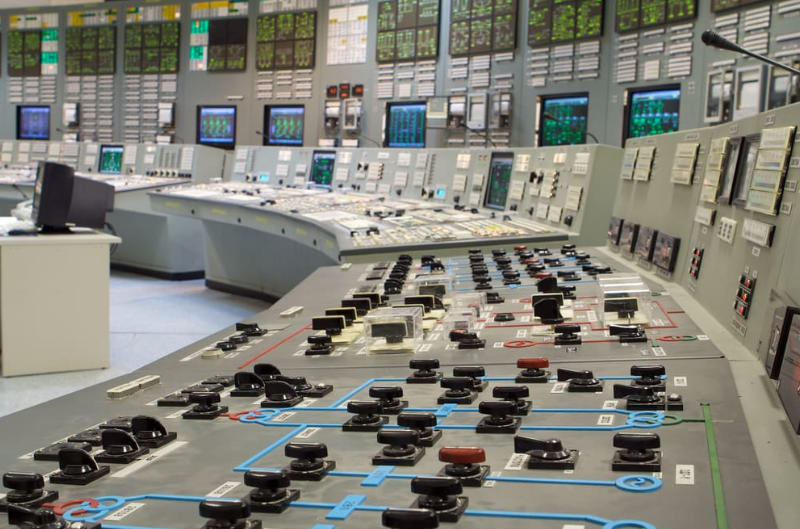
Distributed Control Systems serve as the central nervous system of modern chemical plants. They connect thousands of field instruments to operator workstations. Temperature transmitters send data every second. Pressure sensors detect minute changes. Analytical instruments monitor product quality. Flow meters track material balances. Level sensors prevent overflow conditions.
The DCS processes this data continuously. It compares actual values against setpoints. It calculates required adjustments. It sends commands to final control elements. Control valves modulate product flows. Variable speed drives adjust pump speeds. Automated systems maintain optimal operating conditions. This closed-loop control ensures process stability.
Plant operators depend on the DCS interface. Graphic displays show process conditions clearly. Trends reveal developing problems early. Alarms alert operators to abnormal situations. Historical data enables incident analysis. Without this system, chemical plants would operate blindly. The complexity of modern processes exceeds human management capability.
Safety functions integrate deeply into DCS architectures. Safety Instrumented Systems (SIS) monitor independent safety parameters. Emergency Shutdown Systems (ESD) execute protective actions. Fire and gas detection systems provide early warnings. Toxic vapor monitors protect personnel health. All these critical functions require continuous power.
2.Lessons from Historical Incidents
Chemical industry history documents numerous power-related accidents. These cases illustrate the vital importance of reliable backup systems.
The Seveso disaster occurred in 1976. An electrical fault in a cooling water pump triggered a short circuit. Fire broke out in the power supply switchboard. Connection to backup generators failed. The UPS system lost power shortly after. The DCS became completely inoperative. Cooling water circulation stopped. An exothermic reaction in a hydrazine hydrate unit generated dangerous overpressure. Toxic chemicals released into the atmosphere. Approximately 280 kilograms of ammonia escaped. Plant operations shut down for a week. Rebuilding costs reached $430,000. Environmental remediation required decades. This incident established the Seveso III Directive for European chemical facilities.
The Gramercy incident struck Louisiana in 1999. A power outage stopped all pumps in an alumina processing plant. Steam injection continued heating pressure vessels. Temperatures and pressures rose rapidly. Relief valves failed due to solid deposits. Multiple vessels exploded violently. Twenty-nine employees suffered injuries. Corrosive caustic materials sprayed across the facility. Property damage reached millions of dollars. The investigation revealed inadequate الطاقة الاحتياطية provisions. Power quality assessments were insufficient. Emergency procedures assumed DCS availability.
Richmond California experienced similar problems in 2001. A truck struck a utility pole. The power interruption caused total plant shutdown. Sulfur dioxide escaped from boiler systems. The steam turbine failed to restart quickly. Residents inhaled toxic fumes. Fifty to one hundred people sought medical treatment. The incident triggered community outrage and regulatory scrutiny. The company invested heavily in backup power systems afterward.
These cases demonstrate common patterns. Initial power failures cause immediate control system losses. Operators lose situational awareness. Automated safety functions become unavailable. Manual interventions prove ineffective. Equipment damage occurs. People get hurt. The environment suffers. The financial impacts persist for years.
Ⅲ. The Physics of Thermal Runaway
1.Chemical Reaction Dynamics
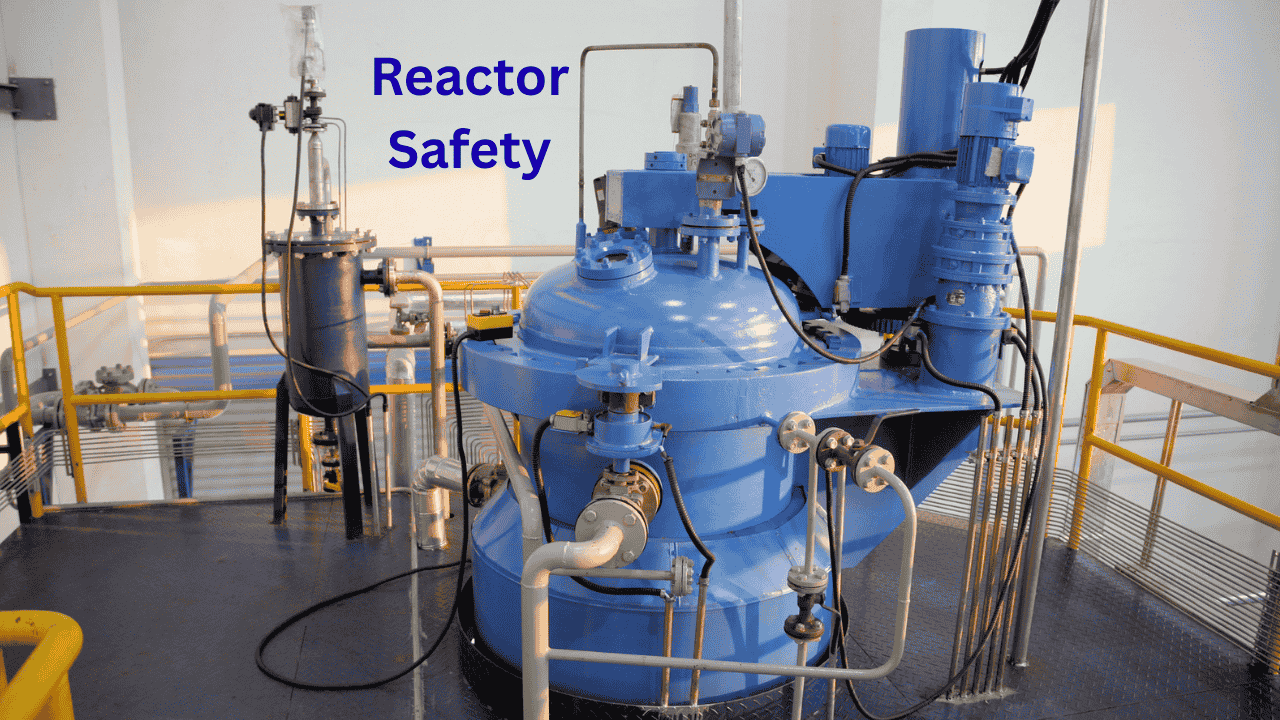
Many chemical processes release heat during operation. These exothermic reactions require careful temperature management. Cooling systems remove excess heat continuously. Agitation maintains uniform temperature distribution. Control systems monitor reaction rates constantly. Operators adjust conditions to maintain stability.
Power failures disrupt this delicate balance immediately. Circulation pumps stop running. Cooling water flow ceases. Agitators halt mixing. Temperature sensors stop transmitting data. Control valves freeze in position. The reactor continues generating heat. Nothing removes this heat effectively.
Hot spots develop first. These localized zones exhibit elevated temperatures. Chemical reaction rates increase exponentially with temperature. The Arrhenius equation governs this relationship. Doubling the reaction temperature often increases reaction rates tenfold. More heat releases faster. Temperatures climb higher. The process enters thermal runaway.
Organic peroxides pose extreme dangers. These compounds contain fuel and oxidizer in the same molecular structure. They decompose violently when heated. Some materials begin decomposing at relatively low temperatures. Once started, the decomposition becomes self-sustaining. Pressure increases dramatically inside containers. Explosive ruptures occur suddenly. The T2 Laboratories incident exemplified these hazards. Four workers died when a reactor exploded catastrophically. The blast equivalent exceeded one ton of TNT.
2.Time Critical Nature of Response
Chemical engineers design safety systems assuming specific response times. They calculate worst-case scenario progression rates. They determine maximum allowable response delays. They implement multiple protective layers. They assume control systems remain functional throughout incidents.
Power failures violate these fundamental assumptions. Response windows close immediately. Operators cannot see process conditions. The control room displays go dark. Safety instrumented systems lose power. Emergency shutdown valves remain inoperable. Automated safety functions fail to execute. Manual interventions require information that no longer exists.
Typical emergency response procedures require several minutes minimum. Operators must recognize abnormal conditions first. They need instrument confirmations. They consult operating procedures. They coordinate with team members. They execute controlled shutdown sequences. None of this works without electrical power. The only effective protection involves maintaining DCS operation continuously.
BKPOWER heavy duty UPS system installations provide this protection. Battery backup bridges utility power failures. Operators retain full control capability. Safety systems remain functional. Emergency procedures execute properly. Process equipment shuts down safely. Thermal runaway conditions never develop.
Ⅳ. Technical Requirements for Chemical Industry UPS
1.Extreme Reliability Standards
Chemical plants cannot tolerate UPS failures. The consequences prove too severe for casual approaches. Industry standards demand exceptional reliability. BKPOWER delivers MTBF ratings exceeding 200,000 hours for our heavy duty UPS system products. This figure translates to an average failure interval exceeding twenty years of continuous operation.
We achieve this reliability through engineering excellence. Redundant component architectures eliminate single points of failure. Hot-swappable power modules enable repairs without system shutdowns. Industrial-grade components withstand harsh environments. Conformal coatings protect circuit boards from corrosive atmospheres. Sealed enclosures exclude dust and moisture. Temperature-controlled operation extends component lifespans.
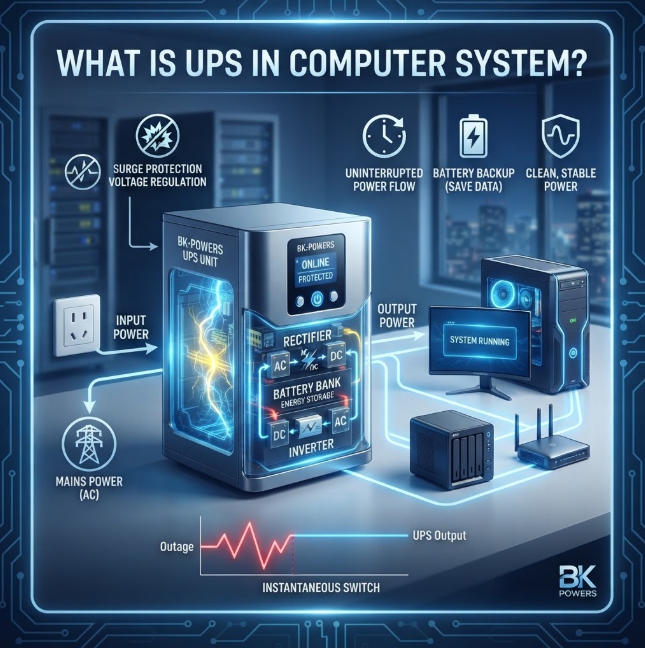
Double-conversion online topology provides electrical isolation. Utility power feeds rectifiers continuously. Rectifiers convert AC to DC power. Inverters regenerate AC from DC sources. Batteries connect to the DC bus. Loads receive pure sine wave power. Voltage sags never affect output. Frequency variations disappear. Harmonic distortion eliminates. Electrical noise attenuates. Sensitive DCS equipment receives perfect power quality.
2.Hazardous Area Compliance
Chemical plants contain classified hazardous locations. Explosive atmospheres exist around many process units. Electrical equipment must meet strict safety standards. Generic UPS systems create ignition risks in these environments.
BKPOWER designs heavy duty UPS system products for hazardous locations. We offer ATEX-certified configurations. We provide IECEx-compliant solutions. Our flame-proof enclosures contain internal explosions safely. Increased safety designs prevent sparking. Intrinsic safety circuits limit energy availability. These certifications satisfy process safety management requirements. They ensure regulatory compliance. They protect personnel and assets.
Installation practices also matter. Cable glands maintain explosion protection. Conduit systems contain arc flashes. Grounding systems prevent static buildup. Separation distances maintain safe clearances. BKPOWER engineers assist with all these considerations. We ensure complete system safety.
3.Scalability and Redundancy
Chemical facilities range from pilot plants to world-scale complexes. BKPOWER provides solutions covering 10kVA to 800kVA capacity. Modular designs accommodate future expansion requirements. Parallel configurations provide redundancy options. N+1 arrangements tolerate module failures without impact. N+2 configurations survive multiple failures.
Battery autonomy options range from minutes to several hours. Short durations bridge generator startup times. Extended runtimes support controlled shutdown sequences. Lithium-ion batteries provide high energy density. Nickel-cadmium cells survive extreme temperatures. Valve-regulated lead-acid offers cost-effective reliability. BKPOWER consultants optimize battery configurations for specific applications.
Generator integration requires special consideration. Diesel generators need time to start and stabilize. UPS systems must synchronize with varying generator output frequencies. BKPOWER units accept wide input frequency ranges. They operate effectively from 40Hz to 70Hz. Soft-start capabilities prevent generator overload. Automatic transfer switches ensure seamless transitions.
V. BKPOWER Solutions: Engineered for Chemical Applications
1.Advanced Battery Management Systems
Batteries represent the most vulnerable UPS components. They degrade over time. Temperature accelerates aging. Deep discharges reduce lifespan. Poor maintenance causes premature failures. BKPOWER addresses these challenges through intelligent battery management systems (BMS).
Our BMS provides temperature-compensated charging. Cooler conditions receive higher voltage. Warmer environments get reduced charging. This optimization extends service life significantly. Automatic testing routines exercise batteries periodically. Weak cells identify early. Discrepancies trigger replacement alerts. Equalization charging maintains cell balance. Individual cell monitoring provides detailed health information.
We offer multiple battery chemistries. Lithium-ion options provide extended lifespan. They deliver faster recharge rates. They tolerate higher temperatures. Nickel-cadmium batteries excel in extreme heat. They resist deep discharge damage. They last decades in proper applications. VRLA batteries provide economical solutions. They suit moderate temperature environments. They deliver proven reliability. Our engineers select optimal configurations for each application.
2.Integration with Safety Systems
Modern chemical plants implement Safety Instrumented Systems (SIS) according to IEC 61511 standards. These systems require high reliability. They must achieve specified Safety Integrity Levels (SIL). SIL ratings range from SIL 1 to SIL 4. Higher numbers indicate greater reliability requirements.
BKPOWER heavy duty UPS system designs support SIL compliance. Redundant power paths satisfy high reliability needs. Fault-tolerant architectures ensure continuous availability. Diagnostic capabilities detect internal failures immediately. Automatic bypasses maintain power during maintenance. Bypasses also activate during UPS faults. Manual bypasses enable complete electrical isolation. These features satisfy Layer of Protection Analysis (LOPA) requirements.
Proof testing validates safety system functionality. Test intervals depend on reliability requirements. BKPOWER designs facilitate testing procedures. Test switches verify transfer functionality. Monitoring systems confirm سعة البطارية. Diagnostic software identifies degradation trends. Documentation supports process safety management audits.
3.Remote Monitoring Capabilities
Modern chemical plants operate with lean staffing models. Centralized control rooms monitor multiple units. Remote facilities run unattended periodically. UPS systems must support these operational models. Local presence cannot remain a requirement for UPS management.
BKPOWER provides comprehensive المراقبة عن بُعد. SNMP protocols integrate with plant networks. Modbus communications connect to DCS systems. OPC interfaces enable data exchange. Web servers provide browser-based access. Mobile apps support smartphone monitoring.
Operators view UPS status from central HMI screens. Alarms aggregate into plant-wide systems. Trends display battery health projections. Event logs record power quality incidents. Predictive algorithms identify maintenance needs. Remote diagnostics resolve many issues without site visits. Technicians arrive prepared when visits become necessary. This approach reduces maintenance costs. It improves system availability. It enhances safety response capabilities.
Ⅵ. Implementation Best Practices
1.Comprehensive Load Assessment
Proper UPS sizing requires thorough analysis. BKPOWER engineers conduct detailed site surveys. We inventory all planned loads. We measure actual power consumption. We identify inrush currents. We evaluate power factors. We calculate crest factors. We assess future expansion plans.
Oversizing wastes capital investment. It reduces operational efficiency. It increases maintenance costs. Undersizing creates overload risks. It limits future growth options. It compromises reliability margins. Our rigorous analysis ensures optimal sizing.
Load characterization proves particularly important for motor drives. Variable frequency drives create harmonic currents. These harmonics stress UPS systems. Crest factors exceed standard values. BKPOWER heavy duty UPS system inverters handle these الأشكال الموجية. We rate our equipment for non-linear loads. We provide output isolation transformers. We filter harmonic distortion. Motor loads operate without problems.
2.Coordinated Power Protection Architecture
Effective protection requires system-level thinking. UPS systems represent just one layer. Surge protective devices (SPD) guard against lightning. Voltage regulators correct chronic sags. Power conditioners filter electrical noise. Generators provide extended runtime. Transfer switches ensure seamless transitions. These components must work together harmoniously.
BKPOWER engineers design complete protection architectures. We coordinate protective device settings. We ensure selective tripping. We verify transfer sequences. We validate integration with plant ESD systems. We confirm compatibility with emergency response procedures.
Grounding systems require particular attention. Chemical plants often contain extensive steel structures. Piping networks create electrical paths. Ground loops induce noise currents. Proper grounding prevents these problems. It ensures personnel safety. It protects equipment from damage. BKPOWER provides grounding recommendations. We ensure NEC compliance. We follow IEEE standards.
3.Maintenance and Testing Programs
Reliability requires ongoing attention. Batteries degrade predictably. Capacitors age gradually. Fans accumulate dust. Connections loosen over time. Thermal cycling stresses components. Without maintenance, failures eventually occur.
BKPOWER offers comprehensive service agreements. Quarterly inspections catch developing problems. Thermal imaging identifies hot connections. Battery testing verifies capacity retention. Fan cleaning restores airflow. Capacitor testing detects aging trends. Firmware updates enhance functionality.
Preventive replacement programs eliminate surprises. We recommend capacitor replacement at eight years. We suggest battery replacement based on test results. We advise fan replacement at ten years. These investments protect against unplanned outages. They maintain MTBF performance. They extend system service life.
Documentation supports regulatory compliance. Service records demonstrate due diligence. Maintenance logs satisfy insurance requirements. Calibration records confirm measurement accuracy. BKPOWER maintains detailed service histories. We provide reports for audits. We support process safety management reviews. We assist with regulatory inspections.
Ⅶ. Conclusion: Investing in Absolute Protection
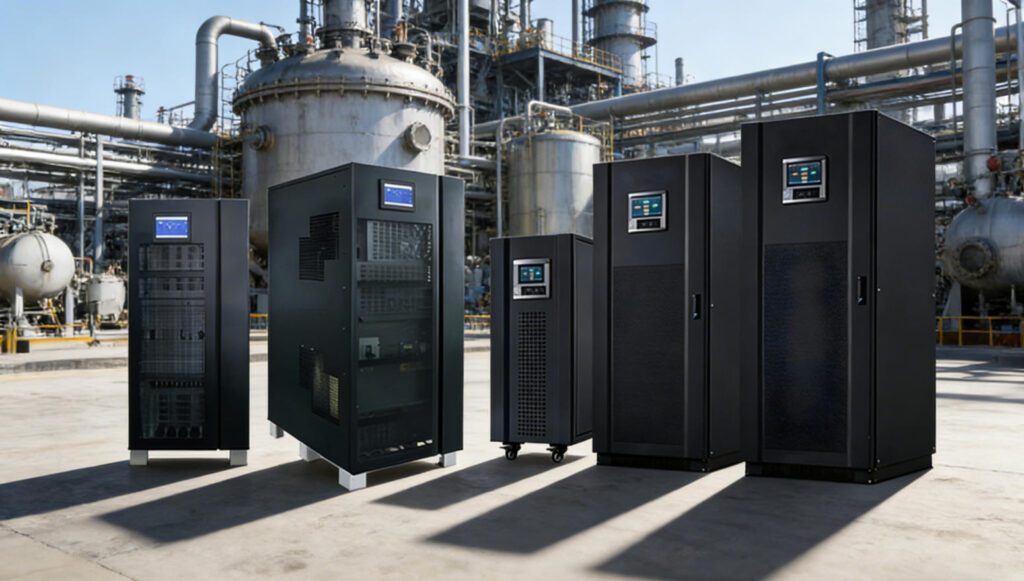
Chemical process safety demands multiple protective layers. Each layer must function reliably. Heavy duty UPS system installations provide foundational protection against power failures. BKPOWER technology prevents the electrical interruptions that trigger runaway reactions. Our MTBF ratings exceeding 200,000 hours ensure long-term reliability. Our hazardous area certifications satisfy regulatory requirements. Our integration capabilities support modern control architectures.
The investment in quality UPS protection proves minimal compared to potential losses. A single prevented incident saves millions. Avoided injuries protect human lives. Environmental protection preserves community trust. Regulatory compliance avoids penalties. Operational continuity maintains revenue streams. These benefits justify premium power protection.
Contact BKPOWER today for a comprehensive power quality assessment. Our engineers understand chemical industry requirements. We have experience with hazardous area installations. We support process safety management compliance. We deliver the reliability that prevents runaway reactions. Protect your facility with the best dcs ups chemical plant technology available. Ensure operational safety with BKPOWER heavy duty UPS system solutions.
المراجع
- اللجنة الكهروتقنية الدولية (IEC)الموقع الرسمي: www.iec.ch
- مختبرات أندررايترز (UL)الموقع الرسمي: www.ul.com
- اللجنة الأوروبية للتوحيد القياسي (CEN)الموقع الرسمي: www.cen.eu
- إدارة التوحيد القياسي في الصين (SAC)الموقع الرسمي: www.sac.gov.cn
- تحالف تشونغقوانكون لتكنولوجيا صناعة تخزين الطاقة (CNESA)الموقع الرسمي: www.cnESA.org
- الموقع الرسمي للمنظمة الدولية للتوحيد القياسي (ISO): www.iso.org