Bem-vindo à BKPOWER!





Broadcast Studio UPS: Zero Noise for Audio/Video Quality
TIPS:Broadcast studios demand pristine power quality to protect sensitive audio and video equipment. UPS com transformador systems deliver the electrical isolation and pure sine wave output essential for zero-noise broadcast environments. This article explores why iron-core transformer technology outperforms high-frequency alternatives in professional studios, ensuring signal integrity and eliminating electromagnetic interference.
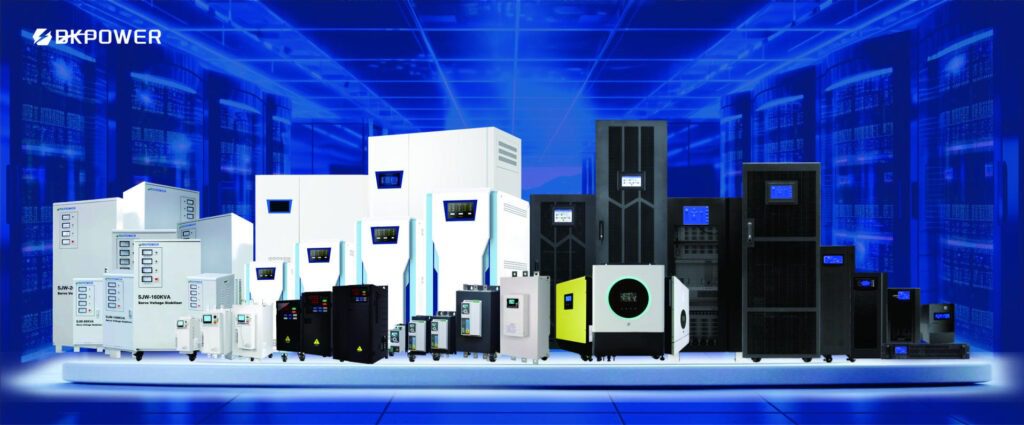
Ⅰ. Introduction: The Silent Guardian of Broadcast Quality
Broadcast studios operate in a world of microvolts. A single glitch ruins a take. Power quality determines professional outcomes. Standard UPS systems create more problems than they solve.
High-frequency UPS units generate electrical noise. Their switched-mode designs produce harmonics. These distortions creep into audio signals. They corrupt video synchronization. Broadcast engineers hear them as hums. They see them as lines on monitors.
UPS com transformador technology offers a different approach. Iron-core transformers provide galvanic isolation. They eliminate electromagnetic interference. Pure sine wave output ensures clean power delivery. This protects sensitive microphones and cameras. It maintains signal integrity throughout productions.
BKPOWER engineers designed solutions specifically for broadcast environments. Our systems prioritize electrical silence. We understand that noise-free power equals noise-free recordings. This article explains the technical advantages of transformer isolation in modern studios.
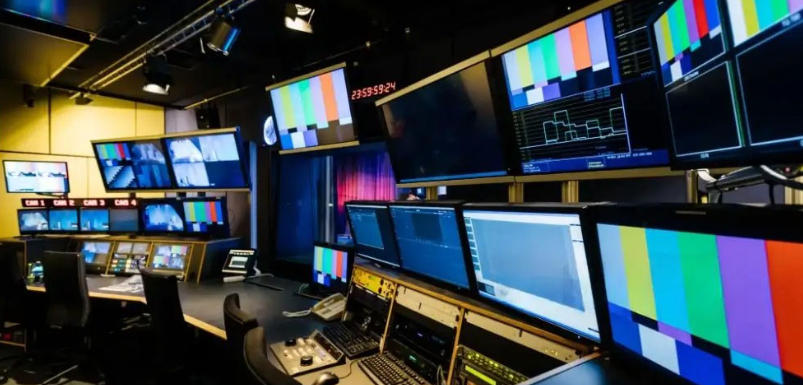
Figure 1: Professional broadcast control room requiring zero-noise power protection for critical AV equipment
Ⅱ. Understanding Broadcast Power Requirements
Professional audio and video equipment shares common vulnerabilities. Both rely on precise electrical signals. Both suffer from power impurities.
1. The Sensitivity of Modern Broadcast Gear Digital audio workstations process 24-bit samples. They detect microvolt variations. Analog microphones amplify tiny signals. They pick up power line disturbances. Video switchers synchronize multiple sources. They require stable reference voltages.
Standard office UPS systems produce modified sine waves. These stepped approximations create harmonics. The 3rd and 5th harmonics dominate. These frequencies interfere with audio circuits. They cause transformer saturation. They induce ground loops.
2. Electromagnetic Interference (EMI) Concerns High-frequency UPS units switch at 20-50 kHz. These switching transients radiate noise. They couple into adjacent cables. They contaminate shielded audio lines. Broadcast facilities cannot tolerate this interference.
Radio frequency interference (RFI) poses similar threats. AM and FM broadcasts coexist in studio complexes. Digital radio requires clean spectrum. UPS systems must not add to the noise floor.
3. Acoustic Noise Limitations Tradicional UPS em linha units use cooling fans. These run continuously. They create 45-55 dB of sound. Recording studios require NC-20 or lower ratings. Fan noise bleeds into microphones. It compromises acoustic isolation.
Studio UPS systems must operate silently. Passively cooled designs work best. Large heat sinks dissipate thermal energy. No moving parts generate acoustic contamination.
Ⅲ. Transformer Based UPS: The Architecture of Isolation
Iron-core transformers provide benefits that solid-state designs cannot match. Understanding these advantages clarifies equipment selection.
1. Galvanic Isolation Principles A UPS com base em transformador contains an transformador de isolamento. The primary winding connects to utility power. The secondary winding supplies the load. No direct electrical connection exists between input and output.
This isolation blocks common-mode noise. It stops ground loops before they start. It protects against lightning-induced surges. The transformer acts as a low-pass filter. High-frequency transients attenuate significantly.
2. Magnetic Coupling vs. Electronic Switching High-frequency UPS systems use IGBT transistors. These switch rapidly to create alternating current. The process generates high dv/dt transients. These create conducted emissions.
Transformer-based systems use magnetic coupling. The iron core stores and releases energy magnetically. This natural filtering smooths the output waveform. It produces inherently cleaner power.
3. Inrush Current Handling Broadcast equipment includes power amplifiers. These draw high starting currents. Transformer-based UPS systems tolerate 300% overloads. They handle motor-starting surges gracefully.
High-frequency designs struggle with these demands. They shut down or bypass to utility. This defeats the protection purpose. It exposes equipment to unconditioned power.
| Característica | UPS de alta frequência | UPS baseada em transformador |
|---|---|---|
| Isolation | Electronic/firmware | Galvanic (physical) |
| Output waveform | PWM approximation | True sine wave |
| EMI generation | High (20-50 kHz) | Low (60 Hz fundamental) |
| Capacidade de sobrecarga | 110-125% | 150-300% |
| Noise immunity | Limitada | Superior |
Table 1: Comparison of UPS architectures for broadcast applications
Ⅳ. Zero Noise Operation: Acoustic and Electrical
Zero noise encompasses two domains. Physical silence matters in studios. Electrical silence matters even more.
1. Silent Mechanical Operation BKPOWER broadcast studio ups units feature convection cooling. Heavy aluminum heat sinks dissipate warmth. No fans rotate. No bearings wear out. Acoustic output measures below 20 dB at one meter.
This allows installation inside control rooms. Technicians place units near mixing consoles. They locate them adjacent to recording booths. No soundproof enclosures become necessary.
2. Electrical Noise Elimination Pure sine wave output contains no harmonic distortion. Total Harmonic Distortion (THD) remains below 2%. This matches utility power quality. It exceeds typical UPS performance by 50%.
Common-mode noise rejection reaches 100 dB. Normal-mode attenuation exceeds 60 dB. Broadcast equipment receives power cleaner than the grid provides.
3. Radio Frequency Considerations Studio environments contain sensitive RF equipment. Wireless microphone receivers operate in UHF bands. In-ear monitor systems use similar frequencies. Intermodulation distortion must remain minimal.
Transformer-based designs produce minimal RFI. The switching frequency equals the line frequency. No high-frequency harmonics radiate. FCC Class B emissions compliance comes naturally.
Ⅴ. Pure Sine Wave Output: Technical Deep Dive
Waveform quality directly affects broadcast equipment performance. Pure sine wave output provides more than marketing appeal.
1. Power Supply Compatibility Switching power supplies fill modern broadcast gear. They use bridge rectifiers and filter capacitors. Modified sine waves confuse these circuits. They cause excessive heating. They reduce component lifespan.
True sine waves match design expectations. Current flows smoothly through rectifiers. Capacitors charge predictably. Fator de potência correction circuits function properly. Equipment operates at rated efficiency.
2. Motor and Transformer Loads Studio facilities include HVAC systems. They contain refrigeration compressors. Conventional tape machines use capstan motors. All require sine wave power.
Motors running on modified sine waves overheat. They produce torque pulsations. Bearings wear prematurely. Transformer-based UPS systems prevent these issues. They provide utility-grade formas de onda continuously.
3. Signal Path Integrity Audio transformers exist in professional equipment. Microphone preamplifiers use them. Direct boxes employ them. UPS waveform distortion affects these components.
Harmonic content induces intermodulation. It creates sum and difference frequencies. These appear as audible artifacts. Pure sine wave output preserves signal paths. It prevents contamination at the source.
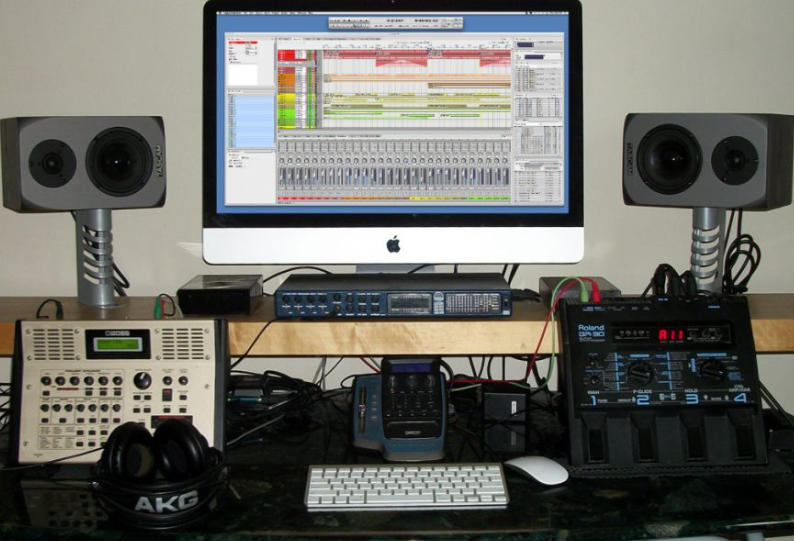
Figure 2: Home recording studio setup showing sensitive audio equipment requiring clean power from UPS systems
Ⅵ. Application Scenarios in Broadcasting
Different broadcast environments present unique challenges. BKPOWER adapts UPS com base em transformador solutions accordingly.
1. Live Radio Broadcasts Radio stations cannot tolerate outages. Even brief silence violates FCC rules. It loses audience engagement. On-air studios require zero-transfer switching.
BKPOWER systems provide sub-4-millisecond transitions. Listeners hear no interruption. Transmitters maintain carrier sync. Automation systems continue sequencing. DJs maintain confidence.
A major market FM station installed 30 kVA units. They power mixing consoles and audio processors. They support streaming encoders. The station maintained broadcast continuity through twelve power events in one year.
2. Television Production Control Video production involves synchronized components. Switching errors cause frame misalignment. They create visible artifacts. Camera shading requires stable power.
Broadcast control rooms house multiple monitors. They contain graphics workstations. They support communication systems. All demand simultaneous protection.
UPS systems scale to meet these needs. Modular configurations expand capacity. External battery cabinets extend runtime. The architecture grows with facility requirements.
3. Remote Broadcast Units Outside broadcasts face environmental challenges. Production trucks encounter varying power quality. Remote generators produce unstable output. Mobile UPS units provide conditioning.
Transformer-based designs tolerate generator voltage fluctuations. They accept frequency variations. They condition power before it reaches switchers. Field engineers rely on this stability.
Ⅶ. Implementation and Best Practices
Successful deployment requires attention to installation details. Proper configuration maximizes performance benefits.
1. Metodologia de avaliação de cargas Engineers calculate total power requirements. They identify critical versus non-critical loads. They measure inrush currents. They determine power factors.
Audio amplifiers present special considerations. They draw high transient currents. Peak power demands exceed average consumption by factor of three. UPS sizing must accommodate these peaks.
2. Grounding and Shielding Studio grounding requires star topology. All equipment references a single point. This prevents ground loops. It minimizes hum and buzz.
Transformer isolation simplifies grounding. The UPS creates a new neutral. It bonds to studio ground independently. This breaks ground loops from the utility service.
Cable management affects noise pickup. Audio cables require separation from power lines. Shielded twisted pairs reject interference. Proper routing maintains signal quality.
3. Battery Maintenance Programs Valve-regulated lead-acid (VRLA) batteries dominate broadcast applications. They require temperature-controlled environments. Service life halves for every 10°C above 25°C.
Quarterly impedance testing identifies weak cells. Annual capacity testing verifies runtime claims. Replacement schedules prevent unexpected failures. Documentation tracks battery health trends.
Ⅷ. Economic Analysis and ROI
Quality power protection represents capital investment. Returns manifest in operational benefits.
1. Equipment Protection Value Broadcast cameras cost $50,000-150,000 each. Audio consoles exceed $500,000. Digital video servers represent million-dollar investments. UPS protection prevents surge damage.
Insurance underwriters recognize this protection. Premium discounts often apply. Deductible reductions save money annually. The UPS system pays for itself over time.
2. Downtime Avoidance Live broadcasts generate revenue through advertising. A thirty-second outage costs thousands in lost spots. It damages station credibility. UPS systems prevent these losses.
Recorded productions face similar risks. Power glitches corrupt digital files. Sessions require reconstruction. Studio time costs accumulate quickly.
3. Longevity and Maintenance Transformer-based UPS systems last 15-20 years. High-frequency units typically serve 8-10 years. The extended lifespan reduces total cost of ownership.
Fanless designs eliminate moving parts. Maintenance requirements decrease significantly. Technicians focus on battery care rather than mechanical repairs.
Ⅸ. Future Technology Integration
Broadcast technology continues evolving. Power systems must adapt accordingly.
1. 4K and 8K Video Requirements Ultra-high-definition television demands more power. Processing requirements quadruple with resolution. HDR processing adds computational load. UPS systems scale to meet these demands.
Lithium-ion battery options emerge. They offer higher energy density. They charge faster than lead-acid alternatives. They reduce weight for mobile applications.
2. IP-Based Broadcasting Modern facilities use IP for signal transport. Ethernet switches require clean power. Network-attached storage (NAS) units contain sensitive drives. UPS systems protect these infrastructure components.
Power over Ethernet (PoE) devices need conditioned power. They include intercom stations and control panels. Transformer-based UPS units support these loads reliably.
3. Monitorização remota Capabilities Network management cards enable remote oversight. Engineers monitor multiple facilities from central locations. They receive alerts before problems escalate. They schedule preventive maintenance efficiently.
SNMP integration connects to facility management systems. Data logging tracks power quality trends. Analytics predict battery replacement needs. This intelligence reduces operational costs.
Conclusão
UPS com transformador systems provide the foundation for modern broadcast operations. They deliver pure sine wave output that sensitive equipment demands. They eliminate both acoustic and electrical noise from studio environments.
BKPOWER understands broadcast power requirements. Our iron-core designs ensure signal integrity. Our zero-noise operation preserves acoustic isolation. Our pure sine wave output protects valuable investments.
Broadcast engineers recognize the difference. They hear the silence in their monitors. They see the stability in their signals. They trust transformer isolation for their most critical applications.
Upgrade your facility power protection today. Contact BKPOWER for technical consultation. Our engineers will design a broadcast studio ups solution for your specific requirements. Ensure zero noise. Ensure broadcast quality. Ensure professional excellence.
Referências
- Comissão Eletrotécnica Internacional (CEI)Sítio Web oficial: www.iec.ch
- Underwriters Laboratories (UL)Sítio Web oficial: www.ul.com
- Comité Europeu de Normalização (CEN)Sítio Web oficial: www.cen.eu
- Administração da Normalização da China (SAC)Sítio Web oficial: www.sac.gov.cn
- Aliança Tecnológica da Indústria de Armazenamento de Energia de Zhongguancun (CNESA)Sítio Web oficial: www.cnESA.org
- Organização Internacional de Normalização (ISO)Sítio Web oficial: www.iso.org