Welcome to BKPOWER!












Industrial vs High Frequency UPS
About uninterrupted power supply(UPS):Industrial vs High Frequency UPS
In the dynamic landscape of modern power management, Uninterruptible Power Supplies (UPS) have emerged as indispensable assets for safeguarding critical equipment and ensuring seamless operations across diverse industries. Among the various types of UPS, Industrial Frequency UPS and High Frequency UPS stand out as two dominant technologies, each with its distinct features, structural designs, application scopes, and product configurations. Understanding these differences is crucial for making informed decisions that align with specific power protection requirements. In this comprehensive article, we will conduct an in – depth comparison between Industrial Frequency UPS and High Frequency UPS, and explore how BKPOWER’s innovative UPS products, encompassing both types, can offer tailored solutions for every power – intensive scenario.

Ⅰ. The Significance of Uninterruptible Power Supplies
1. The Role of UPS in Modern Operations
Uninterruptible Power Supplies act as the last line of defense against power outages, voltage fluctuations, surges, and other electrical anomalies. Whether it’s a bustling data center housing terabytes of critical data, a high – tech manufacturing plant relying on precision machinery, or a healthcare facility where life – saving equipment must remain operational at all times, a reliable UPS system ensures that connected devices continue to function without interruption. By providing a seamless transition to battery – powered backup, UPS systems protect valuable data from corruption, prevent hardware damage, and minimize costly downtime.
2. The Growing Demand for Specialized UPS Solutions
As industries evolve and technology becomes more sophisticated, the demand for specialized UPS solutions has skyrocketed. Different applications have unique power requirements, and choosing the right type of UPS is essential. Industrial Frequency UPS and High Frequency UPS have emerged as leading options, each catering to specific needs based on their inherent characteristics.
Ⅱ. Structural Design: A Comparative Analysis
1. Industrial Frequency UPS
- Transformer – Centric Design: Industrial Frequency UPS, also known as Line – Frequency UPS, is characterized by its large – sized, low – frequency transformer. This transformer plays a central role in the power conversion process, converting the incoming alternating current (AC) to direct current (DC) for battery charging and then back to AC for powering the load. The low – frequency operation of the transformer provides a more robust and stable power conversion, making it highly effective in filtering out electrical noise, voltage sags, surges, and harmonics.
- Complex Circuitry: Due to the presence of the large transformer and additional components required for power conditioning, Industrial Frequency UPS systems tend to have more complex circuitry. This complexity, while contributing to their superior power – conditioning capabilities, also results in a larger physical size and higher weight compared to High Frequency UPS.
2. High Frequency UPS
- Compact and Efficient Design: High Frequency UPS systems leverage advanced high – frequency switching technology. Instead of relying on a large low – frequency transformer, they use smaller, more efficient components such as high – frequency rectifiers and inverters. The high – frequency operation allows for a more compact design, reducing the overall size and weight of the UPS unit significantly. This makes High Frequency UPS highly suitable for applications where space is at a premium.
- Simplified Circuitry: With the elimination of the large transformer and the use of modern switching technology, High Frequency UPS features simplified circuitry. This not only contributes to its smaller form factor but also reduces manufacturing costs and potentially improves overall system reliability.
| Feature | Industrial Frequency UPS | High Frequency UPS |
| Transformer | Large, low – frequency | Small or absent (high – frequency switching) |
| Circuit Complexity | High | Low |
| Size and Weight | Large and heavy | Compact and lightweight |
Ⅲ. Main Application Directions
1. Industrial Frequency UPS
- Industrial Environments: In industrial settings, where power quality can be highly variable and electrical interference is common, Industrial Frequency UPS shines. Manufacturing plants, oil refineries, and mining operations often have equipment that generates significant electrical noise and experiences sudden power surges. The superior power – conditioning capabilities of Industrial Frequency UPS make it ideal for protecting motors, programmable logic controllers (PLCs), and other critical industrial machinery. For example, in a manufacturing line, a momentary voltage sag could disrupt the operation of a robotic arm, leading to production delays. An Industrial Frequency UPS can smooth out such fluctuations, ensuring continuous operation.
- Large – Scale Data Centers: Large – scale data centers with strict power quality requirements also favor Industrial Frequency UPS. These data centers house thousands of servers and storage devices that are extremely sensitive to power variations. The ability of Industrial Frequency UPS to provide clean, stable power and handle high overloads is crucial for maintaining data integrity and preventing server crashes.
- Medical Facilities: In healthcare environments, where the reliability of power supply is non – negotiable, Industrial Frequency UPS is widely used to protect life – saving medical equipment such as ventilators, MRI machines, and surgical lasers. The long – battery life and robust design of these UPS systems ensure that critical medical procedures can continue uninterrupted during power outages.
2. High Frequency UPS
- Small to Medium – Sized Data Centers: High Frequency UPS is a popular choice for small to medium – sized data centers. Its compact size allows for efficient use of limited rack space, and the high – efficiency power conversion helps reduce energy consumption and associated cooling costs. These data centers often have a moderate power load, and the fast response time of High Frequency UPS is sufficient to protect the servers and networking equipment from short – term power disruptions.
- Office Environments: In office settings, where space is at a premium and cost – effectiveness is a key consideration, High Frequency UPS provides reliable power protection for computers, servers, and networking devices. Its smaller footprint makes it easy to install in server closets or under desks, and the lower initial cost makes it an attractive option for businesses on a budget.
- Telecommunications Infrastructure: The telecommunications industry relies on High Frequency UPS to protect base stations, routers, and other communication equipment. The compact and energy – efficient nature of these UPS systems is well – suited to the remote and space – constrained locations where telecommunications equipment is often deployed. Additionally, the fast response time ensures that communication services remain uninterrupted during power outages.
Ⅳ. Single – Phase and Three – Phase Products
1. Industrial Frequency UPS
- Availability: Industrial Frequency UPS is commonly available in both single – phase and three – phase configurations. Three – phase models are particularly popular in industrial and large – scale commercial applications, where high – power loads need to be supported. These three – phase units can handle heavier electrical loads and distribute power more evenly, making them suitable for powering multiple pieces of equipment simultaneously. Single – phase Industrial Frequency UPS, on the other hand, is often used in smaller commercial and residential applications with lower power requirements.
- Advantages in Three – Phase Applications: In three – phase applications, Industrial Frequency UPS offers better power balance, reduced voltage distortion, and increased system capacity. This is crucial in industrial settings where three – phase motors and other heavy – duty equipment are prevalent. For example, in a factory with a large number of three – phase motors, a three – phase Industrial Frequency UPS can ensure stable operation and prevent power – related disruptions.
2. High Frequency UPS
- Availability: High Frequency UPS also comes in single – phase and three – phase variants. Single – phase models are widely used in small – scale applications such as home offices, small retail stores, and individual server setups. Three – phase High Frequency UPS, while available, is more commonly found in medium – sized data centers and commercial buildings with moderate – to – high power demands.
- Advantages in Single – Phase Applications: In single – phase applications, High Frequency UPS’s compact size and high efficiency are especially beneficial. For instance, in a home office with a few computers and a printer, a single – phase High Frequency UPS can provide reliable backup power in a small footprint, without consuming excessive energy.
Ⅴ. BKPOWER’s UPS Product Offerings
1. Industrial Frequency UPS Solutions
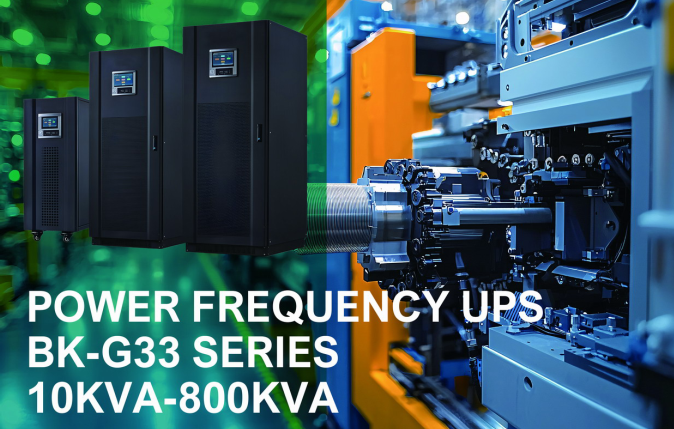
BKPOWER’s Industrial Frequency UPS products are engineered to meet the most demanding power protection requirements. Our units feature high – quality transformers and advanced power – conditioning circuits, ensuring excellent power quality and reliability. With a wide range of power capacities available, from small units for commercial applications to large – scale three – phase systems for industrial use, BKPOWER’s Industrial Frequency UPS can handle any load. Our products also come with intelligent battery management systems, remote monitoring capabilities, and user – friendly interfaces, providing comprehensive control and peace of mind for users. Whether you are running a large – scale manufacturing plant or managing a critical data center, BKPOWER’s Industrial Frequency UPS is the reliable choice for power protection.
2. High Frequency UPS Offerings
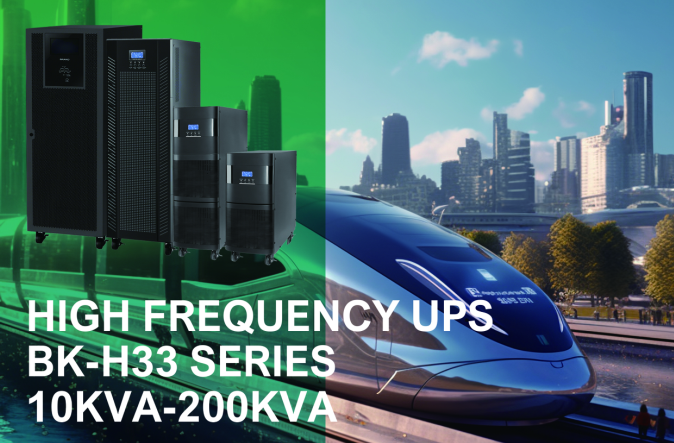
BKPOWER’s High Frequency UPS line is designed with innovation and efficiency in mind. Our high – frequency units offer industry – leading efficiency, fast response times, and compact designs. We provide a diverse range of single – phase and three – phase models to suit different application needs, from small home offices to medium – sized data centers. Our High Frequency UPS products incorporate advanced digital control algorithms and high – performance components, ensuring stable operation and long – term reliability. With features such as easy installation, low maintenance requirements, and energy – saving capabilities, BKPOWER’s High Frequency UPS offers an ideal solution for cost – conscious users who still demand high – quality power protection.
Ⅵ. Conclusion
In conclusion, Industrial Frequency UPS and High Frequency UPS each have their own strengths and are tailored to different power protection needs. Industrial Frequency UPS excels in environments with poor power quality, high – overload demands, and critical applications where long – term reliability is paramount. On the other hand, High Frequency UPS offers a more compact, efficient, and cost – effective solution for applications with space constraints and moderate power requirements.
BKPOWER, with its comprehensive portfolio of both Industrial Frequency and High Frequency UPS products, is well – positioned to meet the diverse needs of customers across various industries. Whether you need a robust solution for an industrial plant or a space – saving option for your office, BKPOWER has the expertise and products to provide reliable power protection. Don’t leave your critical equipment vulnerable to power disruptions. Choose BKPOWER’s UPS products and experience the difference in quality, performance, and reliability.
References
- International Electrotechnical Commission (IEC)Official website: www.iec.ch
- Underwriters Laboratories (UL)Official website: www.ul.com
- European Committee for Standardization (CEN)Official website: www.cen.eu
- Standardization Administration of China (SAC)Official website: www.sac.gov.cn
- Zhongguancun Energy Storage Industry Technology Alliance (CNESA)Official website: www.cnESA.org
- International Organization for Standardization (ISO)Official website: www.iso.org