Welcome to BKPOWER!












Carolinas Medical Center UPS Project: High-reliability Power Protection Case
Ⅰ. Project Overview
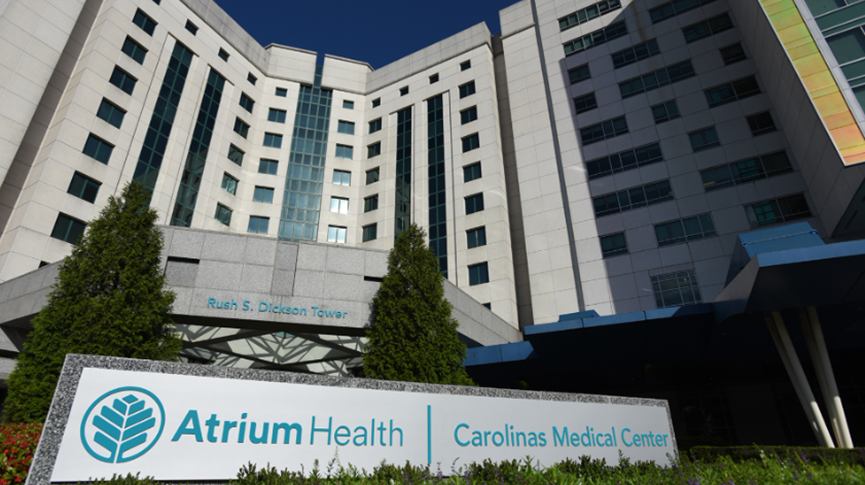
- Institutional Profile: Carolinas Medical Center, situated in Florence, South Carolina, USA, serves nine surrounding counties. With 420 beds and over 1,800 medical staff (including 270+ specialists), it delivers comprehensive healthcare services such as acute care, cancer treatment, cardiac care, emergency services, obstetrics, and rehabilitation.
- Facility Upgrade: In 1998, the center relocated to a new medical campus outfitted with advanced medical devices, aiming to provide high-quality care for decades. The data center moved alongside the campus, and the original UPS system approached full capacity.
Ⅱ. Core Challenges
- Power Stability Requirements:
- The hospital relies on 24/7 operation of IT systems, diagnostic equipment, laboratories, and monitoring systems. Any downtime endangers patient safety and disrupts care continuity.
- Facing power quality issues (voltage fluctuations, surges, load mutations), it needs to protect critical equipment from damage.
- Capacity and Expansion Bottlenecks:
- In 2023, two additional UPS units were installed for servers but reached capacity rapidly.
- Strict compliance with HIPAA (Health Insurance Portability and Accountability Act) for protecting Patient Health Information (PHI) is mandatory.
- Conflict with Future Plans:
- The initial UPS design did not cover the entire data center, failing to adapt to long-term expansion needs.
Ⅲ. Solutions
BKPOWER addressed these challenges with the BK-G33 series line-frequency UPS:
- Technical Selection: Implementation of BK-G33 series line-frequency UPS systems.
- Energy Efficiency: Optimization of energy consumption in high-density computing environments to reduce operational costs.
- Redundancy and Reliability: Parallel redundancy configuration allowing single-unit maintenance without power interruption.
- Network Monitoring: Integration of email/SMS notification functions for proactive power event alerting and load management.
Ⅳ. Project Outcomes
- Enhanced Reliability:
- Achieved year-round fault-free operation, ensuring stable operation of critical medical systems (e.g., patient information systems, radiology applications).
- Prevented data loss and care interruptions caused by power outages, improving patient satisfaction.
- Flexibility and Scalability:
- Modular design enables seamless future server expansion (e.g., adding 6 servers to support a new health information system).
- Optimized O&M Efficiency:
- Remote load monitoring and event response via network monitoring reduce manual inspection costs.
- Phased migration strategy mitigates implementation risks and ensures business continuity.
Ⅴ. Conclusion
This case demonstrates how high-end UPS solutions become the core competitiveness of modern green data centers, providing a replicable energy-efficient model for high-density, high-availability healthcare environments.