Welcome to BKPOWER!












How Temperature Affects Industrial UPS Performance?
TIPS:Industrial UPS systems face severe performance challenges in high temperature environments. This article explores how temperature affects industrial UPS performance and why 50°C operating capability matters. We examine critical design features like fan redundancy that ensure continuous operation. Understanding these factors helps optimize your uninterruptible power supply for harsh industrial conditions.
Ⅰ. Introduction
Heat is the silent enemy of power electronics. Industrial UPS systems face unique thermal challenges that standard office UPS units never encounter. Manufacturing floors, outdoor enclosures, and harsh industrial environments push temperatures far beyond typical 25°C data center conditions.
Understanding how temperature affects industrial UPS performance becomes critical for facility managers. This article provides comprehensive technical guidance on high temperature operation, thermal design strategies, and reliability optimization.
We focus on two critical capabilities: 50°C continuous operation and fan redundancy design. These features distinguish true industrial-grade UPS systems from commercial alternatives. Whether you operate in tropical climates, process industries, or confined spaces, this guide will help you select and maintain the right uninterruptible power supply.
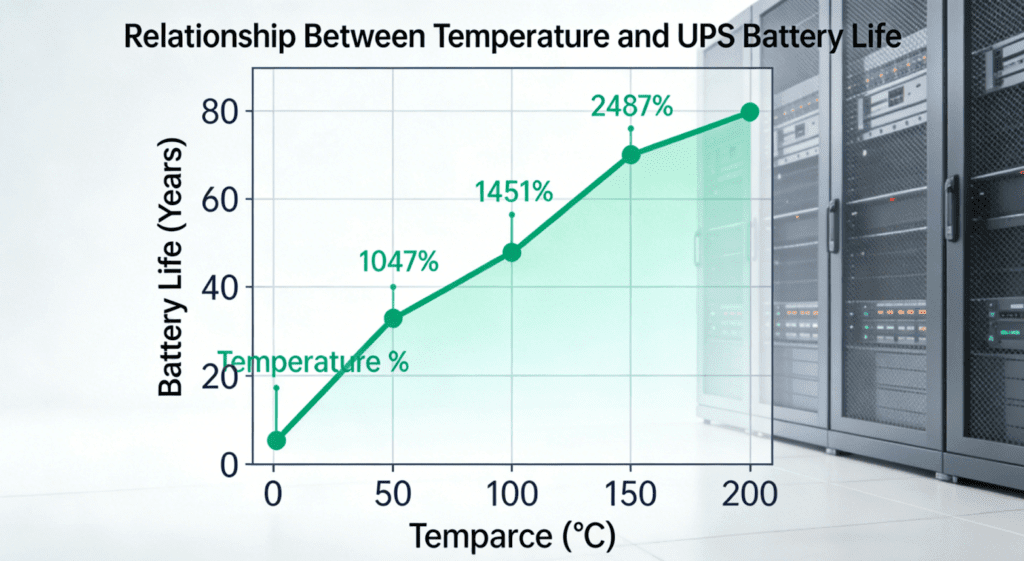
Figure 1: Temperature Impact on UPS Battery Life. Note the dramatic life reduction above 40°C and the critical 50°C threshold.
Ⅱ. Core Mechanisms of Temperature Impact
1. Battery Chemistry and Thermal Sensitivity
Batteries form the heart of any UPS system. Their electrochemical reactions depend heavily on temperature. Lead-acid batteries dominate industrial UPS applications due to cost and reliability. However, these batteries experience accelerated aging when heat rises.
The 10-Degree Rule governs battery life. For every 10°C increase above 20°C, battery life halves. A battery rated for 10 years at 20°C lasts merely 5 years at 30°C. At 50°C, the same battery expires in approximately 1.25 years. This exponential degradation demands attention.
High temperatures trigger multiple failure modes. Electrolyte evaporation increases. Grid corrosion accelerates. Separator materials degrade faster. Internal resistance rises. These factors combine to reduce both capacity and reliability.
Lithium-ion batteries offer better temperature tolerance. Industrial lithium UPS systems now operate reliably up to 50°C (122°F). However, they require sophisticated battery management systems (BMS) to prevent thermal runaway.
2. Capacitor Aging and Power Electronics
Electrolytic capacitors serve critical functions in UPS rectifiers and inverters. These components suffer dramatically from heat. The electrolyte inside evaporates faster at high temperatures. Capacitance drops. Equivalent series resistance (ESR) increases.
Capacitor life follows the Arrhenius equation. A 10°C reduction doubles the lifespan. Conversely, high temperature environments cut capacitor life significantly. Industrial UPS systems designed for 50°C operation use high-temperature rated capacitors. These components typically feature 105°C or 125°C ratings rather than standard 85°C parts.
Power semiconductors—IGBTs and MOSFETs—also face thermal stress. Switching losses generate heat. High ambient temperatures reduce the temperature gradient needed for heat dissipation. This creates a compounding effect. Thermal runaway in power electronics can destroy the UPS instantly.
3. The Engineering Significance of 50°C Operation
Standard UPS systems rate for 25°C or 30°C ambient. Industrial environments frequently exceed these limits. Mechanical rooms, factory floors, and outdoor enclosures regularly reach 40°C to 50°C.
A UPS rated for 50°C continuous operation offers substantial advantages:
- No derating required at high temperatures
- Consistent performance across the operating range
- Longer component life through robust thermal design
- Reduced cooling costs for the installation space
- Flexible installation options in challenging locations
The 50°C rating requires comprehensive design changes. These include oversized heat sinks, high-temperature components, enhanced airflow, and thermal monitoring systems.
Ⅲ. Thermal Design Strategies for High Temperature
1. Fan Redundancy Design (N+1 Configuration)
Cooling fans represent single points of failure in forced-air UPS systems. Fan failure in high temperature environments causes rapid overheating. The UPS shuts down to protect itself. Critical loads lose protection.
N+1 fan redundancy solves this problem. The design installs one additional fan beyond the minimum required (N). If any single fan fails, the redundant unit maintains adequate cooling.
Consider a UPS requiring three fans for full-load cooling:
- Standard design: 3 fans (no redundancy). One failure causes overheating.
- N+1 design: 4 fans (3 needed + 1 backup). One failure allows continued operation.
Industrial UPS systems often implement more sophisticated strategies. Some designs allow 50% load operation with partial fan failure. Others feature automatic fan rotation to balance wear. Temperature-controlled fan speed optimizes noise and energy consumption.
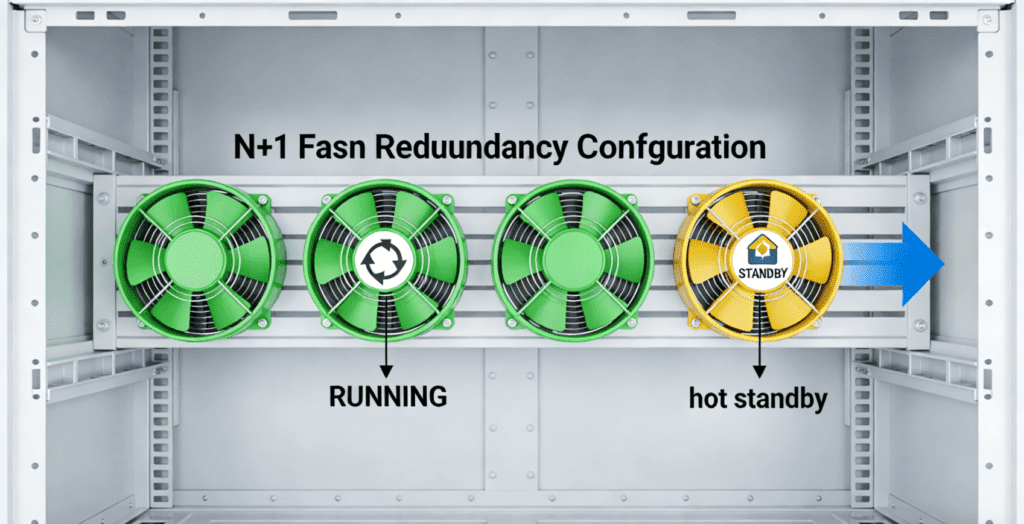
Figure 2: N+1 Fan Redundancy Configuration. The fourth fan serves as hot standby, ensuring continuous cooling even if one active fan fails.
2. Thermal Management System Optimization
Effective thermal management extends beyond fans. Industrial UPS systems employ multiple strategies:
Airflow Engineering: Computational Fluid Dynamics (CFD) analysis optimizes internal airflow. Hot spots receive dedicated cooling. Heat sinks feature aerodynamic designs. Air filters protect against dust accumulation.
Thermal Interface Materials: High-performance thermal paste and pads ensure efficient heat transfer from semiconductors to heat sinks. Phase-change materials absorb temporary thermal spikes.
Heat Exchangers: Large UPS units may use liquid cooling or heat exchangers. These systems transfer heat to external cooling circuits. They enable operation in extreme environments up to 55°C or 60°C.
Ducting and Enclosure Design: Proper ventilation prevents heat recirculation. Industrial UPS enclosures feature multiple air inlets and outlets. Baffles direct airflow across critical components.
3. Temperature-Compensated Charging
Charging batteries at high temperatures risks thermal runaway. The charging voltage must adjust based on ambient temperature. This technique is called temperature-compensated charging.
The system monitors battery temperature continuously. When temperature rises, charging voltage decreases. When temperature drops, voltage increases. This approach:
- Prevents overcharging in hot conditions
- Ensures full charge in cold environments
- Extends battery life significantly
- Reduces water loss in flooded batteries
Modern industrial UPS systems integrate this function automatically. The compensation coefficient typically ranges from -3mV to -5mV per cell per degree Celsius.
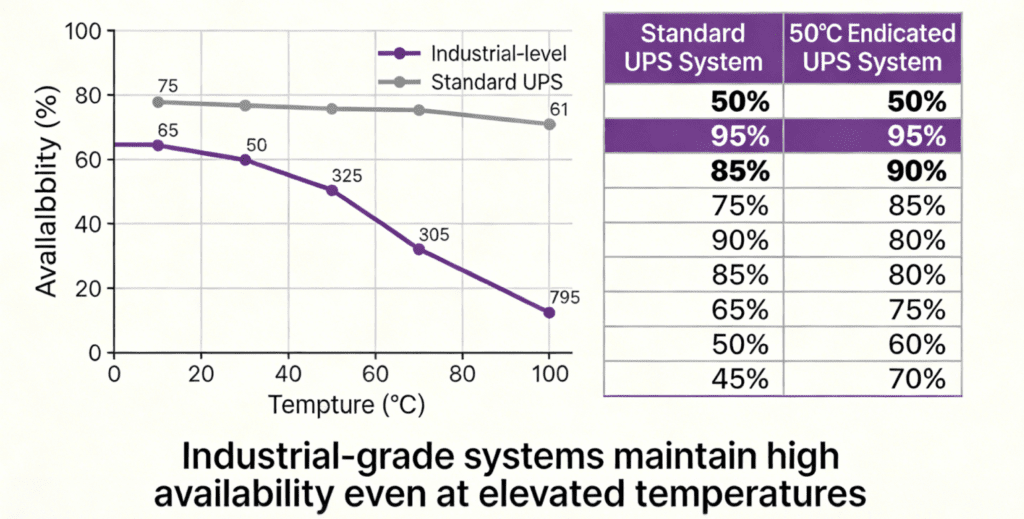
Figure 3: Performance Comparison Between Standard and 50°C Rated UPS Systems. Industrial-grade systems maintain high availability even at elevated temperatures.
Ⅳ. Industrial Application Scenarios
1. Manufacturing Environments
Factory floors generate substantial heat. Welding equipment, furnaces, and motors raise ambient temperatures. Dust and contaminants challenge cooling systems.
Industrial UPS systems in manufacturing require:
- IP54 or higher enclosure ratings
- 50°C continuous operation capability
- N+1 fan redundancy
- Filtered air intakes
- Vibration resistance
Automotive, steel, and chemical plants exemplify these harsh conditions. UPS failure interrupts production lines. Each minute of downtime costs thousands of dollars. Robust thermal design prevents these losses.
2. Outdoor and Semi-Outdoor Applications
Network cabinets, traffic control systems, and renewable energy installations face outdoor temperatures. Solar gain heats enclosures. Summer peaks push temperatures beyond 50°C.
Outdoor-rated industrial UPS systems feature:
- Wide temperature ranges (-30°C to +60°C)
- Sun shields and reflective coatings
- Sealed enclosures with thermal management
- Heated battery compartments for cold climates
- Conformal coating for circuit boards
Telecommunications infrastructure particularly depends on these capabilities. Cell towers and remote monitoring stations require year-round reliability regardless of weather.
3. Edge Computing and Distributed IT
Edge data centers deploy in non-traditional spaces. Utility rooms, warehouses, and retail backrooms lack precision cooling. Heat loads from servers compound environmental challenges.
These installations need compact industrial UPS units with:
- High power density
- Front-to-back airflow
- 50°C operation without derating
- Minimal maintenance requirements
- Remote monitoring capabilities
The shift to edge computing drives demand for thermally robust UPS systems. Standard IT equipment UPS units fail in these applications.
Ⅴ. Maintenance and Monitoring Best Practices
1. Preventive Maintenance Programs
High temperature operation accelerates wear. Regular maintenance ensures continued reliability:
Monthly Inspections: Check air filters. Clean if clogged. Verify fan operation. Listen for bearing noise. Monitor enclosure temperature.
Quarterly Services: Test battery voltage and internal resistance. Check torque on electrical connections. Clean heat sinks. Inspect capacitors for bulging.
Annual Overhauls: Replace air filters. Test fan bearing resistance. Calibrate temperature sensors. Perform full load testing. Update firmware.
Thermal imaging identifies hot spots before failure. Infrared cameras reveal poor connections, failing components, and airflow blockages.
2. Remote Thermal Monitoring
Modern industrial UPS systems provide comprehensive monitoring:
Temperature Sensors: Multiple sensors track ambient, battery, and component temperatures. Alerts notify operators of excursions.
Predictive Analytics: Software analyzes temperature trends. It predicts component failures before they occur. Maintenance scheduling optimizes based on actual conditions.
Environmental Monitoring: Optional sensors track humidity, dust, and corrosive gases. These factors compound thermal stress.
Automated Response: Intelligent UPS units adjust operation based on temperature. They may reduce charging rates, activate redundant cooling, or gracefully shut down if thermal limits approach.
Ⅵ. Conclusion
Temperature represents a critical factor in industrial UPS system design and operation. High temperature environments challenge every component from batteries to capacitors. Understanding these effects enables informed equipment selection.
Industrial UPS systems rated for 50°C operation provide essential advantages. They deliver reliable power in conditions where standard units fail. Fan redundancy design ensures continuous cooling even with component failures. Temperature-compensated charging optimizes battery life across varying conditions.
Facility managers must evaluate their thermal environments honestly. Installing under-rated UPS systems risks unexpected failures. The investment in true industrial-grade equipment pays dividends through extended lifespan, reduced maintenance, and uninterrupted operations.
As industrial automation, edge computing, and outdoor infrastructure expand, thermal resilient UPS systems become increasingly vital. Prioritize 50°C operation capability and N+1 fan redundancy in your next specification. Your critical loads deserve nothing less.
References
- International Electrotechnical Commission (IEC)Official website: www.iec.ch
- Underwriters Laboratories (UL)Official website: www.ul.com
- European Committee for Standardization (CEN)Official website: www.cen.eu
- Standardization Administration of China (SAC)Official website: www.sac.gov.cn
- Zhongguancun Energy Storage Industry Technology Alliance (CNESA)Official website: www.cnESA.org
- International Organization for Standardization (ISO)Official website: www.iso.org