Welcome to BKPOWER!












UPS Meaning in Medical Terms: BKPOWER’s Solutions
TIPS:In medical terms, UPS (Uninterruptible Power Supply) is a crucial device that ensures the stable operation of medical equipment and safeguards patients’ lives. With years of in – depth experience in the UPS field, BKPOWER offers UPS products that provide reliable power protection solutions for the medical industry, thanks to their advanced technologies and excellent performance. This article will explore the meaning of UPS in medical terminology, its significance in medical scenarios, and how BKPOWER’s UPS products meet the strict requirements of the medical sector.
I. Definition and Significance of UPS in Medical Terms
1.Definition Explanation
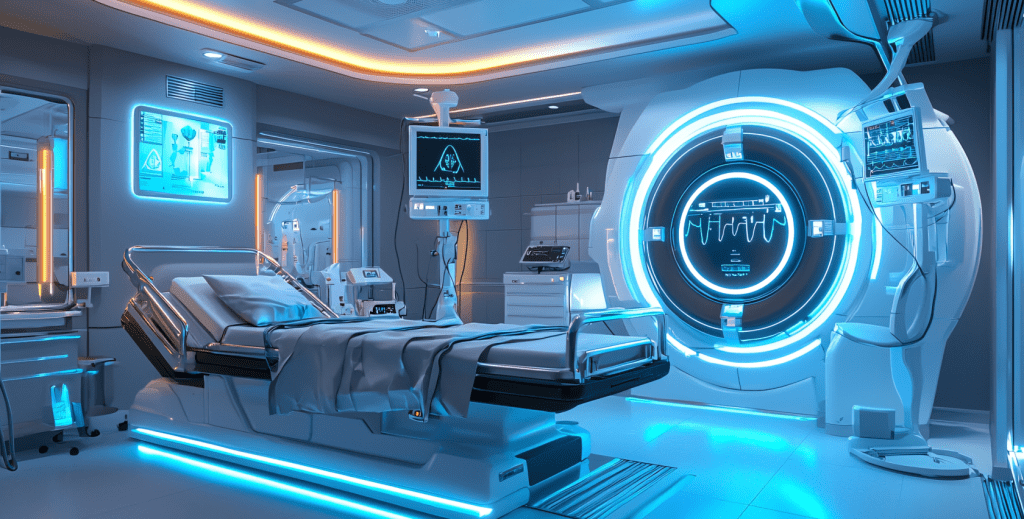
In the medical field, UPS refers to a device that can automatically switch to battery power mode the moment the mains power fails, continuously supplying stable electricity to medical equipment. It acts as the “power guardian” of medical devices, ensuring that sophisticated medical equipment such as CT scanners, Magnetic Resonance Imaging (MRI) machines, cardiac monitors, and life – support systems can operate normally under any sudden power – related situations.
2.Significance Demonstration
Once medical equipment stops working due to power outages, it can directly endanger patients’ lives. For example, during heart surgery, if the extracorporeal circulation machine stops due to a power failure, the consequences would be disastrous. For patients in the Intensive Care Unit (ICU), a power outage of the life – support system would mean the loss of life – saving support. The existence of UPS significantly reduces such risks and is an indispensable part of the stable operation of the medical system.
II. Special Requirements for UPS in Medical Scenarios
1.Extremely High Power Quality Requirements
Medical equipment is composed of precise electronic instruments, which have extremely strict requirements for power parameters such as voltage stability, frequency accuracy, and harmonic content. Take MRI machines as an example; they require the voltage deviation to be controlled within ±1%, the frequency deviation within ±0.1Hz, and the harmonic content to be less than 3%. Ordinary power supplies can hardly meet these requirements, and professional UPS devices are necessary for power regulation and guarantee.
2.Strict Requirements for Power Supply Continuity
The nature of hospital work determines that long – term power outages are not acceptable. Whether it is daily diagnosis and treatment, emergency rescue, or major surgeries, medical equipment needs continuous and stable power supply. This requires UPS to have fast – switching capabilities and sufficient battery life, ensuring seamless power supply after a mains failure and buying time for the hospital to restore power or activate backup power sources.
3.Priority on Safety and Reliability
The medical environment is related to patients’ lives and health, so UPS devices must have extremely high safety and reliability. The equipment should be equipped with comprehensive protection functions, such as over – voltage protection, under – voltage protection, short – circuit protection, etc., to prevent damage to medical equipment and patients caused by abnormal power conditions. At the same time, the device itself should be stable and reliable to reduce the probability of failures.
III. How BKPOWER’s UPS Products Meet the Needs of the Medical Industry
1.Superior Power Regulation Technology
BKPOWER’s UPS products adopt a double – conversion online topology structure, which can completely isolate voltage fluctuations, harmonic interference, surges, and other issues in the mains power grid. The output power is a stable and pure sine wave, with the voltage deviation controlled within ±1%, the frequency deviation within ±0.1Hz, and the harmonic content less than 3%, fully meeting the strict power quality requirements of precise medical equipment such as MRI and CT.
2.Powerful Power Supply Continuity Guarantee
BKPOWER’s UPS is equipped with high – capacity and high – performance battery packs. Depending on different models and configurations, it can continuously supply power for 30 minutes to several hours after a mains failure. Moreover, it has a millisecond – level fast – switching capability, which can switch to battery power mode the moment the mains power fails, ensuring uninterrupted power supply to medical equipment.
3.Comprehensive Safety and Reliability Design
In terms of safety, BKPOWER’s UPS has multiple protection functions such as over – voltage, under – voltage, short – circuit, and over – temperature protection, effectively safeguarding the safety of medical equipment and patients. In terms of reliability, from raw material procurement to production and testing, the products follow a strict quality control system and have passed a number of international authoritative certifications such as ISO 9001 Quality Management System Certification and CE Certification. Each device undergoes strict testing to ensure stable and reliable operation.
4.Intelligent Operation and Maintenance Management System
BKPOWER’s UPS products customized for the medical industry are equipped with an intelligent monitoring and management system, supporting remote monitoring through mobile apps and computer platforms. Hospital operation and maintenance personnel can view the operation status, load conditions, battery health status, and other information of the UPS system in real – time. The system also has automatic fault diagnosis and warning functions. Once an abnormality is detected, it will immediately issue an alarm and provide solutions, greatly improving operation and maintenance efficiency and reducing risks caused by equipment failures.
IV. Key Points for Selecting Medical – Use UPS
1.Precisely Match Load Requirements
Hospitals need to accurately calculate the total power and starting inrush current according to the actual medical equipment in use and select a UPS with an appropriate capacity. It is generally recommended to reserve a power margin of 20% – 30% to cope with the instantaneous starting requirements of the equipment and possible future equipment additions.
2.Consider Battery Life
Determine the time that the UPS needs to continuously supply power after a mains failure according to the actual situation of the hospital. For large comprehensive hospitals, it is advisable to choose a UPS system with a longer battery life to ensure that key medical equipment can still operate normally during long – term power outages.
3.Pay Attention to Brand and After – Sales Service
The medical industry has extremely high requirements for the reliability of UPS. It is necessary to choose a supplier like BKPOWER, which has a good brand reputation and rich experience in the medical industry. At the same time, a complete after – sales service is crucial. BKPOWER has more than 200 service outlets and professional technical service teams worldwide, providing 7×24 – hour technical support and regular equipment inspection and maintenance services.
In the medical industry, UPS is not only a power protection device but also an important line of defense for patients’ lives. BKPOWER creates reliable UPS solutions for the medical industry with its professional technology, high – quality products, and comprehensive services, helping the medical system operate stably and safeguarding patients’ lives and health. Choosing BKPOWER’s UPS products means choosing a safer and more reliable medical power guarantee.
References
- International Electrotechnical Commission (IEC)Official website: www.iec.ch
- Underwriters Laboratories (UL)Official website: www.ul.com
- European Committee for Standardization (CEN)Official website: www.cen.eu
- Standardization Administration of China (SAC)Official website: www.sac.gov.cn
- Zhongguancun Energy Storage Industry Technology Alliance (CNESA)Official website: www.cnESA.org
- International Organization for Standardization (ISO)Official website: www.iso.org