Welcome to BKPOWER!












Keep Water Pumps Running During Outages
TIPS:Water treatment facilities face critical power continuity challenges. An online industrial UPS provides seamless protection for water distribution systems. This article explores how online industrial UPS technology solves motor starting current problems. We examine UPS for water pump systems in wastewater treatment applications. BKPOWER’s solution supports 1000% inrush current for 1 second. Discover why standard battery backup units fail pump motor loads. Learn how specialized UPS for water pump systems ensures continuous operation during outages.
Ⅰ. The Critical Power Challenge in Water Treatment
Water treatment plants operate 24/7. Power interruptions threaten public health. They risk environmental contamination. They violate regulatory compliance.
Pumps form the heart of these facilities. Raw water intake pumps move source water. Lift pumps transport wastewater. High-pressure pumps drive filtration systems. Chemical dosing pumps maintain water quality.
Standard UPS systems struggle with pump loads. Motor starting currents create problems. These surges reach 600% to 1000% of normal running current. They last 0.5 to 2 seconds. Most UPS units cannot deliver this burst power. They trip on overload. They fail to start pumps when needed most.
This article explains why online industrial UPS technology matters. We examine UPS for water pump systems design requirements. We explore BKPOWER’s 1000% inrush current capability.
Ⅱ. Understanding Motor Starting Current (Inrush)
Electric motors behave differently during startup. Understanding this behavior explains UPS selection criteria.
Motor Starting Physics
When a motor starts from standstill, it draws locked rotor current (LRA). The rotor is not yet turning. No back electromotive force (EMF) exists. Current flows freely through windings. This creates a magnetic field. The field overcomes rotor inertia.
Starting current typically equals 5 to 8 times full load current (FLA). Large pumps may reach 10 times FLA. This is the “1000% inrush” phenomenon. It lasts until the motor reaches approximately 80% of rated speed.
The Pump Load Profile
Centrifugal pumps present specific challenges. They require high starting torque. They accelerate slowly due to water mass. Starting duration extends longer than other motor types.
| Motor Size | Typical FLA | Starting Current (600%) | Starting Current (1000%) |
|---|---|---|---|
| 10 HP | 28A | 168A | 280A |
| 25 HP | 68A | 408A | 680A |
| 50 HP | 130A | 780A | 1300A |
| 100 HP | 248A | 1488A | 2480A |
As shown, a 50 HP pump demands 1300 amps at 1000% inrush. Most commercial UPS cannot supply this. They lack surge capacity. They use weak inverters. They trip immediately.
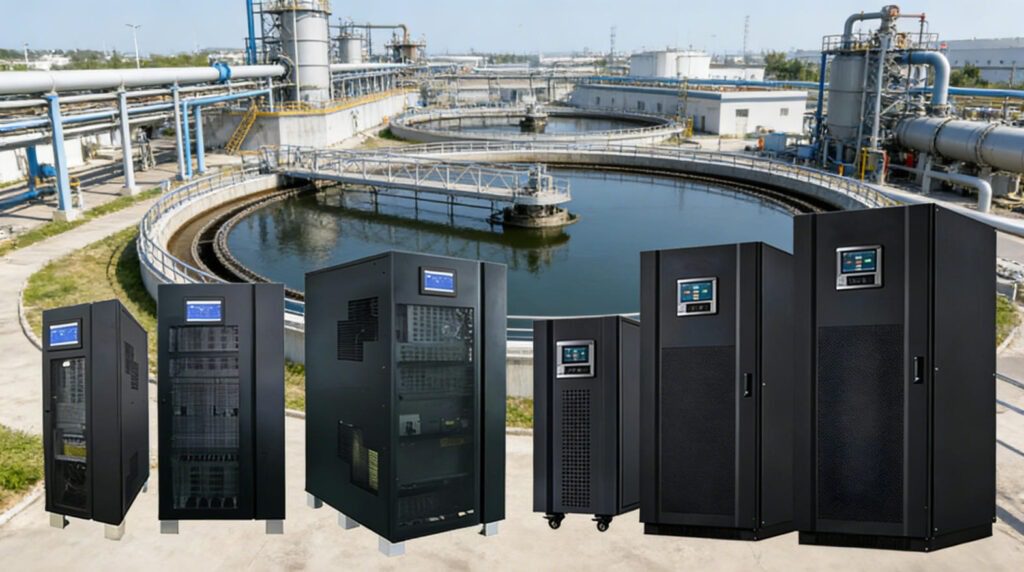
Figure 1: Industrial UPS systems for water pump applications require specialized sizing for high inrush current demands.
Ⅲ. Why Standard UPS Systems Fail Pump Loads
Many engineers attempt using standard UPS units. They select based on running watts. They ignore starting requirements. The results disappoint.
Overload Protection Tripping
Standard UPS include fast-acting electronic protection. They detect current spikes. They assume short circuits. They shut down within milliseconds. This prevents inverter damage. However, it stops motor starts.
Inverter Current Limitations
Commercial UPS inverters use semiconductor ratings. These match continuous load only. Surge ratings typically reach 125% to 150% for brief periods. They never approach 1000% capacity. The inverter simply cannot source enough current.
Battery Stress
Attempting motor starts strains UPS batteries. Voltage sags occur. Current demands exceed battery capability. Battery life shortens dramatically. Premature failure follows.
The Wrong Topology
Line-interactive and standby UPS transfer to battery during outages. They rely on bypass paths. They lack continuous voltage regulation. They offer poor motor starting support.
Ⅳ. Online Industrial UPS: The Technical Solution
Online industrial UPS uses double conversion topology. This solves pump load challenges. It provides true continuous protection.
Double Conversion Operation
AC input feeds a rectifier. The rectifier creates DC. DC powers an inverter. The inverter generates clean AC output. Batteries connect to the DC bus. They provide instant backup during outages.
This topology isolates loads from grid disturbances. It delivers regulated voltage constantly. It eliminates transfer switches. It offers zero transfer time.
Handling Inrush Current
BKPOWER online industrial UPS incorporates special design features:
- Overrated Inverters: Output stages handle 1000% of rated current for 1 second. Specialized IGBT modules deliver burst power. Conservative thermal design prevents overheating.
- Current Limit Algorithms: Smart control systems distinguish between faults and motor starts. They allow temporary overloads. They time-limit protection responses.
- Battery Augmentation: Large DC bus capacitors supplement battery current. They supply peak demands. They reduce battery stress.
1000% for 1 Second Capability
BKPOWER specifically rates units for 1000% overload for 1 second. This matches motor starting profiles. A 10 KVA UPS delivers 100 KVA momentarily. It starts a 50 HP pump reliably. It then continues normal operation.
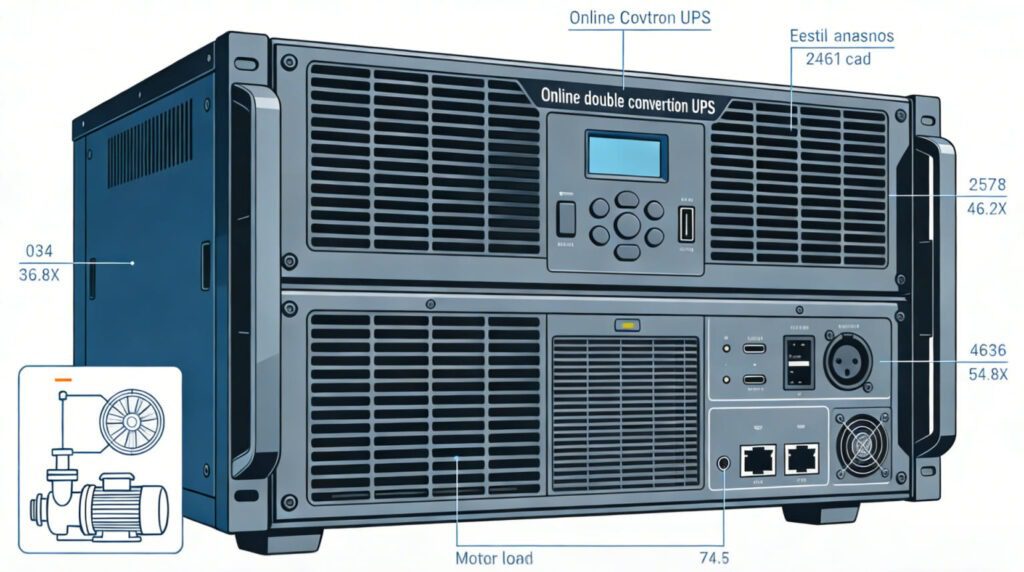
Figure 2: Online double conversion UPS provides continuous power conditioning and high surge capacity for motor loads.
Ⅴ. Water Treatment Applications: Where UPS Matters
UPS for water pump systems serves multiple critical functions.
Wastewater Lift Stations
Lift stations collect sewage. Pumps move it uphill. Power outages cause overflows. Raw sewage spills into streets. It contaminates water supplies. It creates public health hazards.
UPS maintains pump operation during brief outages. It prevents wet well overflow. It allows controlled operations until generators start.
Clean Water Distribution
Booster pumps maintain pressure. They deliver water to elevated tanks. They serve high-rise buildings. Outages cause pressure loss. Contaminants enter pipelines. Boil-water orders follow.
UPS keeps distribution pumps running. It maintains system pressure. It prevents backflow. It protects public safety.
Chemical Dosing Systems
Chlorine and coagulant pumps need precise operation. Interruptions upset treatment chemistry. Water quality suffers. Regulatory violations occur.
UPS ensures continuous dosing. It maintains chemical balance. It safeguards treatment effectiveness.
Filtration Backwash
Membrane and media filters require periodic backwashing. Power loss during backwash damages equipment. It compromises filtration integrity.
UPS completes backwash cycles. It protects expensive membranes. It maintains filter performance.
Ⅵ. Sizing Guidelines for Pump Applications
Correct sizing ensures reliable operation. Follow these steps for UPS for water pump systems:
Step 1: Determine Full Load Current
Check motor nameplates. Note FLA (Full Load Amps). Record voltage and phase. Verify power factor.
Step 2: Calculate Starting Current
Multiply FLA by starting factor. Use 600% for across-the-line starters. Use 1000% for high-torque pumps. Check manufacturer LRA specifications.
Step 3: Determine Running Watts
Calculate: Watts = Volts × Amps × Power Factor × Efficiency. Account for all simultaneous loads. Include controls and instruments.
Step 4: Select UPS Capacity
Select online industrial UPS based on:
- Continuous rating exceeds running watts
- Surge rating exceeds starting current (1000% for 1s)
- Battery capacity supports runtime requirements
Step 5: Verify Inverter Capacity
Confirm inverter can deliver starting current. Check manufacturer surge specifications. BKPOWER documentation confirms 1000% for 1 second ratings.
Example Sizing
A 30 HP pump draws 77A FLA at 480V. Starting current reaches 770A (1000%). Running load equals 52 KW. Select 60 KVA online industrial UPS. The unit delivers 600A continuous. It supports 600A surge (1000% of 60). This starts the pump reliably.
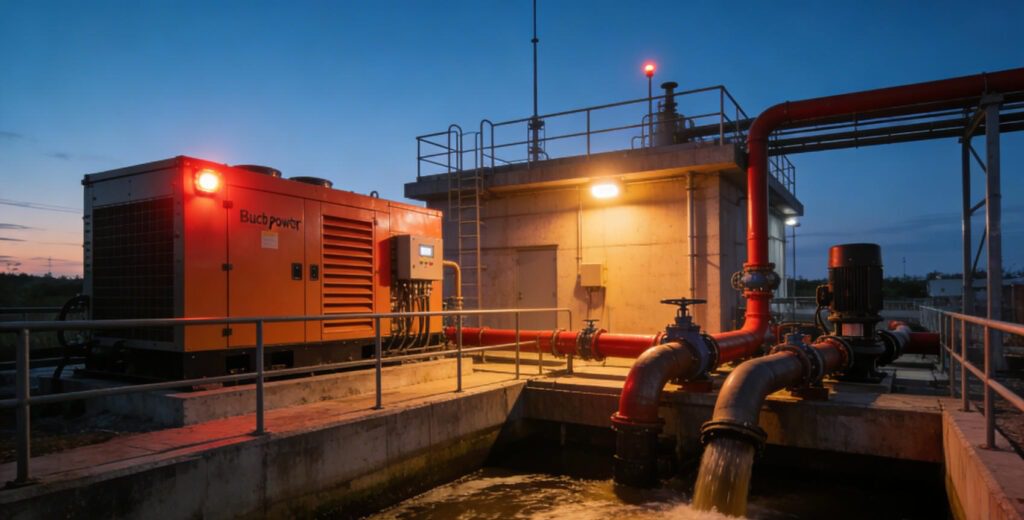
Figure 3: Wastewater lift stations require reliable backup power to prevent sewage overflows during outages.
Ⅶ. Integration with Dry-Type Transformers
BKPOWER offers 10-100 KVA dry-type transformers. These integrate with online industrial UPS systems.
Voltage Transformation
Many water facilities use 4160V or 13.8kV distribution. Step-down transformers feed UPS systems. Cast resin transformers provide isolation. They eliminate oil spill risks. They suit wet environments.
Harmonic Mitigation
UPS rectifiers create harmonic currents. These heat transformers. They cause neutral currents. K-rated transformers handle these loads. They prevent overheating.
Combined Solutions
BKPOWER provides integrated packages. Transformers match UPS input requirements. Output configurations suit pump voltages. Single-source responsibility simplifies projects.
Ⅷ. Conclusion: Ensuring Continuous Operations
Water treatment cannot tolerate power interruptions. Standard UPS systems fail motor loads. Online industrial UPS with high surge capacity provides the solution.
BKPOWER delivers 1000% inrush current support for 1 second. This starts large pumps reliably. It maintains water distribution. It prevents environmental disasters.
Specify UPS for water pump systems based on starting requirements, not running loads. Choose double conversion topology. Verify surge capacity. Plan for future expansion.
BKPOWER engineers assist with sizing calculations. We provide integrated transformer-UPS solutions. We support 10-100 KVA applications. Contact us to keep your pumps running.
References
- International Electrotechnical Commission (IEC)Official website: www.iec.ch
- Underwriters Laboratories (UL)Official website: www.ul.com
- European Committee for Standardization (CEN)Official website: www.cen.eu
- Standardization Administration of China (SAC)Official website: www.sac.gov.cn
- Zhongguancun Energy Storage Industry Technology Alliance (CNESA)Official website: www.cnESA.org
- International Organization for Standardization (ISO)Official website: www.iso.org